
First Solar (NASDAQ: FSLR) is the rare growth stock that has become a value stock without breaking. As of the latest close, shares trade at $211.51 — roughly 34% below the 52-week high of $320.95 — after management issued a conservative 2026 revenue outlook that spooked Wall Street into a wave of price-target cuts. Yet underneath that de-rating sits a company earning a 30%+ net margin, carrying almost no debt, and sitting on a multi-year contracted backlog worth about $18.5 billion. The market is pricing First Solar at just 8.8x forward earnings while the analyst consensus price target of $261.90 implies roughly 24% upside from here. That gap between price and fundamentals is the entire investment case, and this article is about whether it is justified.
The reason to look at First Solar now, rather than six months ago or six months from now, is that the two biggest overhangs on the stock have partially cleared at the same moment a new source of demand has arrived. First, the legislative uncertainty around the Inflation Reduction Act’s Section 45X advanced-manufacturing tax credit — the single most important line item in First Solar’s earnings — was clarified when the credit was preserved at its full per-watt rate through 2029, after which it phases down to 75% in 2030, 50% in 2031, and 25% in 2032 before expiring in 2033. This is the crux of the First Solar 45X tax credit thesis: the company’s US-made modules generate a per-watt federal credit that flows almost directly to the bottom line, and that credit now has a defined runway — full value through 2029, with a scheduled step-down thereafter that is a real headwind to the later years of the credit-capture story. Second, the explosion in artificial-intelligence data center power demand is rewriting how large electricity buyers procure clean power, pulling utility-scale solar-plus-storage into a structural growth cycle that First Solar’s domestic capacity is uniquely positioned to serve.
Three investment points frame the rest of this analysis. One, First Solar owns a genuine, hard-to-replicate moat: its cadmium-telluride (CdTe) thin-film technology sits entirely outside the Chinese-dominated polysilicon supply chain, and more than 92% of global module manufacturing capacity now faces US import restrictions — turning First Solar’s domestic vertical integration into a structural advantage rather than a marketing slogan. Two, the valuation has overshot to the downside; at 8.8x forward earnings with an 18% return on equity and a net-cash balance sheet, the stock is priced for stagnation the numbers do not support. Three, the risks are real and specific — tax-credit dependency, a multi-year backlog that is being drawn down faster than it is refilled, and unresolved Section 232 tariff decisions on overseas plants — and any honest analysis has to weigh them against the upside rather than wave them away.
Over the following sections we will map the business and its revenue segments, size the utility-scale solar and AI-power-demand markets that drive it, dissect the durability of the CdTe moat, walk through five years of financials, build a scenario-based valuation off consensus forward earnings, and lay out the specific risks and the exit plan that follow from all of it.
1. Company Overview
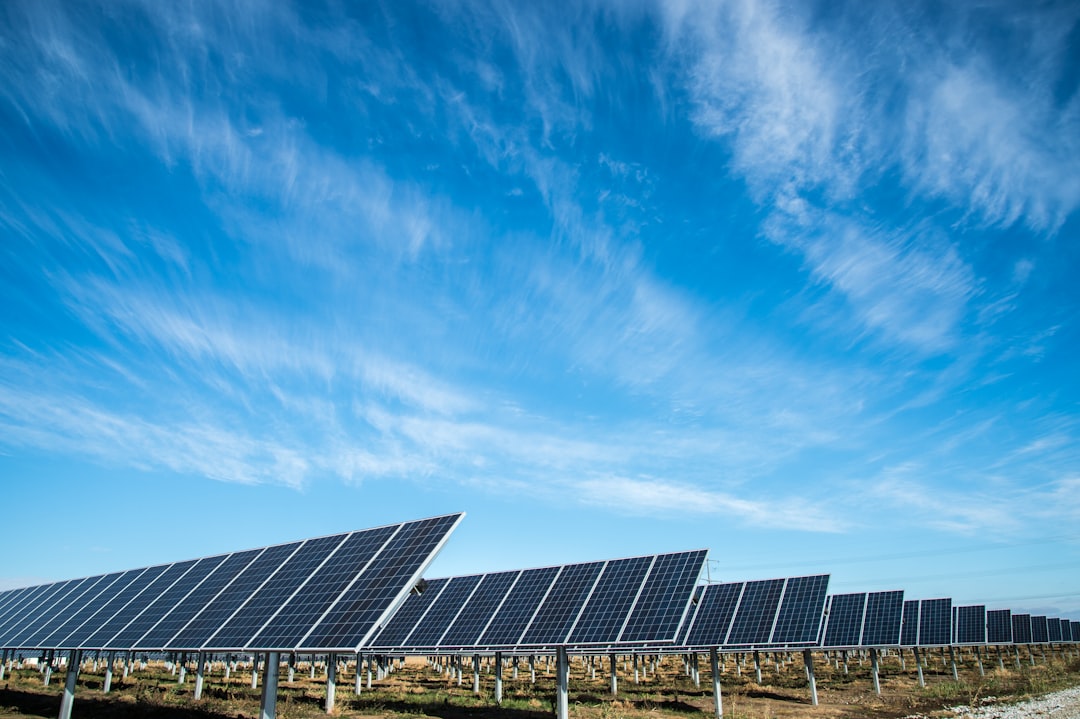
First Solar is the largest US-headquartered solar manufacturer and the world’s leading producer of cadmium-telluride thin-film photovoltaic modules. Unlike the overwhelming majority of the solar industry — which builds crystalline-silicon (c-Si) panels — First Solar designs and manufactures a fundamentally different product using a thin coating of CdTe semiconductor on glass. The company does not install rooftop systems or run a retail business; it is a business-to-business industrial manufacturer selling modules primarily to utility-scale developers and independent power producers who build large ground-mounted solar farms.
How First Solar makes money is refreshingly simple to state: it manufactures solar modules and sells them, module by module, gigawatt by gigawatt, under long-dated supply contracts. Revenue is almost entirely module sales. What makes the model distinctive is where those modules are made and how the economics work. Because First Solar operates vertically integrated factories in the United States — in Ohio and in newer facilities in Alabama and Louisiana, with a South Carolina finishing plant slated to begin production in 2026 — its US-made modules qualify for the Section 45X advanced-manufacturing production tax credit. That credit is worth roughly $0.17 per watt for a complete module and is booked as a reduction of cost of goods sold, which is why First Solar’s reported gross and net margins run far above what a commodity hardware manufacturer would normally earn.
On a trailing-twelve-month basis, First Solar generated $5.42 billion in revenue and $1.67 billion in net income, a net margin of roughly 31% — extraordinary for a company that physically stamps out industrial glass panels. Trailing EPS is $15.48, and the company earns a return on equity of 18.4% and a return on assets of 13.1%, with margins of 41.7% gross, 33.2% operating, and 30.7% net. Crucially, First Solar carries a debt-to-equity ratio of just 0.06 — effectively a net-cash balance sheet — which gives it the flexibility to fund a multibillion-dollar domestic capacity build without leaning on capital markets.
Revenue and capacity profile (illustrative segmentation):
Dimension Detail Primary product CdTe thin-film utility-scale modules Core revenue source Module sales to utility-scale developers / IPPs Manufacturing base US (Ohio, Alabama, Louisiana; South Carolina finishing plant 2026) + international (Malaysia, Vietnam, India) Contracted backlog ~64 GW / ~$18.5 billion, many contracts carrying price-adjuster clauses TTM revenue $5.42 billion TTM net income $1.67 billion 2026 volume guidance 17.0–18.2 GW sold 2026 revenue guidance $4.9–5.2 billion
First Solar’s customer base is concentrated among large developers and utilities building gigawatt-scale projects; recent quarters have also seen record revenue contribution from its India operations, which serve that country’s fast-growing domestic solar market. Its market position in CdTe is effectively monopolistic — it is the only company producing CdTe modules at commercial scale — while in the broader module market it competes as a domestic-champion alternative to Chinese-linked c-Si suppliers. On governance, First Solar is a widely held, institutionally owned company (index and long-only funds dominate the register), with no controlling shareholder and a professional management team led by CEO Mark Widmar. That ownership structure means the stock trades on fundamentals and policy headlines rather than on the whims of a founder-controlled block.
2. Industry Analysis
2-1. Market Size & Growth Trajectory
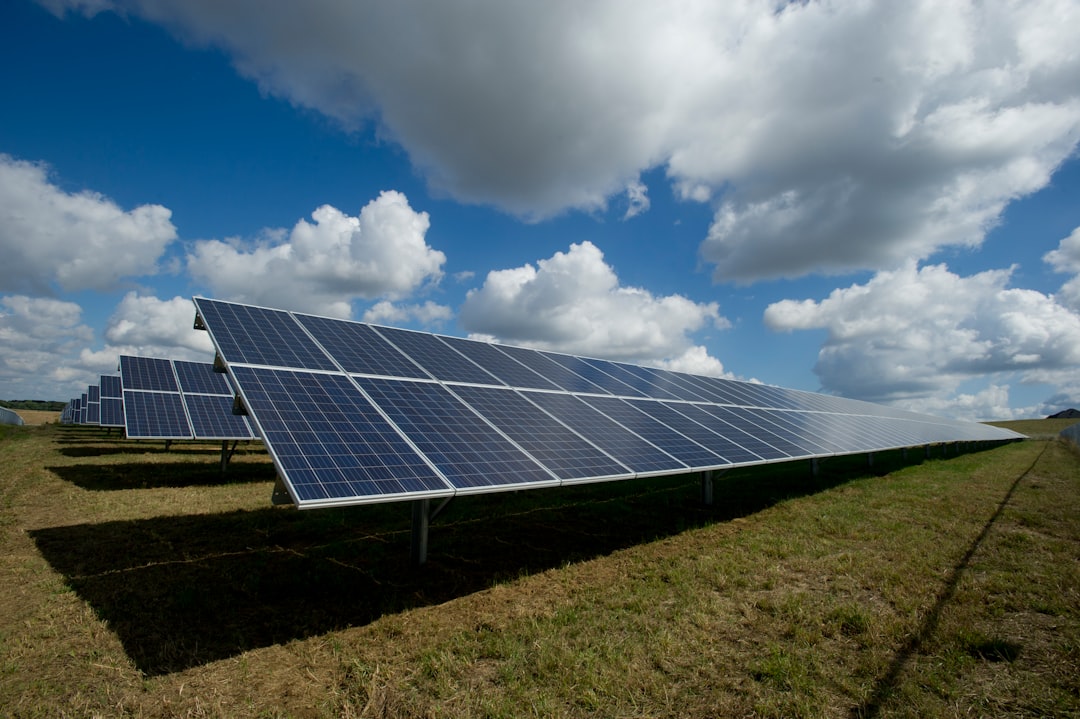
Solar is no longer an alternative energy story; it is the default new-build power source in the United States and much of the world. Solar and storage together have accounted for the large majority of new US generating capacity added in recent years, and the trajectory is accelerating rather than flattening. The reason is a step-change in electricity demand. After nearly two decades of flat US power consumption, load growth has returned — driven above all by AI data centers, but also by electrification of transport and the reshoring of energy-intensive manufacturing. Grid operators and utilities that spent fifteen years planning around zero demand growth are now scrambling to add gigawatts, and solar-plus-storage is the fastest, cheapest capacity they can bring online.
The addressable market for First Solar specifically is US utility-scale solar, which is measured in tens of gigawatts of annual installations and is projected to keep growing at a double-digit compound rate through the end of the decade. First Solar’s own contracted backlog — approximately 64 GW — represents multiple years of production booked in advance, a level of forward visibility that few manufacturers in any industry enjoy. The industry sits in what is best described as an acceleration phase: the technology is mature and bankable, costs are competitive without subsidy in most of the country, and a genuinely new demand driver (AI compute) has just arrived to extend the runway.
The AI angle deserves specific numbers. Data center power demand is on a trajectory to add tens of gigawatts of incremental US electricity load over the next several years. Because the federal interconnection queue is clogged and gas turbines are back-ordered for years, hyperscalers and their power partners are increasingly turning to behind-the-meter and co-located solar-plus-storage “energy parks” that can be built quickly and bypass the sluggish grid-connection process. This is a demand channel that essentially did not exist in First Solar’s planning three years ago, and it directly favors large, domestically-sourced module supply.
2-2. Structural Growth Drivers
Driver 1 — AI data center power demand and the new solar PPA playbook. The most important structural driver is the collision between exponential AI compute growth and a power grid that cannot expand fast enough. Training and serving large AI models consumes enormous amounts of electricity, and the companies building that capacity — hyperscale cloud providers and neoclouds — have committed to procuring it with low-carbon sources. With natural-gas turbines back-ordered and nuclear years away, solar-plus-storage has become the marginal supplier of new firm-ish capacity, increasingly structured as behind-the-meter energy parks co-located with data centers. This reshapes the power-purchase-agreement market: buyers are larger, credit-worthier, and willing to sign longer contracts, which is precisely the customer profile that suits First Solar’s gigawatt-scale, US-made supply. For a manufacturer that sells years of production in advance, a wave of new investment-grade demand is the single most valuable thing that can happen.
Driver 2 — Policy-driven reshoring and the domestic-manufacturing premium. US trade and industrial policy has, deliberately, made imported solar dramatically more expensive while subsidizing domestic production. Antidumping and countervailing duties, Section 232 tariff actions, and Uyghur-forced-labor import restrictions have combined to put more than 92% of the world’s module manufacturing capacity under some form of US import friction. At the same time, the Section 45X production tax credit pays domestic manufacturers a per-watt bounty. The net effect is a structurally protected home market in which First Solar — the largest US-based manufacturer with the deepest domestic footprint — is the primary beneficiary. This is a multi-year driver because factory capacity, tariff schedules, and the Section 45X credit (paid at full value through 2029, then phasing down to 75%/50%/25% across 2030–2032 before expiring in 2033) all operate on long time horizons rather than quarter-to-quarter.
Driver 3 — Domestic capacity ramp and mix shift toward higher-credit production. First Solar is in the middle of a capacity expansion that shifts its production mix toward higher-margin, higher-credit US output. New lines in Alabama and Louisiana, plus a South Carolina finishing facility starting in 2026, raise the share of modules that qualify for the full 45X credit and for domestic-content bonus incentives that its customers value. This is why forward earnings estimates rise even as revenue guidance stays flat: each incremental US-made watt carries more credit and better economics than the international watt it replaces. Consensus EPS next year of $24.05 — up 55% from the trailing $15.48 — is largely a story of this mix shift and credit capture, not of unit-volume heroics.
Short-term versus long-term dynamics diverge in an important way. In the short term, 2026 revenue is guided flat-to-slightly-down versus 2025 as the company works through contract timing and international-plant uncertainty. In the long term, the combination of AI demand, a protected domestic market, and rising credit capture points to a multi-year earnings expansion. Investors who conflate the near-term revenue optics with the long-term earnings trajectory are, in our view, the source of the current mispricing.
2-3. Competitive Landscape
First Solar competes on a different axis than almost everyone else in solar. The bulk of global capacity — dominated by Chinese manufacturers such as LONGi, JinkoSolar, and Trina, plus a growing US assembly presence — builds crystalline-silicon panels dependent on the polysilicon supply chain. First Solar’s CdTe modules sidestep that chain entirely.
Company Technology Approximate scale / positioning Moat character First Solar (FSLR) CdTe thin-film ~$5.4B revenue, ~31% net margin, ~64 GW backlog Supply-chain independence + 45X credit + domestic scale LONGi / Jinko / Trina c-Si (polysilicon) Far larger volume, thin margins, China-linked supply chain Low-cost scale, but exposed to US tariffs and import bans US c-Si assemblers c-Si (imported cells) Growing but cell-supply constrained Domestic-content optionality, weaker vertical integration Enphase / SolarEdge Inverters / residential Different segment (electronics, not modules) Not a direct module competitor
First Solar is better positioned than the c-Si field for three concrete reasons. First, its product is legally and logistically cleaner for US buyers: no polysilicon means no Uyghur-forced-labor import exposure and no reliance on tariff-encumbered Chinese cells. Second, it captures the full 45X credit on vertically integrated US production, whereas c-Si assemblers importing cells capture far less of the domestic-manufacturing incentive. Third, its margins — 30%+ net — are structurally higher than the low-single-digit-to-negative margins that characterize the commoditized c-Si module business. The trade-off is that First Solar is smaller in absolute volume and its CdTe efficiency at the cell level trails the best c-Si, a genuine competitive vulnerability we address in the moat and risk sections.
3. Economic Moat Analysis
First Solar’s competitive advantage rests on two reinforcing pillars — a technology-and-supply-chain moat and a policy-scale moat — with a cost advantage running underneath both.
Moat Type 1: Supply-Chain Independence via CdTe Thin-Film Technology
The foundational moat is that First Solar makes a product almost no one else can, using inputs no one can cut off. CdTe thin-film modules are manufactured by depositing a micron-thin layer of cadmium-telluride semiconductor onto glass, a process that consumes a fraction of the semiconductor material a silicon panel requires and runs on a manufacturing cycle measured in hours rather than the multi-day, multi-stage polysilicon-to-wafer-to-cell-to-module chain. The strategic consequence is independence: First Solar does not buy polysilicon, does not depend on Chinese wafer suppliers, and is therefore insulated from the geopolitical, tariff, and forced-labor risks that hang over every crystalline-silicon competitor selling into the US.
The concrete evidence for this moat is that First Solar has been producing CdTe at commercial scale for two decades while no competitor has managed to replicate it at volume — the combination of process know-how, deposition equipment, and reliability data represents an accumulated advantage that a new entrant cannot buy off the shelf. CdTe also carries real field advantages: a lower temperature coefficient means the modules lose less output in hot climates, and superior low-light and high-temperature performance improves real-world energy yield in exactly the desert and Sun Belt sites where US utility solar is concentrated. Combined with a lower capital intensity per gigawatt of capacity than c-Si, this gives First Solar a cost-and-differentiation position that is difficult to attack.
Moat Type 2: Policy-Scale Advantage and the 45X Credit
The second moat is scale within a protected market. Because more than 92% of global module capacity faces US import restrictions and the 45X credit rewards domestic production, the relevant competitive arena is not “the world’s cheapest module” but “the largest compliant US-made module supply.” There First Solar is the clear leader, with the deepest domestic manufacturing footprint and the highest absolute 45X credit capture of any manufacturer. This is a scale advantage that compounds: the more US capacity First Solar builds, the more credit it captures, the more cash it generates to fund the next factory — a flywheel that a subscale competitor cannot match. The credit’s legislated schedule — full value through 2029, then a phase-down to 75%/50%/25% across 2030–2032 before expiring in 2033 — converts what was a policy question mark into a defined economic advantage, albeit one that steps down over time rather than running flat.
Moat Durability Assessment
Will the moat hold for five to ten years? The supply-chain-independence pillar is highly durable — the CdTe process advantage has survived twenty years of c-Si cost declines, and the geopolitics pushing buyers toward non-Chinese supply are structural, not cyclical. The policy-scale pillar is legislated through 2032 by statute — though at full value only through 2029 and at a declining rate thereafter — and carries genuine political risk beyond that horizon and even within it if future legislation revisits the credit. The most credible threat to the moat is technological: crystalline silicon continues to improve cell efficiency faster than CdTe, and if the efficiency gap widens enough, First Solar’s cost-per-watt advantage could erode. The counterargument is that First Solar is investing in next-generation CdTe efficiency research and in tandem/perovskite pathways, and that its energy-yield advantages in hot climates partially offset nameplate-efficiency deficits. On balance, we judge the moat wide and durable for the base-case investment horizon, with technology and the post-2029 credit step-down as the risks to monitor.
4. Financial Analysis
First Solar’s financial arc over the past several years is one of a company that turned a policy tailwind into genuine operating leverage.
Fiscal Year Revenue Gross Margin Net Income Net Margin 2023 ~$3.32B ~30.9% ~$0.83B ~25% 2024 ~$4.21B ~44.2% ~$1.29B ~31% 2025 ~$5.22B ~41.7% ~$1.53B ~29% TTM (latest) $5.42B 41.7% $1.67B 30.7%
The trajectory tells a clear story. Revenue grew from roughly $3.3 billion in 2023 to $5.4 billion on a trailing basis — a compound growth rate in the low-to-mid 20% range — while net income roughly doubled from $0.83 billion to $1.67 billion over the same span. The margin inflection in 2024, when gross margin jumped from ~31% to ~44%, marks the point at which the 45X credit began flowing through the P&L at scale; the modest normalization to ~42% since then reflects a maturing but still highly profitable credit dynamic. Each year’s growth has a story: 2024 was the 45X margin ramp plus record India revenue; 2025 was continued volume growth and domestic mix improvement; the trailing period reflects further US capacity coming online.
On operating metrics specific to the business, the numbers that matter are contracted backlog (~64 GW / ~$18.5 billion), annual volume sold (17.0–18.2 GW guided for 2026), and capacity utilization at US plants, all of which management discloses. The backlog is the single most important operating metric because it converts future revenue from a forecast into a contracted near-certainty — subject to the important caveats we raise in the risk section.
The balance sheet is a source of strength rather than risk. With a debt-to-equity ratio of 0.06, First Solar carries almost no leverage and runs a net-cash position, funding an ambitious domestic capacity expansion largely from internally generated cash and existing liquidity. Return on equity of 18.4% and return on assets of 13.1% confirm that this is a genuinely profitable industrial franchise, not a subsidy-inflated mirage — even though a meaningful share of net income does derive from the 45X credit. This is already a profitable company with a clear margin-and-earnings expansion story ahead, with consensus forward EPS of $24.05 implying roughly 55% earnings growth off the trailing base as domestic credit capture rises.
5. Valuation
First Solar’s valuation is the heart of the opportunity, and the honest way to frame it is that the market is pricing a high-quality, profitable, net-cash industrial at a distressed multiple.
Method — forward P/E on consensus earnings. First Solar is solidly profitable, so a price-to-earnings framework is appropriate (unlike unprofitable growth names where P/E is meaningless). The authoritative inputs are a current price of $211.51, trailing EPS of $15.48 (trailing P/E 13.66), and, most importantly, consensus EPS next year of $24.05, which puts the stock at a forward P/E of just 8.8x. For context, the broad market trades near 20x forward, and even cyclical industrials with weaker balance sheets typically command low-to-mid-teens multiples. An 8.8x forward multiple embeds an assumption of earnings decline or credit disappearance that the contracted backlog and legislated 45X schedule do not support.
Base case. Applying a still-conservative 11x multiple to consensus forward EPS of $24.05 yields a fair value of approximately $265. This is within a rounding error of the published analyst consensus target of $261.90, and it implies roughly +24% upside from the current $211.51. The logic: an 11x multiple is well below the market and below First Solar’s own historical range, appropriately discounting tax-credit dependency and backlog concerns, yet still recognizes a growing, profitable franchise.
Scenario analysis:
Scenario Assumptions Multiple × EPS Price Target Return vs $211.51 Bull AI-driven bookings re-accelerate, tariffs favor domestic supply, credit capture peaks 13.5x × $24.05 ~$325 +54% Base Backlog delivers, 45X flows as legislated, flat-to-modest revenue growth 11x × $24.05 ~$265 +25% Bear Bookings stall, revenue declines, credit/multiple compress 8x × ~$20 (haircut EPS) ~$160 -24%
Comparison to consensus — we agree with the direction, with eyes open. The analyst consensus target of $261.90 sits right on our base case, and the published range spans roughly $217 on the cautious end to about $330 on the bullish end, reflecting exactly the tax-credit-and-tariff uncertainty this analysis has flagged. Recent action has been two-sided: some firms trimmed targets after the soft 2026 revenue guide (for example, cuts into the mid-$240s to high-$260s while maintaining favorable ratings), which tells you the de-rating is about revenue optics and policy risk, not about the earnings power itself. Our disagreement with the bears is narrow but decisive: at 8.8x forward earnings, the stock already prices a pessimistic scenario, so the risk/reward is asymmetric to the upside. We would rather own a profitable, net-cash domestic champion at 8.8x with a legislated credit runway — full value through 2029, then a phase-down through 2032 — than pay 20x for the market average.
6. Risk Factors
Risk 1 — Tax-credit dependency. The most important risk, and the one bears press hardest, is that a large share of First Solar’s net income derives from the Section 45X production tax credit. Strip out or materially reduce that credit and the reported ~31% net margin compresses sharply, because the credit is booked directly against cost of goods sold. The 45X credit is legislated at full value through 2029 and then at a declining 75%/50%/25% rate across 2030–2032 (expiring in 2033), which de-risks the near-term base case even as the post-2029 step-down is itself a scheduled headwind to the credit-capture story; and political risk never fully disappears: a future Congress could revisit the credit, tighten domestic-content or foreign-entity-of-concern rules in ways that reduce First Solar’s capture, or alter the phase-down schedule. Investors must underwrite First Solar with clear eyes that a meaningful portion of current earnings is policy-derived rather than purely operational, and that the multiple is low partly because the market discounts this dependency. The mitigant is that even on pre-credit economics First Solar remains profitable, and the credit’s statutory schedule gives multi-year visibility — full value through 2029 and a declining rate thereafter.
Risk 2 — Backlog depletion outpacing new bookings. First Solar’s ~64 GW backlog is a strength, but it is being drawn down as the company delivers modules faster than it signs replacement contracts. The bear framing — “tax-credit dependency masking backlog depletion” — captures a real dynamic: multi-year backlog has been trending down, and the soft 2026 revenue guidance of $4.9–5.2 billion (below the ~$6.2 billion consensus that existed before the guide) is partly a symptom. If new bookings do not re-accelerate — whether because of PPA-pricing pressure, project delays, or customers waiting on policy clarity — the multi-year revenue visibility that underpins the bull case weakens. The AI-data-center demand channel is the most credible source of backlog refill, but it is early and not yet fully contracted, so this risk is live for the next several quarters and is the single most important thing to monitor.
Risk 3 — Section 232 tariffs and international-plant utilization. First Solar operates module manufacturing outside the US (Malaysia and Vietnam), and the economic viability of those facilities depends on unresolved Section 232 tariff decisions and broader trade policy. Adverse outcomes could force First Solar to idle or shut international lines, creating impairment charges and stranded capacity, while favorable outcomes would let those plants run at full utilization serving export markets. This binary policy dependence adds earnings volatility and makes near-term guidance genuinely hard to forecast. It is a two-sided risk — the same tariff regime that threatens First Solar’s overseas plants protects its domestic ones — but the uncertainty itself is a drag on the multiple.
Risk 4 — Technology and execution. Crystalline-silicon cell efficiency continues to improve faster than CdTe, and over a long horizon a widening efficiency gap could erode First Solar’s cost-per-watt competitiveness; separately, the domestic capacity ramp (new Alabama, Louisiana, and South Carolina output) carries the usual execution risk of yield ramps, equipment installation timing, and cost overruns. A stumble on either front would pressure the margin-expansion narrative embedded in the $24.05 forward EPS estimate.
7. Conclusion & Exit Plan
Investment rating: Buy. First Solar offers an asymmetric setup: a profitable, net-cash domestic manufacturer with a wide CdTe supply-chain moat and a legislated 45X credit runway — full value through 2029, then phasing down through 2032 — trading at just 8.8x forward earnings with roughly 24% upside to consensus. The de-rating from $320 to $211 was driven by revenue optics and policy uncertainty, not by a break in the underlying earnings power — and at this multiple the stock already discounts a fairly pessimistic scenario. We stop short of Strong Buy because the tax-credit dependency and backlog-depletion risks are real and require active monitoring rather than blind faith.
Entry price range. The current $211.51 is an attractive entry, and we would view any dip into the $185–$210 range (toward the 52-week low of $172 in a market-wide selloff) as an opportunity to build a fuller position, given the ~$18.5 billion contracted backlog providing a fundamental floor.
Exit conditions:
– Target achieved: trim into strength — take roughly 25% off at the base-case target of $262, and trim a further portion toward the bull-case $325 if AI-driven bookings visibly re-accelerate.
– Fundamental break: reduce or exit if the multi-year contracted backlog declines for two or more consecutive quarters without offsetting new bookings, or if legislative action materially cuts the 45X credit ahead of its legislated phase-down schedule — either event breaks the core thesis.
– Time-based: reassess in 6 months or immediately after the next two quarterly reports, focusing on backlog additions and Section 232 tariff resolution.
Summary table:
Item Detail Company First Solar, Inc. (FSLR) Current Price $211.51 Target Price $262 (base case) Upside ~24% Rating Buy Key Thesis Net-cash CdTe domestic champion at 8.8x forward earnings with the 45X credit at full rate through 2029 (phasing down through 2032) and AI-driven solar demand as backlog refill Main Risk Tax-credit dependency plus multi-year backlog depletion outpacing new bookings
This content is general investment information provided to an indefinite/unspecified audience by a quasi-investment advisory business registered under Korea’s Financial Investment Services and Capital Markets Act, and is not personalized 1:1 investment advice tailored to any individual investor. This analysis is for informational purposes only and is not a solicitation to invest. All investment decisions and their consequences rest solely with the investor. The estimates and assumptions in this report are as of the writing date (2026-07-23) and may not materialize depending on market conditions and geopolitical variables. Financial data used reflects sources such as company filings and analyst consensus, and the scenarios and price targets represent the author’s conservative assessment. All investments carry the risk of principal loss, and past performance or analytical track record does not guarantee future results. As of the writing date, the author does not hold a position in this stock. The author’s holdings and positions may change without prior notice depending on market conditions.
함께 읽으면 좋은 글
- Urban Outfitters Nuuly Subscription Profit Inflection: Why URBN’s 11x Forward P/E Signals 19% Upside to $88
- Spotify Margin Expansion Analysis 2026: How Pricing Power and Operating Leverage Point to a $597 Target (22% Upside)
- Philip Morris International (PM) Smoke-Free Inflection: Why IQOS and ZYN Driving Over 40% of Revenue Support a $206 Price Target Into Q2 Earnings
- Biogen Diranersen Phase 2 CELIA Data: Why a 26% Cognitive Slowing and 12x Forward P/E Signal a Re-Rating
- Berkshire Hathaway (BRK.B) Fair Value Reanalysis: Why a $397B Cash Pile and 1.46x Book Value Support a $532 Target — July 2026