
When most investors hear “Urban Outfitters,” they picture a mall-based apparel retailer fighting the same structural headwinds — fast fashion, Amazon, fickle Gen-Z taste — that have hollowed out specialty retail for a decade. That mental model is now badly out of date, and the market is only beginning to correct it. On July 20, 2026, Goldman Sachs analyst Brooke Roach upgraded Urban Outfitters, Inc. (NASDAQ: URBN) from Neutral to Buy and lifted the price target from $76 to $93, arguing the company sits “on the verge of a fundamental turning point.” The stock trades at $73.74, against a consensus analyst target of $87.91 — roughly 19% upside — while changing hands at just 10.9x forward earnings. For a company that just posted its seventh consecutive quarter of record sales and profit, that is an unusually cheap multiple.
This Urban Outfitters Nuuly subscription stock analysis makes the case that URBN is no longer a story about apparel cycles. It is now three distinct engines bolted together: a recovering multi-brand retail portfolio (Anthropologie, Free People, Urban Outfitters), a fast-growing and — critically — profitable clothing-rental subscription business (Nuuly), and a wholesale arm riding Free People’s athleisure momentum. Three key investment points frame the thesis.
First, the profit inflection is real and broad-based. Operating income climbed from $227 million in fiscal 2023 to $606 million in fiscal 2026, a near-tripling in three years, while net income rose from $160 million to $465 million over the same span. This is not a one-quarter markdown-driven pop; it reflects durable improvements in full-price selling, inventory discipline, and operating leverage across every brand.
Second, Nuuly has crossed the threshold from cash-burning experiment to scaled, profitable platform. The subscription business ended fiscal 2026 with roughly 420,000 subscribers (up 40% year over year), $568 million in annual sales, and $35 million in segment profit. A rental-logistics network of this scale is extremely hard to replicate, and it gives URBN a data and switching-cost moat that pure apparel retailers lack.
Third, the valuation embeds almost none of this. At 10.9x forward earnings on consensus EPS growth from $5.21 (trailing) to $6.75 (next year), URBN trades below the broad market multiple despite double-digit revenue growth, an 18.7% return on equity, and a fortress balance sheet (low leverage and no meaningful net debt).
This article covers, in order: URBN’s business model and segment economics; a deep dive into the specialty-retail and clothing-rental industries; the company’s economic moat and its durability; a five-year financial reconstruction; a step-by-step valuation with bull/base/bear scenarios; the three risks most likely to break the thesis; and a concrete exit plan. The goal is not to cheerlead a Goldman upgrade but to test whether the numbers justify the call.
—
1. Company Overview
Urban Outfitters, Inc. is a Philadelphia-based lifestyle retailer founded in 1970 that has evolved into a portfolio of distinct consumer brands spanning apparel, accessories, home goods, beauty, and — increasingly — services. The company generates revenue through three reportable segments: Retail, Wholesale, and Subscription (Nuuly). Unlike a single-banner apparel chain, URBN’s structure lets it target multiple demographics and price points under one operating and supply-chain umbrella.
Retail is the core, accounting for roughly 85.7% of consolidated net sales in fiscal 2026. It comprises three flagship brands, each aimed at a different customer:
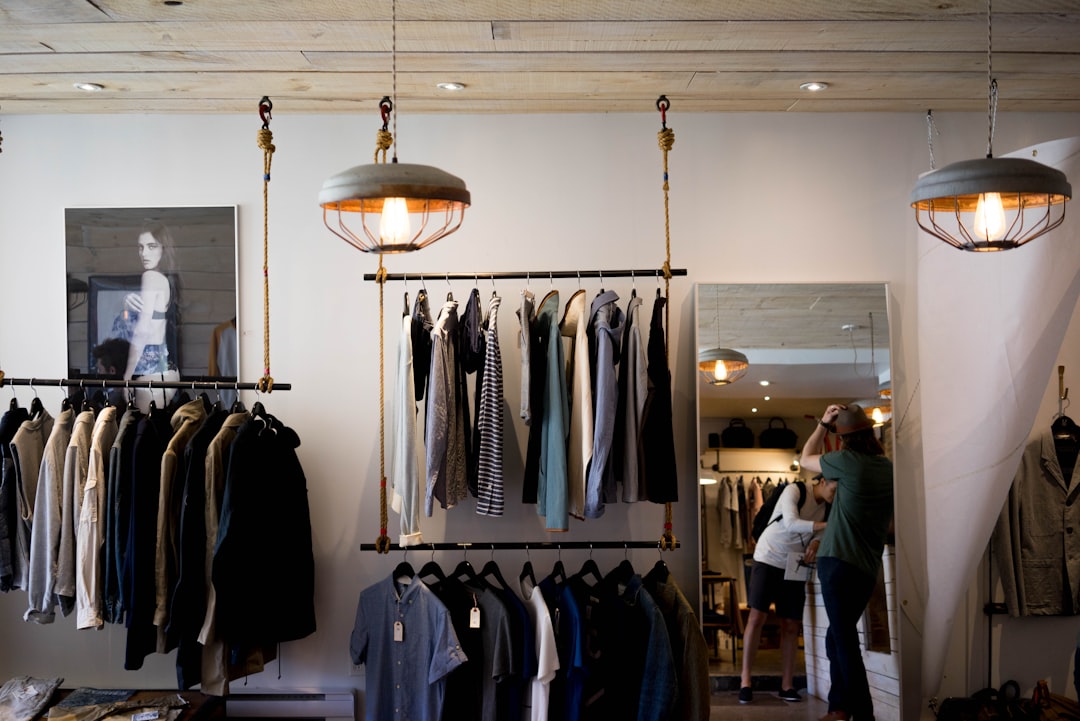
– Anthropologie — a premium women’s lifestyle brand (apparel, home, beauty) skewing to affluent women in their 30s–50s. This is URBN’s highest-margin, most brand-loyal franchise and the epicenter of the current recovery.
– Free People (including FP Movement) — a bohemian women’s apparel brand with a fast-growing activewear extension. FP Movement is arguably URBN’s single best growth asset, riding the structural athleisure tailwind.
– Urban Outfitters — the namesake youth/Gen-Z banner, historically the most volatile brand, which delivered a +9.6% comparable-store sales result in the most recent quarter after years of underperformance.
Wholesale sells Free People and FP Movement product to department stores and specialty retailers; wholesale net sales rose 21% in fiscal 2026, driven by a 22.4% jump in Free People wholesale to specialty customers.
Subscription (Nuuly) is the clothing-rental service launched in 2019. For a monthly fee, subscribers receive a rotating set of garments — from URBN’s own brands and hundreds of third-party labels — with cleaning and reverse logistics handled centrally at a dedicated Pennsylvania fulfillment facility. Nuuly ended fiscal 2026 at roughly 420,000 subscribers, $568 million in sales, and $35 million in profit.
Revenue breakdown by segment (fiscal 2026, year ended January 2026):
Segment Approx. Net Sales Share of Total Growth Driver Retail (Anthro / Free People / Urban) ~$5.28B ~85.7% +5.5% retail comps (record) Subscription (Nuuly) $568M ~9.2% 420K subs, +40% YoY Wholesale ~$0.32B ~5.1% +21% (Free People-led) Total $6.17B 100% +11.1% YoY
(Retail is disclosed at ~85.7% of net sales and Nuuly at $568M; wholesale is the approximate residual. Figures are directional.)
In terms of market position, URBN is a mid-cap specialty retailer with a $6.31 billion market capitalization and 85.6 million shares outstanding. It is not the largest apparel company by revenue — peers such as Ralph Lauren and Abercrombie & Fitch compete in overlapping categories — but its differentiation lies in the combination of owned lifestyle brands plus a scaled rental platform, a mix no direct competitor fully replicates.
On ownership and governance: URBN was co-founded by Richard Hayne, who remains Chairman and CEO and holds a substantial insider stake, aligning management with shareholders. The remainder of the float is dominated by institutional holders (large index and active managers), typical for a company of this size. Founder-level insider ownership is a governance positive — capital allocation has been conservative, favoring buybacks and internal reinvestment over debt-funded expansion.
—
2. Industry Analysis
Urban Outfitters straddles two industries with very different dynamics: specialty apparel retail (mature, cyclical, competitive) and clothing rental / apparel-as-a-service (early-stage, structurally growing). Understanding URBN requires understanding both, because the market currently prices the company almost entirely on the first while the second is where the durable moat is being built.
2-1. Market Size & Growth Trajectory
The global apparel market is enormous but slow-growing. The U.S. apparel and footwear market alone is estimated at roughly $380–400 billion in annual retail sales, expanding at a low-single-digit CAGR broadly in line with nominal consumer spending. Within that, specialty retail — branded, vertically integrated chains like URBN’s banners — is a share-shift game: winners take share from department stores and weaker specialty players rather than riding overall category growth. This is why comparable-store sales, brand heat, and full-price sell-through matter far more than end-market expansion for a company like URBN.
The clothing-rental / apparel subscription market is the opposite: small today but growing fast off a low base. Third-party estimates put the global online clothing-rental market in the low-single-digit billions of dollars today, with projected CAGRs frequently cited in the high-teens to low-20% range through the early 2030s as younger consumers embrace access-over-ownership, sustainability-driven consumption, and wardrobe variety without closet clutter. Nuuly’s own trajectory — from launch in 2019 to $568 million in fiscal 2026 sales — illustrates how quickly a well-run operator can scale within this niche. URBN management has guided Nuuly to mid- to high-20% revenue growth going forward, implying the segment is still early in its S-curve.
Where does each business sit in its cycle? Specialty retail is mature, and URBN’s retail recovery is best understood as a self-help / share-gain story rather than a rising-tide one. Nuuly, by contrast, sits in the acceleration phase — past the money-losing proof-of-concept stage (it is now profitable) but still small enough that a multi-year runway of subscriber additions and revenue compounding remains. The blend is attractive: the mature retail engine funds the growth engine, and the growth engine gives URBN a re-rating catalyst that pure apparel peers lack.
2-2. Structural Growth Drivers
Driver 1 — The access economy and the normalization of clothing rental. A generational shift is underway in how consumers relate to their wardrobes. Younger shoppers increasingly value variety, sustainability, and flexibility over pure ownership, exactly the behavior that subscription apparel monetizes. Nuuly capitalizes on this by offering a rotating wardrobe for a fixed monthly fee, spanning both URBN’s owned brands and hundreds of third-party labels. The strategic elegance is that Nuuly both defends against the secular pressure on apparel ownership and converts it into recurring, high-visibility revenue. As the service scales, unit economics improve — the fixed cost of the reverse-logistics network is spread across more subscribers, and per-garment “turns” (the number of times an item is rented before retirement) rise. This is why Nuuly flipped from a cash drain to $35 million of profit, and why incremental subscribers are increasingly margin-accretive. Over a five-to-ten-year horizon, a subscription base measured in the hundreds of thousands could plausibly reach seven figures, transforming URBN’s revenue quality from cyclical product sales toward recurring subscription income.
Driver 2 — The athleisure and “casualization” supercycle. The multi-year shift toward comfort-oriented, versatile apparel remains one of the most durable trends in consumer goods, and URBN is positioned squarely within it through FP Movement, Free People’s activewear extension. FP Movement targets the premium women’s athleisure customer — a segment where brand and design differentiation command real pricing power and where the addressable market continues to expand as activewear penetrates everyday wardrobes. The wholesale channel amplifies this: Free People wholesale sales to specialty retailers grew 22.4%, meaning URBN monetizes the trend both through its own stores and by distributing to third parties. Unlike the volatile namesake Urban Outfitters brand, athleisure demand is structurally supported by health/wellness culture and hybrid-work casualization, giving this driver a longer and steadier runway than fashion-fad categories.
Driver 3 — Brand-portfolio full-price discipline and margin recovery. The near-tripling of operating income since fiscal 2023 is not an accident; it reflects a deliberate shift toward selling more product at full price and running leaner promotions. Goldman explicitly cited “improved efficiency in the sale of discounted merchandise” and operating leverage as reasons for the upgrade. Anthropologie’s assortment reset — culling underperforming categories and sharpening the brand’s point of view — is expected to “continue to build into the second half of the year.” When a multi-brand retailer improves full-price sell-through, the benefit compounds: higher gross margin, lower markdown risk, cleaner inventory, and stronger free cash flow. This is a short-to-medium-term driver (it plays out over the next 4–8 quarters) that supports the earnings estimates underpinning the valuation.
Distinguishing short-term from long-term: the margin-recovery driver is the near-term earnings catalyst (fiscal 2027–2028), while Nuuly’s subscription compounding and the athleisure supercycle are the long-duration drivers that justify a structurally higher multiple over five-plus years.
2-3. Competitive Landscape
URBN competes on two fronts. In specialty apparel, its peers include Abercrombie & Fitch (ANF), American Eagle Outfitters (AEO), Ralph Lauren (RL), and Gap (GAP). In clothing rental, its primary pure-play competitor is Rent the Runway (RENT).
Company Approx. Revenue (TTM) Operating Margin Approx. Market Cap Primary Moat Urban Outfitters (URBN) ~$6.3B ~9.8% ~$6.3B Multi-brand portfolio + scaled rental Abercrombie & Fitch (ANF) ~$5.0B ~15% ~$4–5B Brand turnaround, Hollister American Eagle (AEO) ~$5.3B ~7% ~$3–4B Aerie intimates brand Ralph Lauren (RL) ~$7.0B ~13% ~$16B+ Premium heritage brand, global Rent the Runway (RENT) ~$0.3B Negative Small-cap First-mover in rental (unprofitable)
(Peer figures are approximate, drawn from public filings and market data; margins and caps fluctuate. They are directional, not precise.)
Two observations stand out. First, URBN’s operating margin (~9.8%) trails brand-led peers like ANF and RL, which is actually part of the bull case: it implies room for margin expansion as the Anthropologie reset and full-price discipline mature, rather than a peak-margin story that can only compress. Second, and more importantly, no apparel peer has a profitable rental platform at Nuuly’s scale. Rent the Runway pioneered the category but has struggled for years to reach sustained profitability; URBN reached it by leveraging its existing brand relationships, merchandising expertise, and balance sheet. URBN is thus better positioned than pure-play retailers (which lack a recurring-revenue growth engine) and better positioned than pure-play rental (which lacks the profitable retail base to fund the model). That dual positioning is the crux of why the stock deserves a re-rating.
—
3. Economic Moat Analysis
Urban Outfitters possesses a moat that is easy to underestimate because it is a combination of moderate advantages rather than one dominant one. The two most durable sources are brand equity across a differentiated portfolio and a scale/switching-cost advantage in the Nuuly rental network.
Moat Type 1: Brand Equity and Portfolio Diversification
Anthropologie and Free People are not commodity apparel labels; they are lifestyle brands with devoted, higher-income customer bases that shop across categories (apparel, home, beauty, accessories) and return at full price. Concrete evidence of pricing power shows up in the numbers: URBN’s gross margin expanded to roughly 36% (from ~30% in the trough fiscal 2023), and retail comparable sales hit a record +5.5% with all brands contributing positively — a sign that demand, not discounting, drove the result. Anthropologie in particular commands the kind of aspirational loyalty that lets URBN avoid the promotional death-spiral that plagues undifferentiated mall retailers.
The portfolio structure is itself a moat feature. Because URBN operates three distinct brands targeting different demographics, a stumble in one banner (historically, the namesake Urban Outfitters brand) can be offset by strength elsewhere (Free People, Anthropologie). This diversification smooths the inherent volatility of fashion and reduces the single-brand risk that sinks focused competitors. The fact that the volatile Urban Outfitters brand just posted +9.6% comps — while the steadier Anthropologie and Free People franchises also grew — demonstrates the portfolio firing on all cylinders, an unusually favorable setup.
Moat Type 2: Nuuly’s Scale and Switching-Cost Advantage
Nuuly’s moat is the more interesting and less appreciated one. A clothing-rental service at scale requires a purpose-built reverse-logistics engine: receiving, inspecting, cleaning, repairing, repackaging, and re-shipping hundreds of thousands of garments per cycle with tight turnaround. URBN operates a dedicated fulfillment and cleaning facility built for exactly this. Reaching ~420,000 subscribers and $568 million in sales gives Nuuly scale economies — the fixed cost of that infrastructure is amortized across a large base, which is precisely why the segment turned a $35 million profit while sub-scale rivals continue to lose money.
There are also switching costs and data advantages. A subscriber who has built up style preferences, sizing history, and a curated queue within Nuuly faces friction in recreating that experience elsewhere. Every rental cycle feeds URBN proprietary data on fit, demand, and garment durability — data that improves assortment decisions both for Nuuly and, potentially, for the retail brands. This creates a compounding advantage: more subscribers → more data and better turns → better economics → ability to reinvest in selection and service → more subscribers. Rent the Runway’s decade-long struggle to reach profitability is the clearest evidence that this network is genuinely hard to build.
Moat Durability Assessment
Will these moats hold over five to ten years? The honest answer is partially, with real caveats. The brand-equity moat is durable but not permanent — fashion is inherently cyclical, and even beloved brands can lose relevance if merchandising falters. The mitigant is portfolio diversification and the demonstrated ability to reset a brand (Anthropologie) back to growth, which suggests management has the merchandising competence to defend the moat. The Nuuly scale moat is arguably more durable, because logistics networks and subscriber bases compound over time and are capital-and-operationally intensive to replicate; the main threat is a deep-pocketed entrant (a large retailer or e-commerce platform) deciding to subsidize a competing service. Even then, URBN’s head start, profitability, and brand relationships provide a meaningful buffer. Net assessment: a moderate, widening moat — not a wide-moat compounder like a payments network, but considerably more defensible than the market’s “mall apparel retailer” framing implies.
—
4. Financial Analysis
Urban Outfitters’ financials tell a clear story: a trough in fiscal 2023, followed by three consecutive years of accelerating profitability that culminated in record results and, most recently, a seventh straight quarter of record sales and income.
Five-year income statement (fiscal years ended January):
Fiscal Year Revenue Gross Profit Operating Income Net Income Diluted EPS FY2022 (Jan ’22) $4,549M $1,494M $409M $311M $3.13 FY2023 (Jan ’23) $4,795M $1,427M $227M $160M $1.70 FY2024 (Jan ’24) $5,153M $1,715M $370M $288M $3.05 FY2025 (Jan ’25) $5,551M $1,927M $474M $402M $4.26 FY2026 (Jan ’26) $6,165M $2,218M $606M $465M $5.06
(Source: company filings via stockanalysis.com. Trailing-twelve-month figures through the most recent quarter run modestly higher — ~$6.32B revenue, ~$472M net income, ~$5.21 EPS — reflecting continued growth.)
The story behind each year matters. FY2022 was a post-pandemic reopening rebound. FY2023 was the trough — revenue grew but operating income collapsed to $227 million as the industry drowned in excess inventory and heavy markdowns; this is the depressed base off which the recovery is measured. FY2024 began the turn as inventory normalized. FY2025 saw operating income more than double the trough as Nuuly scaled and full-price discipline took hold. FY2026 delivered records across the board: revenue up 11.1% to $6.17 billion, operating income of $606 million, and net income of $465 million — roughly 2.9x the trough three years earlier.
Key operating metrics specific to the business reinforce the trend. Retail comparable sales reached a record +5.5% with all three brands positive; the namesake Urban Outfitters brand swung to +9.6% comps after years of weakness; Nuuly scaled to ~420,000 subscribers (+40%), $568 million in sales, and $35 million in profit; and wholesale grew 21%. In the most recent quarter (Q1 fiscal 2027, reported May 2026), net sales grew 11% to $1.5 billion, EPS rose 12% to $1.30, Nuuly revenue grew 35% on a 33% rise in average active subscribers (over 110,000 added year over year), Free People Group revenue rose 17%, and wholesale climbed 25%.
Balance sheet and cash flow are a genuine strength and a key reason the risk profile is lower than a typical retailer’s. URBN carries low leverage — Finviz reports debt-to-equity of roughly 0.3–0.5, much of which is capitalized operating leases rather than financial debt — with a healthy cash position and no meaningful net debt. Return on equity of 18.7% and return on assets of 10.2% indicate efficient capital deployment. The main call on cash going forward is growth capex — management guided to roughly $475 million for new stores, Nuuly capacity, and supply-chain investment — which the company can comfortably self-fund from operating cash flow while still returning capital via buybacks.
This is not a pre-profit or margin-stressed story. URBN is solidly profitable with an expanding margin trajectory: the path from here is continued operating leverage as Anthropologie’s reset matures and Nuuly’s fixed-cost base is spread across a growing subscriber count. That combination — mid-single to low-double-digit revenue growth plus margin expansion — is what drives the consensus EPS jump from $5.21 (trailing) to $6.75 (next fiscal year).
—
5. Valuation
The valuation case for Urban Outfitters is straightforward: a growing, margin-expanding business trading at a below-market multiple. I anchor the primary valuation on forward P/E, appropriate for a profitable retailer with clear earnings visibility, and cross-check against the analyst consensus.
The inputs (from authoritative real-time data):
– Current price: $73.74
– Trailing EPS: $5.21 → Trailing P/E: 14.15x (self-check: 73.74 ÷ 5.21 = 14.15 ✓)
– Forward EPS (next fiscal year consensus): $6.75 → Forward P/E: 10.92x (self-check: 73.74 ÷ 6.75 = 10.92 ✓)
– Consensus analyst target: $87.91 (implied ~19.2% upside)
– P/B: 2.42x | P/S: ~1.0x
Step-by-step forward-P/E valuation. The central question is what multiple URBN deserves on its $6.75 of forward EPS. A specialty retailer growing revenue at double digits with a profitable, fast-growing subscription arm and mid-teens ROE arguably warrants a market-to-slight-premium multiple. Given lingering fashion-cycle risk, I apply a conservative base-case multiple of 13x — still below the S&P 500’s typical forward multiple and well below where higher-margin peers like Abercrombie or Ralph Lauren trade at their better moments:
– Base case: 13x × $6.75 = ~$88 → +19% upside (essentially matching the $87.91 consensus)
– Bull case: 15x × $6.75 = ~$101 → +37% upside (multiple re-rates as Nuuly’s recurring revenue is recognized and margin expansion continues; exceeds Goldman’s $93)
– Bear case: 9x × $6.75 = ~$61 → -17% downside (fashion cycle rolls over, comps decelerate, multiple compresses toward trough levels)
Scenario summary:
Scenario Fwd Multiple Implied Target vs. $73.74 Bull 15x ~$101 +37% Base 13x ~$88 +19% Bear 9x ~$61 -17%
The risk/reward is favorable: roughly 19% base-case upside and 37% in the bull case against 17% downside in a genuine cyclical stumble. Note also the asymmetry from the low starting multiple — at 10.9x forward earnings, much of the “fashion retailer discount” is already in the price, cushioning the downside.
Comparison to analyst consensus. Eleven analysts covering URBN carry a consensus “Buy” rating and an average target of roughly $87 (Finviz reports $87.91), with Goldman at the high end at $93 following its July 20 upgrade. My base case of ~$88 agrees with consensus, and I find the bull case credible because the Street’s estimates may still under-appreciate Nuuly’s margin trajectory and the durability of the Anthropologie recovery. One point of discipline: the stock has rallied toward its 52-week high ($84.35 high vs. $73.74 current), so entry discipline matters (see §7). But on fundamentals, the gap between a 10.9x forward multiple and a double-digit-growth, margin-expanding, moat-widening business is the core of the opportunity.
—
6. Risk Factors
No thesis is complete without the conditions that would break it. Three risks matter most for Urban Outfitters.
Risk 1 — Fashion and trend cyclicality (brand relevance risk). URBN’s core retail business lives or dies on merchandising and brand heat, which are inherently fickle. The clearest cautionary evidence is URBN’s own history: the namesake Urban Outfitters brand endured years of comparable-sales underperformance before its recent +9.6% recovery, and fiscal 2023 saw operating income collapse to roughly a third of its prior-year level as demand and inventory misaligned. A future season where Anthropologie’s assortment reset stalls, or where Free People loses its fashion edge, could quickly reverse the full-price-selling gains that underpin the margin story. Because so much of the bull case rests on continued margin expansion, any slippage in comps or a return to heavy promotional activity would compress both earnings and the multiple simultaneously — the classic double-hit that makes apparel retail volatile. Portfolio diversification mitigates but cannot eliminate this risk; fashion is not a business where past success guarantees future relevance.
Risk 2 — Macro consumer softness, tariffs, and input-cost inflation. URBN sells discretionary goods to a customer whose spending is sensitive to the economic cycle. A recession, a weakening labor market, or a pullback in middle- and upper-middle-income discretionary budgets would pressure comps across all three brands at once. Compounding this, management has explicitly flagged planning for tariffs and elevated freight costs, both of which threaten gross margin in a business where the recent margin expansion is central to the valuation. Apparel supply chains are globally sourced and exposed to trade-policy shifts; a meaningful tariff escalation could force URBN to either absorb costs (hurting margin) or raise prices (risking demand). With roughly $475 million of planned capex, the company is also investing ahead of growth, which magnifies the earnings impact if demand disappoints. This risk is largely exogenous and outside management’s control, making it the hardest to underwrite.
Risk 3 — Nuuly execution, capital intensity, and competition. The subscription business is the crown jewel of the thesis, but it is also the most operationally complex and capital-hungry part of URBN. Scaling a rental-logistics network requires ongoing investment in inventory, facilities, and technology, and the economics depend on maintaining high garment “turns” and low subscriber churn. If subscriber growth decelerates faster than the guided mid-to-high-20% range — whether from market saturation, churn, or a well-funded competitor subsidizing a rival service — the segment’s profit contribution and, more importantly, its re-rating potential would diminish. There is also inventory risk: rented garments depreciate and must eventually be sold or retired, and a misjudgment of demand could leave URBN holding excess rental stock. While Nuuly’s current profitability is reassuring, investors are partly paying for future subscription growth, and any stumble in that growth curve would remove a key pillar of the valuation argument.
—
7. Conclusion & Exit Plan
Investment rating: Buy. Urban Outfitters offers a rare combination in specialty retail — genuine, broad-based earnings momentum (seven straight record quarters), a differentiated and profitable subscription growth engine (Nuuly), a low-leverage balance sheet, and a valuation (10.9x forward earnings) that still reflects an outdated “struggling mall retailer” narrative. The base-case fair value of roughly $88 implies ~19% upside and aligns with a Street consensus that is coalescing around the turnaround, with credible bull-case upside toward $100+ if Nuuly’s margin trajectory and the Anthropologie recovery continue to compound.
Entry price range with rationale. The stock trades at $73.74, below its 52-week high of $84.35, which offers a reasonable entry. Given the recent rally and residual fashion-cycle risk, I would treat $68–$74 as an attractive accumulation zone (roughly 10–11x forward earnings), adding more aggressively on any pullback toward the low end. Chasing well above $80 would erode the margin of safety, so patience on entry is warranted.
Exit conditions:
– Target achieved: Trim the position as the stock approaches the base-case target of ~$88; take further profits toward the bull-case ~$101 (approximately 15x forward earnings), where the risk/reward becomes more balanced.
– Fundamental break: Sell if the core thesis breaks — specifically, if retail comparable sales turn negative for two consecutive quarters, if gross margin compresses back toward the low-30s (signaling a return to heavy discounting), or if Nuuly subscriber growth stalls materially below the mid-20% guided range. Any of these would invalidate the margin-expansion and subscription-growth pillars.
– Time-based: Reassess the full thesis in 6 months, or immediately following the next two quarterly earnings reports, whichever comes first, to confirm the recovery and Nuuly trajectory remain intact.
Summary table:
Item Detail Company Urban Outfitters, Inc. (URBN) Current Price $73.74 Target Price $88 (base) / $101 (bull) / $61 (bear) Upside +19% (base) Rating Buy Key Thesis Profit inflection + profitable Nuuly subscription engine, unrecognized at 10.9x forward earnings Main Risk Fashion-cycle reversal / consumer softness compressing both earnings and multiple
—
Disclaimer:
This content is general investment information provided to an indefinite/unspecified audience by a quasi-investment advisory business registered under Korea’s Financial Investment Services and Capital Markets Act, and is not personalized 1:1 investment advice tailored to any individual investor. This analysis is for informational purposes only and is not a solicitation to invest. All investment decisions and their consequences rest solely with the investor. The estimates and assumptions in this report are as of the writing date (2026-07-22) and may not materialize depending on market conditions and geopolitical variables. Financial data used reflects sources such as company filings and analyst consensus, and the scenarios and price targets represent the author’s conservative assessment. All investments carry the risk of principal loss, and past performance or analytical track record does not guarantee future results. As of the writing date, the author does not hold a position in this stock. The author’s holdings and positions may change without prior notice depending on market conditions.
함께 읽으면 좋은 글
- Spotify Margin Expansion Analysis 2026: How Pricing Power and Operating Leverage Point to a $597 Target (22% Upside)
- Philip Morris International (PM) Smoke-Free Inflection: Why IQOS and ZYN Driving Over 40% of Revenue Support a $206 Price Target Into Q2 Earnings
- Biogen Diranersen Phase 2 CELIA Data: Why a 26% Cognitive Slowing and 12x Forward P/E Signal a Re-Rating
- Berkshire Hathaway (BRK.B) Fair Value Reanalysis: Why a $397B Cash Pile and 1.46x Book Value Support a $532 Target — July 2026
- BlackRock Private Markets Pivot Analysis: Why a Record $15.3 Trillion AUM and a 45.9% Margin Point to 18% Upside