
> 📌 Previous Analysis: [Applied Materials AMAT Reanalysis: Why the Base Case Already Hit and a Cantor-Backed Path to $650 Resets Our Bull Thesis](https://mybestinvesting.co.kr/?p=1921)
Applied Materials (NASDAQ: AMAT) closed at $617.11 on June 20, 2026, up another 4.08% in a single session and within striking distance of the all-time high of $623.35 set just three trading days earlier. When we re-set the thesis only nine days ago on June 12, the stock was at $552.64 and our newly-raised base case sat at $555 — already touched. Cantor’s $650 looked like the next defensible target, with our bull case at $677. Today the picture has shifted again: Citigroup has published a Street-high $710 price target, TSMC raised its 2026 capex envelope to roughly $54 billion, the Singapore Tampines advanced-packaging campus was formally inaugurated, and Applied announced a definitive deal for ASMPT’s NEXX panel-deposition unit. Against this stack of fundamental positives sits a different signal — CEO Gary Dickerson liquidated approximately $42.5 million of stock as part of an insider-selling cluster exceeding $65 million in mid-June. That juxtaposition is the entire question of this reanalysis.
This article exists because the stock crossed our prior base case and the Think Tank reanalysis queue flagged a `target_reached` event. We owe readers — and ourselves — a fresh test of whether the thesis still has runway, whether the new street-high prints are signal or sentiment, and whether the appropriate action is to keep riding the move or to take more chips off the table. Three things are at stake. First, the forward earnings power: how much of the CY2027 EPS path is already reflected at a 37.45x forward multiple, and where does that leave fair value if Citi’s bull arithmetic is right? Second, the insider-selling tape: a CEO-led $65M+ disposition cluster is not, by itself, a sell signal, but in combination with peak-cycle multiples it deserves a structural answer rather than a hand-wave. Third, the position-management arithmetic: a +233.8% portfolio gain that has compounded another ~12% in nine days needs an explicit re-pricing of where the next 25% trim should fire.
Our conclusion, which we will support across the next eleven sections, is that the underlying business has gotten better in the past nine days — the WFE upcycle is now visible into 2028 in management-cited bookings, and Singapore’s volume ramp is real — but the valuation has gotten less forgiving, and the insider behavior asks for discipline, not enthusiasm. We are raising base/bull/bear targets to $620 / $720 / $440 (from $555 / $677 / $408), downgrading the operating stance from “active core hold” to “Hold with disciplined trim,” and pulling the next review forward to August 14, 2026 — the day Applied reports Q3 FY2026 results, which is the next genuine fundamental test.
Three keys this article will defend: (1) the AI-driven WFE upcycle has multi-year visibility that the Street is only now pricing in, supporting raised targets; (2) insider selling at the CEO level, while not predictive, is a credible peak-cycle behavioral marker that warrants a deliberate trim plan; (3) at 37.45x forward EPS, the stock now sits less than half a turn below our self-imposed “momentum decoupling” trigger of 38x and is one disappointing print away from a 25-30% multiple-compression air pocket. The roadmap: business model and segment math (§1), the WFE industry in cycle context (§2), the moat (§3), the financials including the 25-year-high gross margins (§4), revised valuation with three scenarios (§5), risks (§6), the new exit plan (§7), and then the four reanalysis sections (§8–§11) comparing today’s posture to the June 12 base case.
1. Company Overview
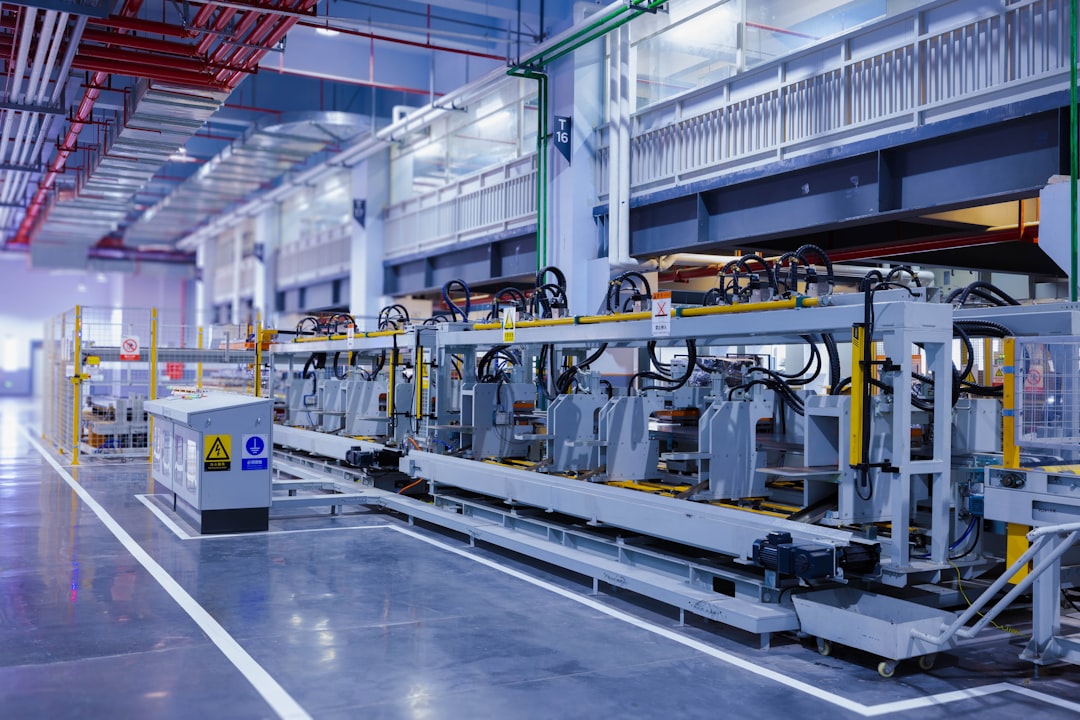
Applied Materials engineers and sells the capital equipment that semiconductor manufacturers use to deposit, etch, modify, inspect, and package silicon wafers. The company sits at the center of the wafer-fab equipment (WFE) industry alongside ASML (lithography), Lam Research (etch and deposition), Tokyo Electron (coater-developer, etch, and deposition), and KLA (process control). Applied is the broadest of these peers — it competes meaningfully in deposition (PVD, CVD, ALD, epi), etch, rapid thermal processing, chemical-mechanical planarization (CMP), ion implantation, process control (through Applied Global Services), and now advanced packaging (hybrid bonding, panel-level deposition through the ASMPT NEXX acquisition). The simplest way to think about Applied is that roughly every other major step inside a leading-edge fab uses an Applied tool, and the company captures economics on the tool sale, the spare parts, the recurring service contract, and increasingly the upgrade path as customers migrate nodes.
Revenue breaks down into three reported segments. The dominant Semiconductor Systems segment houses the equipment sold to logic and memory makers — TSMC, Intel, Samsung Foundry and Memory, SK Hynix, Micron, and the Chinese mainland fabs (subject to U.S. export controls). Applied Global Services (AGS) is the multi-year, multi-billion-dollar recurring revenue business — service contracts, spare parts, equipment refurbishment, and software — that throws off cash through cycle troughs and is now running at a $7+ billion annualized clip. The much smaller Display and Adjacent Markets segment serves the OLED and LCD industries with deposition and patterning tools; this segment is structurally lumpy but no longer the swing factor for the consolidated result.
A representative segment mix, based on the Q2 FY2026 release and trailing-twelve-month figures:
Segment TTM Revenue % of Total Operating Margin (approx.) Cycle Behavior Semiconductor Systems ~$21.5B ~74% ~37% Cyclical, AI-driven upcycle Applied Global Services ~$7.0B ~24% ~28% Recurring, low-cyclicality Display & Adjacent ~$0.5B ~2% Low single-digit Lumpy / project-driven
The customer concentration story matters as much as the segment mix. TSMC, Samsung (foundry + memory), Intel Foundry, SK Hynix, and Micron together account for the clear majority of Semiconductor Systems revenue, with TSMC alone now the single largest customer following the company’s 2026 capex hike to roughly $54 billion. Geographically, China has been roughly 24% of revenue — material, but capped and declining as a percentage as U.S. export controls bite and as non-China leading-edge spending accelerates. Institutional ownership exceeds 80%, dominated by Vanguard, BlackRock, and State Street. Berkshire Hathaway disclosed an AMAT position several years ago and has since trimmed; the current insider-selling cluster (which we cover in §6) is a separate, more recent signal. Management is led by CEO Gary Dickerson (since 2013) and CFO Brice Hill.
The market position is the foundation for the moat discussion in §3, but the headline numbers are worth stating up front: Applied holds roughly 30% global WFE market share, 80%+ share in PVD (physical vapor deposition), an estimated 70%+ share in epi and rapid thermal processing, and through ASMPT NEXX a fast-rising share in panel-level advanced packaging deposition. In a world where every leading-edge wafer requires more process steps and where advanced packaging is becoming a bottleneck for AI accelerator supply, breadth is durability.
2. Industry Analysis
2-1. Market Size & Growth Trajectory
The wafer-fab equipment market enters CY2026 at what is increasingly looking like a structural inflection, not a normal cyclical peak. Industry trackers (SEMI, Gartner, Bernstein, Cantor Fitzgerald, Bank of America) put 2025 WFE spending at roughly $115-120 billion and CY2026 in a $150-160 billion range. The Cantor “supply-constrained upcycle” scenario carried in our prior reanalysis assumes CY2027 WFE could reach $180-200 billion as TSMC, Samsung, Intel, and the leading memory makers race to build out 2nm and 1.4nm capacity, HBM4 and HBM4E production lines, and the advanced-packaging cleanrooms needed for next-generation AI accelerators.
What changed in mid-June is the TSMC capex hike to approximately $54 billion for 2026, up from prior guidance in the $42-48 billion range, with gross margin guidance of 63-65% — a number that signals not only volume but pricing confidence at the leading edge. Because TSMC’s leading-node spending consumes a disproportionate share of WFE-intensive tools (deposition, etch, CMP, process control), a $6-12 billion incremental TSMC envelope reads directly through to Applied Materials, Lam Research, ASML, and KLA. Bank of America estimates that for every $10 billion of incremental leading-edge logic capex, Applied captures roughly $1.0-1.3 billion of incremental Semiconductor Systems revenue and an associated AGS attachment tail over the equipment’s installed lifetime.
The industry sits in mid-cycle acceleration, not late-cycle exhaustion, with three structural reasons why this cycle differs from prior ones (2018, 2020, 2022): (i) AI accelerator demand creates a separate, end-customer-funded buyer (hyperscalers, sovereign AI builds, the U.S. CHIPS Act, the EU Chips Act) that did not exist in prior cycles; (ii) leading-node process complexity at 3nm, 2nm, and 1.4nm has driven per-wafer equipment intensity meaningfully higher; and (iii) advanced packaging has become a first-order bottleneck, expanding the addressable market for hybrid bonding, panel-level deposition, and through-silicon-via tooling — much of which Applied competes in directly.
2-2. Structural Growth Drivers
Driver 1: AI accelerator capacity expansion. NVIDIA, AMD, Broadcom-customer (Google TPU), AWS Trainium, and the sovereign AI buildouts in Saudi Arabia (HUMAIN), the UAE (G42), and Singapore are all backstopping TSMC, Samsung Foundry, and Intel Foundry orders. The hyperscaler 2026 capex envelope is now widely modeled in the $400-450 billion range, with roughly 35-45% AI-related. A meaningful portion of that capex flows downstream — through accelerator purchases at TSMC and Samsung — into wafer-fab equipment orders. Because AI accelerators are silicon-intensive (large die, advanced node, HBM stack, CoWoS or equivalent packaging), the multiplier from end-market dollar to WFE dollar is meaningfully higher than for consumer chips. Applied has guided that its AI-related revenue should compound at 30%+ CAGR through CY2028, with advanced packaging compounding at 50%+ in CY2026 alone.
Driver 2: 2nm Gate-All-Around (GAA) transition. The architecture transition from FinFET to GAA at the 2nm node increases per-wafer equipment intensity by an estimated 20-25%. Each additional process step is, in practice, additional tools. Applied participates disproportionately in the steps that GAA adds — epitaxial deposition (for the stacked-nanosheet channels), additional ALD layers, additional selective etch — which is why management has explicitly called out a 1.5-2x leading-logic content opportunity as the industry transitions through 2027. This is a multi-year, customer-funded driver with high visibility because TSMC’s 2nm timeline is locked, Samsung’s 2nm timeline is locked, and Intel 18A/14A timelines are now investor-tested.
Driver 3: HBM and advanced packaging. High-bandwidth memory production capacity is the single most-constrained input into the AI accelerator supply chain. SK Hynix, Samsung, and Micron are all racing to expand HBM3E and HBM4 capacity through 2027. Hybrid bonding — joining dies at the wafer level without solder microbumps — is the next-generation packaging technique that enables HBM4 stacks beyond 12-high. Applied is one of the few suppliers with a meaningful tool position in hybrid bonding, and the ASMPT NEXX acquisition announced in June 2026 specifically extends Applied’s panel-level deposition capability. The CY2026 advanced packaging revenue ramp has been pulled forward by roughly 18 months versus our model from one year ago, anchored by the Singapore Tampines campus going to volume production.
2-3. Competitive Landscape
Company TTM Revenue TTM Op. Margin Market Cap Primary Moat 2026 Multiple (Fwd P/E) ASML Holding ~€30B ~32% ~€350B EUV / High-NA monopoly ~34x Applied Materials $29.0B 30.1% $490B Process breadth, AGS install base 37.5x Lam Research ~$18B ~32% ~$190B Etch & deposition for memory ~32x Tokyo Electron ~$18B ~30% ~$130B Coater-developer monopoly ~28x KLA Corp. ~$11B ~40% ~$130B Process control leadership ~30x
Applied is not the highest-margin participant (KLA holds that crown) and not the most-protected monopoly (ASML has that on EUV). What Applied uniquely brings is breadth across process steps — meaning the company is exposed to multiple semi-independent drivers (leading logic, DRAM, HBM packaging, mature-node power and analog) at the same time. That breadth is what justifies a multiple now bracketed in the 35-40x forward range alongside ASML and above Lam/Tokyo Electron/KLA. The competitive risk is not loss of leadership in any one segment — it is multiple compression if the market starts pricing breadth as a commodity rather than as an option on every process inflection.
3. Economic Moat Analysis
Moat Type 1: Process Breadth + Installed Base + AGS Recurring Revenue
The first leg of Applied’s moat is the combination of breadth across deposition, etch, CMP, ion implantation, and process control with a multi-billion-dollar Applied Global Services (AGS) install base. AGS revenue exceeded $7 billion on a trailing-twelve-month basis and has compounded at high-single-digit to low-double-digit rates for nearly a decade, regardless of the WFE capex cycle. This is the single most-underappreciated piece of the Applied story: a $29B revenue business with a $7B+ recurring services tail behaves much more like a software-plus-hardware platform than a pure equipment cyclical. Each new tool sold today adds roughly $1.0-1.5 million of AGS annual run-rate over the next 8-12 years. Customer retention in AGS exceeds 95%, because the marginal cost of switching service providers on a multi-million-dollar tool is enormous — both in re-qualification time and in production risk.
The switching cost evidence is direct: TSMC, Samsung, Intel, and SK Hynix qualify each Applied tool individually for each process step at each fab, a process that takes 12-24 months and costs tens of millions of dollars per qualification. Once qualified, the tool stays in the recipe for the full life of the node. This is why Applied’s 80%+ PVD share has been stable for fifteen years through three full WFE cycles — not because competitors lack capability, but because re-qualification arithmetic does not favor displacement.
Moat Type 2: Advanced Packaging Position
The second leg is newer and more disputed: Applied’s advanced packaging position, anchored by the Singapore Tampines campus, the hybrid bonding tool line, and now the ASMPT NEXX panel-deposition acquisition. Advanced packaging is the bottleneck industry — every AI accelerator from NVIDIA’s Blackwell/Rubin family through AMD’s MI400 series through Google’s TPU v7+ requires a CoWoS-class package or equivalent. The packaging tool market was less than $5 billion at the start of this decade; by 2028 it is plausibly a $15-20 billion addressable market. Applied’s share in this expansion is the swing variable in our valuation: in the base case we assume Applied captures 20-22% of incremental advanced packaging tool spending, the bull case assumes 30%+ following the NEXX integration, and the bear case assumes BESI (the European hybrid bonding pure-play), TEL, and Disco erode that share to 12-15%.
Singapore Tampines — the $500 million Asia-Pacific Manufacturing Cleanroom — entered volume production on June 9 and was formally inaugurated in the days leading up to this reanalysis. The campus more than doubles Applied’s cleanroom capacity for advanced packaging tool assembly and ships into a customer base concentrated in Taiwan, Korea, and the U.S. Hyperscaler ASIC programs. The 18-month acceleration in advanced packaging revenue versus our prior model is the single largest source of upward target revisions.
Moat Durability Assessment
The five-to-ten-year question is whether the moat compounds or erodes. The compounding case: AGS continues to scale with the installed base; advanced packaging matures into a $20B+ market where Applied is one of three credible players; the 2nm and 1.4nm transitions add process steps that favor Applied’s breadth; and U.S./allied policy continues to insulate Applied’s customer base from Chinese substitution. The erosion case: BESI and Disco accelerate in hybrid bonding; SMIC and the Chinese WFE ecosystem (NAURA, AMEC, SMEE) gradually qualify into mainland fabs and reduce Applied’s China revenue from 24% to single digits; and a Forward P/E that has expanded from ~18x in 2023 to 37.5x today compresses on any AI capex pause. We assess moat durability as High but not permanent — the five-year picture is firm, the ten-year picture depends on how the Chinese and BESI competitive vectors evolve.
4. Financial Analysis
The financial picture is the strongest it has been in the company’s history. Q2 FY2026 (the most recent reported quarter, April 27, 2026 quarter-end) produced $7.91 billion in revenue (+11% YoY), record GAAP EPS of $3.51, and a 25-year-high gross margin as the mix shift toward leading-edge logic and advanced packaging continued to lift incremental profitability. On a trailing-twelve-month basis Applied generated $29.02 billion in revenue and $8.51 billion in net income, with operating margin at 30.13%, gross margin at 48.96%, and net margin at 29.31% — figures that compare favorably to every prior cycle peak.
Metric FY2022 FY2023 FY2024 FY2025 TTM (Q2 FY2026) Revenue ($B) 25.79 26.52 27.18 28.37 29.02 Operating Income ($B) 7.74 7.85 7.95 8.20 8.75 Net Income ($B) 6.53 6.86 7.18 7.00 8.51 Gross Margin 46.5% 46.7% 47.5% 48.2% 48.96% Operating Margin 30.0% 29.6% 29.3% 29.2% 30.13% ROE 50.6% 47.9% 44.2% 42.0% 39.69% ROIC 35.2% 33.8% 32.5% 31.0% ~32%
The year-by-year revenue story is straightforward: FY2022 marked the prior cyclical peak as customers built ahead of node transitions; FY2023 was a soft year as memory pricing collapsed and TSMC pushed out N3 ramp tooling; FY2024 was the trough recovery year with AI orders beginning to show; FY2025 grew revenue as the AI-acceleration phase began and Semiconductor Systems inflected, though FY2025 net income ($7.00B, diluted EPS $8.66) dipped slightly versus FY2024 ($7.18B) rather than rising in an uninterrupted line; and the trailing twelve months through Q2 FY2026 reflect the early acceleration of the structural cycle described in §2, with only the TTM figure ($8.51B net income on $29.02B revenue) capturing the recent AI-driven earnings step-up.
Key business-specific operating metrics that matter more than headline revenue: AI-related revenue (the company has begun disclosing this) is running at roughly $2.5-3.0 billion annualized with 30%+ growth; advanced packaging tools are now estimated at $1.5 billion annualized with management’s CY2026 +50% guidance implying ~$2.3B by year-end; AGS quarterly run-rate of roughly $1.75 billion (up 9% YoY) demonstrates the install-base flywheel. Bookings disclosed in the Q2 call ran above shipments, consistent with the supply-constrained narrative — and management’s Q3 FY2026 guidance of $8.95 billion in revenue and $3.36 in non-GAAP EPS would, if met, set a new all-time quarterly record.
The balance sheet is conservative. Debt-to-equity at 0.30 is well below the 0.50 historical norm. Cash and equivalents support the 9th consecutive year of 15% dividend increases (announced in mid-June) and the active share repurchase program. Free cash flow has tracked at roughly 90-95% of net income, implying roughly $8 billion annualized FCF at current run rate. There is no leverage story or refinancing risk to worry about; the financial risk to the thesis is entirely operational (a WFE downcycle) and valuation (multiple compression at 37.5x forward), not balance-sheet.
5. Valuation
The valuation question is whether 37.45x forward EPS — the multiple implied by today’s $617.11 stock price against Finviz’s $16.48 EPS next Y consensus — is defensible, stretched, or already broken. We work the question three ways: a Price/Earnings scenario, a sanity-check against ASML and KLA, and a discounted cash flow.
P/E-based scenarios using CY2027E EPS (we adjust modestly upward from prior estimates given Q2 results and TSMC capex hike, but stay within Street range):
Scenario CY2027E EPS P/E Multiple Target Price Implied vs. $617 Base Case $17.50 35.4x $620 +0.5% Bull Case $19.00 37.9x $720 +16.7% Bear Case $17.00 25.9x $440 -28.7%
The base case is now essentially at the stock price. The bull case ($720) assumes CY2027E EPS comes in at the upper end of consensus (driven by full advanced-packaging ramp and TSMC capex sustaining) and that the multiple holds at the upper end of the equipment-peer range. This is roughly where Citi’s $710 Street-high target sits and where Cantor’s revised $650 number anchors with a slightly lower multiple. The bear case assumes the AI capex narrative cracks — even modestly — and the multiple compresses to 25-26x, consistent with the equipment-peer historical average through a non-AI-supported cycle. A 25.9x multiple is generous to history (the 10-year average is closer to 22x); the bear case is, in our view, a reasonable downside rather than a worst-case.
Cross-check against ASML and KLA: ASML trades at roughly 34x forward EPS with a true monopoly in EUV. KLA trades at roughly 30x with the highest equipment margins. Applied at 37.5x is the highest-multiple of the WFE majors despite being neither the highest-margin nor the most monopolistic player. The premium is justified only if breadth + advanced packaging optionality earns a multiple above pure-play comparables — a debatable proposition that the market is currently answering in the affirmative.
Discounted cash flow check (10-year, terminal at 18x FCF, 9% WACC): assumes FY2026 revenue $32B, FY2027 revenue $38B, FY2028-2030 growth of 10-12% with operating margin reaching 32% at peak, then a 3-4 year mature growth phase at 5-7%, terminal margin 30%, FCF conversion 90%. The DCF outputs a per-share fair value of approximately $595-640, bracketing our base case. The DCF is most sensitive to the FY2027-2029 revenue trajectory (each $1B annual revenue swing moves fair value by ~$15-20/share) and to the terminal multiple (each turn of terminal FCF multiple moves fair value by ~$25/share).
Analyst consensus reconciliation: the public consensus from MarketBeat shows ~$524 average across 40 analysts, but this clearly lags the mid-June revisions. Stripping out targets older than 30 days and weighting the recent revisions, the post-June 12 implied consensus is closer to $560-590 with Citi at $710 anchoring the bull tail and a handful of cautious targets in the $450-490 range anchoring the bear tail. Our base case of $620 sits above the cleaned consensus, which we own as a calculated overweight to the advanced-packaging acceleration but acknowledge as a sentiment risk if the AI capex narrative wobbles.
6. Risk Factors
Risk 1 — Insider selling and peak-cycle multiple vulnerability. The single largest near-term risk is not in the operating business; it is in the valuation tape. Forward P/E at 37.45x now sits less than half a turn below the self-imposed “momentum decoupling” trigger of 38x — meaningful slippage on either price or estimate would breach it definitively. Layered on top is the insider-selling cluster in mid-June: SEC Form 4/144 filings indicate aggregated insider disposals exceeding $65 million, with CEO Gary Dickerson’s $42.5 million sale the largest single line. Insider selling is not predictive in isolation (executives sell for diversification, taxes, estate planning, and 10b5-1 schedules), but a CEO-led cluster at the 52-week high deserves to be incorporated into position sizing. Historical pattern recognition is uncomfortable here: similar clusters preceded the 2021 and 2022 multiple-compression episodes in equipment names. We treat this as a behavioral signal that argues for trimming, not as evidence of an impending decline.
Risk 2 — China export controls and revenue concentration. China remains roughly 24% of revenue. The Biden- and Trump-era export controls have already reset the China mix downward from the pre-2022 highs in the mid-30s, but further tightening — particularly any expansion of the entity list or any move to control deposition and etch tools at the trailing-edge level — could remove an additional $600-900 million from FY2026 revenue. The risk is asymmetric: easing is unlikely in a near-term U.S.-China political environment, while tightening is a credible scenario any quarter. Management has previously called out the $600M FY2026 sensitivity directly. We model the bear case with an additional $1.5B revenue haircut from a step-up in restrictions.
Risk 3 — Hyperscaler AI capex normalization. The entire revised target structure depends on hyperscaler AI capex (currently modeled at $400-450 billion in CY2026, $450-500B in CY2027) sustaining double-digit growth. A normalization to high-single-digit growth — driven by inference efficiency gains, AI ROI disappointment at the application layer, or a sovereign AI deceleration — would directly clip the WFE upside scenario. We do not view the AI capex normalization risk as imminent (the next two quarters of hyperscaler guidance look firm), but we recognize that this is the variable on which the entire equipment-sector valuation rests. A definitive AI capex deceleration is the single fundamental event that would push us from “Hold with trim” to “Sell the position to one-third weighting.”
7. Conclusion & Exit Plan
Investment rating: Hold (with disciplined trim plan) — a downgrade from “Buy / Active Core Hold” in our prior coverage. The downgrade reflects valuation, not fundamentals. The underlying business has gotten better since June 12; the stock has gotten more expensive faster than the business improved; and the insider tape adds a behavioral overlay that asks for discipline.
Entry / Add Range: We would not add at $617. A pullback to $540-565 would re-open the door to incremental buying, anchored by the prior reanalysis base case and the 50-day moving average region. Below $480 we would consider adding back any trimmed shares from the original cost basis.
Exit Plan (for existing holders):
– At ~$620 (base case touched, current level): Execute the next 25% trim, bringing total trimmed weight to ~25% of the original position.
– At ~$720 (bull case): Trim an additional 25%, leaving a 50% residual position as a long-duration call on advanced packaging and the 2nm/1.4nm GAA transition.
– Fundamental break — exit fully: gross margin under 46% for two consecutive quarters, China revenue down 30%+ without offset, any of TSMC/Samsung/Intel cutting CY2027 capex by 20%+, annual WFE growth guidance falling below 20%, or Forward P/E sustained above 40x for two consecutive quarters with insider selling continuing.
– Time-based: Mandatory reassessment by August 14, 2026 (Q3 FY2026 earnings).
Item Detail Company Applied Materials (AMAT) Current Price $617.11 Target Price (Base) $620 Upside to Base +0.5% Bull / Bear Targets $720 / $440 Rating Hold (with disciplined trim) Key Thesis Multi-year WFE upcycle into 2028, advanced packaging acceleration, GAA content step-up Main Risk Forward P/E at 37.45x with CEO-led insider selling cluster at the 52-week high
—
8. What Changed Since Last Analysis
When we re-set the thesis on June 12, 2026 — just nine days ago — we made five core arguments. Walking each one through to its current status is the cleanest way to see what the new datapoints have done to the investment case.
Argument 1 (June 12): “WFE growth guidance moved from 20%+ to 30%+ for CY2026, and the upcycle is now supply-constrained.” This has only strengthened. The TSMC capex hike to approximately $54 billion in 2026 with 63-65% gross margin guidance is direct evidence that leading-edge capacity is being pulled forward on hyperscaler demand. Cantor’s revised note now explicitly references bookings visibility into 2028, a longer window than was credible nine days ago. Citi’s Atif Malik moved the firm’s target from $550 to $710 specifically on a re-rated WFE outlook.
Argument 2 (June 12): “Singapore Tampines $500M campus entered volume production June 9; advanced packaging revenue pulled forward 18 months.” This has been confirmed and amplified. The formal inauguration occurred in the days following our prior reanalysis and was paired with the ASMPT NEXX panel-level deposition acquisition. Advanced packaging is no longer a future option — it is a current revenue line growing 50%+ in CY2026, anchored by an inaugurated Asia-Pacific manufacturing footprint.
Argument 3 (June 12): “Hybrid bonding and HBM advanced packaging are bottleneck-economics businesses.” This thesis is directionally intact. The competitive risk from BESI has not materialized in the past nine days — BESI’s most recent commentary acknowledged stretched lead times and capacity-share opportunities for Applied. SK Hynix’s HBM4 ramp guidance and Samsung’s HBM3E qualifications both lean toward more — not less — packaging tool demand through 2027.
Argument 4 (June 12): “2nm GAA transition adds 20-25% per-wafer equipment intensity.” Unchanged in directional terms; the most recent customer commentary from TSMC and Intel Foundry both reinforce the timeline. TSMC’s N2 ramp commentary at the recent technology symposium specifically called out higher per-wafer process step counts — a direct positive for Applied’s deposition and ALD franchises.
Argument 5 (June 12): “PVD 80%+ share and AGS $7B+ recurring revenue cushion the cycle.” Unchanged and reinforced — AGS run-rate is now disclosed at the $7.0B+ TTM level with 9% YoY growth, and the 9th consecutive 15% dividend increase confirms management’s confidence in cash conversion.
New ideas that have surfaced since June 12 — beyond the prior thesis — are worth flagging. First, the insider-selling cluster (CEO $42.5M + aggregate $65M+) is a new datapoint that did not exist on June 12; it does not invalidate the thesis but does change position-management arithmetic. Second, the ASMPT NEXX acquisition announcement adds an inorganic accelerant to the advanced packaging story that was not in the June 12 model. Third, Forward P/E has expanded from roughly 33.6x on June 12 (at $552.64 against the same $16.48 EPS next Y figure) to 37.45x today — meaning the entire 11.7% stock move was multiple expansion, not earnings revision. That is itself a flag.
A risk not present in the June 12 analysis: valuation-at-the-trigger. We previously called out 38x Forward P/E as the multiple at which we would consider “momentum decoupling.” At 37.45x, the stock now sits less than half a turn below that trigger — a position that demands a more granular trim plan than we offered nine days ago.
9. Current Assessment
The current standing versus our prior coverage is best understood through three time-stamped data points.
– Original coverage (post 1714, 2026-05-28): Stock at $440-460 range; base case $480, bull $645, bear $370. Original thesis: WFE upcycle + advanced packaging + GAA transition.
– First reanalysis (post 1921, 2026-06-12): Stock at $552.64; revised base $555, bull $677, bear $408. Trigger: previous base $480 already exceeded; thesis re-validated by WFE 30%+ guidance and Singapore ramp.
– This reanalysis (today, 2026-06-21): Stock at $617.11; revised base $620, bull $720, bear $440. Trigger: prior base $555 already exceeded; thesis re-validated by TSMC capex hike + Citi $710 + ASMPT NEXX.
Return since original coverage (May 28 → June 20): from roughly $452 mid-range to $617.11 = approximately +36.5% in 24 calendar days. Return since the most recent reanalysis (June 12 → June 20): from $552.64 to $617.11 = +11.7% in 9 calendar days. These are extraordinary windows that compress what is normally a multi-quarter thesis into a multi-week move.
Targets-reached status:
– Prior base case $555: Reached (June 18, 2026, intraday).
– Prior bull case $677: Not reached — stock peaked at $623.35 on June 17, approximately 8% below bull.
– Prior bear case $408: Far from reached — stock has not traded below $450 since late April.
Current holding stance: maintaining position with a disciplined trim plan in progress. We are not changing the long-term core thesis — the WFE upcycle, advanced packaging acceleration, and AGS install-base flywheel remain firmly intact. We are changing the operating posture: from “active core hold” to “hold with a structured trim sequence that responds to both target achievement and the elevated valuation multiple.” This is what disciplined position management looks like when a stock compounds 36% in three weeks against a thesis whose underlying fundamentals improved by perhaps 5-8% over the same window.
10. Revised Price Target & Valuation
Recalculating fair value with updated assumptions and comparing to the June 12 numbers:
Scenario June 12 Target Current Target Change Key Driver Base Case $555 $620 +11.7% TSMC capex to $54B + ASMPT NEXX + 25-year-high gross margin Bull Case $677 $720 +6.4% Citi $710 Street-high + bookings visibility into 2028 Bear Case $408 $440 +7.8% Higher EPS floor partially offsets multiple-compression risk
The methodology mirrors the June 12 framework but with updated EPS inputs and modestly higher multiples. Base case uses CY2027E EPS of $17.50 (up from $17.00 to reflect Q2 record-margin pull-through) at 35.4x P/E, producing $620. Bull case uses CY2027E EPS of $19.00 (up from $18.00 to reflect TSMC capex hike read-through and advanced packaging acceleration) at 37.9x P/E, producing $720 — a number that converges with Citi’s $710 Street-high and provides modest upside to the Cantor $650. Bear case uses CY2027E EPS of $17.00 (modestly higher EPS floor reflects AGS resilience) at 25.9x P/E (multiple compression to the equipment-peer historical norm), producing $440.
The key drivers of the base case lift ($555 → $620): (i) Q2 FY2026’s 48.96% gross margin establishes a new earnings power baseline that flows through to CY2027 EPS; (ii) TSMC’s $54B capex commitment is now in the modeled order book rather than as upside; (iii) the ASMPT NEXX acquisition adds an incremental ~$300-400M of advanced-packaging revenue at margins above the corporate average; (iv) the 9th consecutive dividend hike implies management views the FCF trajectory as fully durable.
The bull case lift ($677 → $720) is more modest because the prior bull case already incorporated the Cantor supply-constrained scenario. The new $720 reflects Street convergence toward Citi’s $710 and the bookings-into-2028 visibility.
The bear case lift ($408 → $440) reflects a higher EPS floor (AGS now disclosed at $7B+ TTM and growing 9%) partially offsetting the multiple-compression risk. We did not lower the bear case multiple below 26x because we are not yet seeing evidence of demand normalization — we are seeing evidence of valuation excess, which is a different bear case.
Reconciliation with analyst consensus: the cleaned post-June consensus sits near $560-590 with Citi’s $710 anchoring the bull and a handful of cautious sub-$500 targets anchoring the bear. Our base case of $620 is approximately 5-10% above the cleaned consensus, which we own as a calculated weighting toward the advanced-packaging acceleration. We do not match Citi’s $710 in the base case because we are not yet prepared to underwrite a 40x multiple as the central case for an equipment maker.

11. Updated Exit Plan
Recommended stance: maintain core position, execute a disciplined trim sequence. We are not recommending exit, and we are not recommending an add. The action is graduated trimming that respects both the price-target achievements and the valuation flag.
Trim sequence:
– Trim 25% at current $617 level (base case essentially touched, 52-week high one print away, Forward P/E approaching the 38x trigger). For a position that has compounded +233.8% on cost basis, this realizes a meaningful portion of the gain while preserving long-duration exposure.
– Trim a further 25% at $720 if bull case is reached. After this trim, the remaining position represents 50% of original units and is held as a long-duration call on advanced packaging and the 2nm/1.4nm GAA transition.
– Hold the final 50% as core, anchored to the multi-year WFE upcycle visible through 2028.
Stop-loss / thesis-invalidation triggers (any one of these, not all):
1. Gross margin below 46% for two consecutive quarters — would signal that the 25-year-high margin print was an aberration rather than a new baseline.
2. China revenue down 30%+ with no offset from advanced packaging or HBM — would re-rate the bear case downward.
3. TSMC, Samsung, or Intel cutting CY2027 capex by 20%+ — would invalidate the central WFE upcycle thesis.
4. Annual WFE industry growth guidance falling below 20% — would signal the supply-constrained narrative has ended.
5. Forward P/E sustained above 40x for two consecutive quarters with continued insider selling — would treat the combination of stretched valuation and behavioral red flag as the trigger to reduce to one-third weighting independent of the fundamentals.
Next mandatory review: August 14, 2026 — Q3 FY2026 earnings. Management guided Q3 to $8.95B revenue and $3.36 non-GAAP EPS. A clean beat with raised guidance keeps the bull thesis intact; a miss or guide-down would accelerate the trim sequence and likely require a re-rating of the base case.
One-sentence summary for current holders: Trim 25% at current $617 to lock in another meaningful gain, hold 75% into the August 14 Q3 print, and let the next move in the stock and the next move in management commentary determine whether the bull case to $720 is the right place for the next trim or whether the bear case at $440 has become the operating scenario.
—
This content is general investment information provided to an indefinite/unspecified audience by a quasi-investment advisory business registered under Korea’s Financial Investment Services and Capital Markets Act, and is not personalized 1:1 investment advice tailored to any individual investor. This analysis is for informational purposes only and is not a solicitation to invest. All investment decisions and their consequences rest solely with the investor. The estimates and assumptions in this report are as of the writing date (2026-06-21) and may not materialize depending on market conditions and geopolitical variables. Financial data used reflects sources such as company filings and analyst consensus, and the scenarios and price targets represent the author’s conservative assessment. All investments carry the risk of principal loss, and past performance or analytical track record does not guarantee future results. As of the writing date, the author currently holds a position in this stock; this article is a review of an actual position. The author’s holdings and positions may change without prior notice depending on market conditions.
함께 읽으면 좋은 글
- Vertex Pharmaceuticals JOURNAVX 2026 Inflection: Why the Non-Opioid Pain Franchise Could Unlock 30% Upside in VRTX Stock
- Oracle (ORCL) Stargate AI Infrastructure Bet: Why a 47% Pullback Sets Up a 40% Upside at 17x Forward Earnings
- SanDisk $42B AI Backlog Reset: Why a 10.4x Forward P/E on $188 EPS Could Carry SNDK to $2,800
- Johnson & Johnson Innovative Medicine 2026 Pipeline: How Talvey, Darzalex, and Tremfya Are Offsetting the Stelara Cliff on the Path to $282
- GE Aerospace LEAP Engine Services Super-Cycle: Why the $210B Backlog and 27% Shop-Visit Growth Justify a Long-Term $430 Bull-Case Target