
On September 2, 2026, Deutsche Bank did something the rest of Wall Street has been reluctant to do all year: it told investors to stop treating Sirius XM Holdings (NASDAQ: SIRI) like a melting ice cube and start treating it like a mispriced growth-and-cash-flow story. Analyst Bryan Kraft upgraded the stock from Hold to Buy and lifted his price target from $31 to $45 — a roughly 51% premium to the pre-upgrade price. Shares jumped as much as 7.5% intraday on the call. For a company that most retail investors mentally filed away years ago as “the satellite radio thing in my car,” that is a jarring re-rating catalyst.
Here is why this matters now, and why I am writing about SiriusXM today rather than the latest AI semiconductor name. At $29.81, SiriusXM trades at just 9.2 times next year’s consensus earnings and 0.84 times book value, while throwing off a guided $1.375 billion of free cash flow against a $10.05 billion market capitalization — a free cash flow yield of nearly 13.7%. Those are the kinds of numbers you normally find on a business that is shrinking toward zero. SiriusXM is not shrinking toward zero. In its most recent quarter it returned to positive net subscriber growth, printed a low churn rate, and grew free cash flow 48% year over year. This is the classic setup value investors dream about: a durable cash machine that the market has priced for terminal decline while the operating data quietly inflects the other way.
Three investment points frame the entire thesis. First, the SiriusXM subscription business is a legally protected, cash-gushing near-monopoly that is stabilizing, not collapsing — self-pay subscribers just turned positive with churn at a low 1.4%. Second, the market is assigning almost no value to the company’s digital audio advertising engine (Pandora plus off-platform), even as SiriusXM signs exclusive and expanded partnerships with YouTube and Amazon that Deutsche Bank believes could add $1.5 billion of revenue by 2028 versus consensus of roughly $250 million. Third, the capital-return story is about to restart: management has guided to a resumption of share buybacks in the second half of 2026, and Warren Buffett’s Berkshire Hathaway — already the largest shareholder — keeps adding shares.
This article walks through the business model and segment economics, sizes the digital audio advertising opportunity that sits at the heart of the bull case, dissects SiriusXM’s economic moat (regulatory scale, an installed base of tens of millions of vehicles, and switching frictions), works through the financials and the extraordinary free cash flow profile, builds a valuation with bull, base, and bear scenarios, lays out the very real risks, and closes with a concrete rating and exit plan. The central question throughout: is SiriusXM a value trap, or a genuinely mispriced compounder of cash?
1. Company Overview
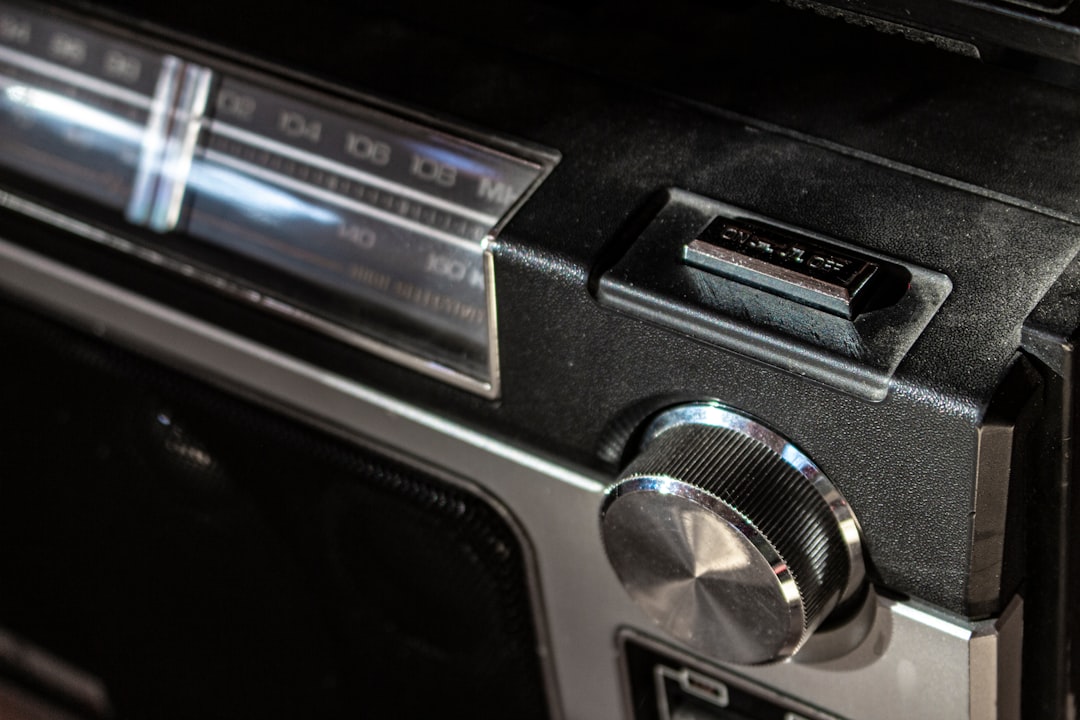
SiriusXM Holdings is an audio entertainment company that generates revenue through two distinct engines. The first and larger is SiriusXM, the subscription satellite and streaming radio service that reaches tens of millions of paying households, overwhelmingly through the roughly 150 million enabled vehicles on U.S. roads. The second is the Pandora and Off-Platform segment, an advertising-supported business spanning the Pandora streaming service, podcasting, and a growing programmatic digital audio advertising network that sells inventory across SiriusXM’s own properties and, increasingly, third-party platforms.
The revenue model splits cleanly along those lines. The SiriusXM segment earns recurring subscription fees — average revenue per user (ARPU) of $15.32 per month as of the second quarter of 2026 — from listeners who pay for exclusive channels, live sports, talk, comedy, and commercial-free music inside their cars and, increasingly, through the SiriusXM app. The Pandora and Off-Platform segment monetizes free listeners through advertising: display, audio, and video ads sold both directly and programmatically. On a consolidated basis, SiriusXM generated $8.60 billion in trailing-twelve-month revenue with net income of $880 million, a 10.23% net margin, and a robust 22.53% operating margin.
A rough segment breakdown illustrates where the money comes from:
Segment Nature of Revenue Approx. Share of Revenue Key Metric SiriusXM (subscription) Recurring monthly subscriptions ~75–78% ARPU $15.32; churn 1.4% Pandora & Off-Platform Advertising (audio, display, programmatic) ~22–25% Ad monetization / digital audio
The subscription segment is the ballast — it is where the vast majority of the company’s roughly $2.6 billion of adjusted EBITDA and its enormous free cash flow originate. The advertising segment is the growth optionality, and it is precisely the part of the business that the Deutsche Bank thesis argues the market is ignoring.
SiriusXM occupies a singular position in the U.S. audio market: it is the sole operator of satellite radio in the country, a structure that traces back to the 2008 merger of Sirius and XM. In digital audio it competes in a far more crowded field against Spotify, Apple Music, Amazon Music, iHeartMedia, and terrestrial broadcasters, but in its core satellite franchise it has no direct satellite competitor.
On ownership and governance, the standout feature is the presence of Berkshire Hathaway as the largest shareholder, holding a stake in the mid-30% range and continuing to add — Berkshire purchased another 2.3 million shares during the most recent reporting period. The current corporate structure dates to September 2024, when Liberty Media completed the split-off that created the streamlined, single-class Sirius XM Holdings and executed a 1-for-10 reverse stock split, which is why the company today has roughly 337 million shares outstanding rather than the multi-billion share count long-time observers may remember. Insider and affiliated ownership is meaningful, aligning management incentives with the aggressive capital-return posture the company has adopted.
2. Industry Analysis
2-1. Market Size & Growth Trajectory
The audio entertainment market that SiriusXM addresses splits into two very different growth profiles, and understanding the divergence is the key to the entire investment case.
The subscription satellite and premium audio market is mature. In-car satellite radio penetration is high, the pool of new-vehicle installations grows only in line with U.S. auto sales, and the competitive threat from free streaming and smartphone connectivity is real and persistent. This is a low-single-digit-growth-at-best, cash-harvest market. SiriusXM’s own consolidated revenue guidance of $8.525 billion for 2026 — up modestly year over year — reflects that maturity. The value here is not growth; it is the durability and margin of the cash flows.
The digital audio advertising market is the opposite: a structurally growing category. U.S. digital audio advertising is a multi-billion-dollar market — commonly estimated in the $7–8 billion range annually — and it has been compounding at high-single-digit to low-double-digit rates as advertising dollars migrate from terrestrial radio and as podcasting and programmatic audio mature. Streaming audio hours continue to rise, connected-car dashboards increasingly default to internet-delivered audio, and advertisers are steadily shifting budgets toward the addressable, measurable inventory that digital audio uniquely offers. Where the satellite business sits in late maturity, the digital audio advertising business sits in an accelerating growth phase — and SiriusXM has assets in both.
2-2. Structural Growth Drivers
Driver 1: The migration of advertising dollars into programmatic and addressable digital audio. The single most important secular tailwind for SiriusXM’s advertising segment is the ongoing shift of ad budgets from linear, unmeasured formats (terrestrial radio, linear TV) toward digital audio that can be targeted, measured, and bought programmatically. SiriusXM sits at the confluence of this shift with Pandora’s owned-and-operated inventory plus an expanding off-platform network. Crucially, the company has been building programmatic pipes to third parties. Deutsche Bank specifically flagged the July expansion of SiriusXM’s relationship with Amazon’s demand-side platform (DSP) as a tailwind, because plugging SiriusXM audio inventory into Amazon’s advertising demand dramatically widens the pool of advertisers bidding on that inventory. As programmatic penetration of audio deepens, an incumbent with scaled, premium inventory captures a disproportionate share of the incremental spend. This is a multi-year, structurally rising demand curve rather than a one-time step.
Driver 2: The exclusive YouTube partnership and content-distribution expansion. The most striking element of the Deutsche Bank upgrade is the analyst’s contention that consensus revenue estimates effectively ignore SiriusXM’s exclusive U.S. partnership with YouTube. Bloomberg consensus, according to Kraft, implies only about $250 million of consolidated revenue growth from 2026 through 2028; Deutsche Bank models roughly $1.5 billion over the same window — a six-fold gap. Whether the true number lands in the middle or at the high end, the point stands: distribution partnerships that extend SiriusXM’s content and advertising reach into the largest video and audio platforms in the world represent a growth vector the market has not underwritten. When the gap between what a company is building and what the sell-side has modeled is this wide, the setup favors positive estimate revisions as the partnerships season and show up in reported results.
Driver 3: Subscriber stabilization plus ARPU and pricing power in the core. For years the bear narrative on the satellite business was straightforward: churn is rising, the car is going all-streaming, and the subscriber base is in secular decline. The second quarter of 2026 challenged that narrative directly. SiriusXM returned to positive self-pay net additions — 22,000 in the quarter — with a low 1.4% churn rate and a 1% ARPU increase to $15.32. Management has been actively re-tiering its plans, launching a lower-priced ad-supported tier to widen the funnel while preserving premium pricing at the top. If the base is genuinely stabilizing rather than eroding, the entire cash-flow stream is worth substantially more than a declining-perpetuity valuation implies. In the short term, this is about proving stabilization quarter by quarter; in the long term, it is about converting a stabilized base into a durable, high-margin annuity.
2-3. Competitive Landscape
SiriusXM competes in two different arenas with two different competitive dynamics. In digital audio streaming and advertising, it faces formidable, well-capitalized competitors. In satellite radio, it faces none.
Company Core Audio Business Approx. Revenue (TTM) Operating Margin Competitive Position SiriusXM (SIRI) Satellite subscription + digital audio ads ~$8.6B ~22.5% Sole U.S. satellite operator; scaled ad network Spotify (SPOT) Global music/podcast streaming Much larger Lower / improving Global scale, thin per-user economics iHeartMedia Terrestrial + digital radio/podcasts Smaller, levered Pressured Heavy debt, secular radio decline Apple / Amazon (audio) Music streaming within ecosystems Embedded in giants N/A (loss leaders) Bundled, not standalone profit centers
The critical distinction is profitability and structure. Spotify has vastly more listeners globally but historically far thinner margins because it pays out the bulk of revenue to music labels; SiriusXM’s satellite economics, by contrast, produce a 22.5% operating margin and prodigious free cash flow. Apple Music and Amazon Music are strategic loss leaders bundled into hardware and Prime ecosystems, not standalone profit engines — which means they compete for listening time but not on the same profit logic. iHeartMedia carries the legacy terrestrial radio business into secular decline with a heavily levered balance sheet. SiriusXM’s advantage is that it owns the only profitable, scaled, subscription-plus-advertising audio franchise anchored by a protected satellite monopoly, and it is now using that cash engine to build into the growth part of the market rather than defend a declining one.
3. Economic Moat Analysis
Moat Type 1: Efficient Scale and Regulatory Protection (the satellite monopoly)
SiriusXM’s deepest moat is structural: it is the only satellite radio operator in the United States. Satellite radio requires launching and maintaining a constellation of satellites, securing dedicated radio spectrum, and embedding compatible receivers into the vehicle manufacturing supply chain — a combination of capital intensity, spectrum scarcity, and automaker integration that makes a second national satellite entrant economically irrational. The market is only large enough to profitably support one operator, which is the textbook definition of an efficient-scale moat. This structure was cemented by the 2008 combination of the two former satellite competitors into a single company, and no new satellite radio competitor has emerged in the years since.
The concrete evidence of this moat is in the margins and the cash conversion. A business without pricing power and without barriers to entry does not sustain a 22.5% operating margin and convert revenue into $1.375 billion of guided free cash flow. The 40.4% gross margin reflects the fact that once the satellite infrastructure and content deals are in place, each incremental subscriber carries very low marginal cost — the fixed satellite constellation serves the entire base. That operating leverage is a direct expression of the moat.
Moat Type 2: Installed Base and Switching Frictions
SiriusXM’s second moat is its installed base of enabled vehicles and the switching friction that comes with it. Satellite radio hardware is factory-installed in a large majority of new U.S. vehicles across most major automakers, and SiriusXM secures multi-year trial and subscription conversion pipelines with those manufacturers. Every new enabled car is a fresh funnel: a trial subscription that converts a meaningful share of drivers into paying customers. Because the receiver is already in the dashboard and the channel lineup, presets, and listening habits are established during ownership, there is genuine inertia against cancellation. The low 1.4% churn rate quantifies this stickiness — a churn rate that low across tens of millions of subscribers is direct evidence of switching costs and habit formation, not merely a soft brand preference.
Moat Durability Assessment
Will these moats hold over the next five to ten years? The honest answer is nuanced. The regulatory and efficient-scale moat around satellite radio is essentially permanent for as long as satellite radio exists as a format — no one is going to launch a competing constellation. The more relevant durability question is not “will a competitor enter satellite radio” but “will the car dashboard migrate entirely to internet streaming, rendering the satellite channel less relevant regardless of monopoly.” This is the real long-term risk to the moat: as connected cars default to Spotify, Apple CarPlay, and Android Auto, the strategic value of the built-in satellite tuner could erode even without a direct competitor.
The counterargument, and the reason the moat is more durable than the bears assume, is threefold. First, SiriusXM has been aggressively porting its exclusive content and subscription into an app-first, streaming-delivered experience, so the franchise is decreasingly dependent on the satellite hardware itself and increasingly on exclusive content and bundled distribution. Second, the exclusive content — live sports rights, exclusive talk and comedy, artist-branded channels — is not replicable by a generic music-streaming app and gives subscribers a reason to keep paying that survives the hardware transition. Third, the company’s pivot into digital audio advertising means that even listeners who migrate to free, ad-supported streaming are increasingly monetized through the Pandora and off-platform ad engine rather than lost entirely. The moat is evolving from “the only satellite tuner” toward “the scaled owner of exclusive audio content and monetization infrastructure,” and the stabilizing subscriber trend suggests that evolution is working.

4. Financial Analysis
SiriusXM’s financial profile is defined by one dominant characteristic: exceptional conversion of revenue into free cash flow. On $8.60 billion of trailing-twelve-month revenue, the company produced $880 million of net income (10.23% net margin), $2.6 billion in adjusted EBITDA, and — most importantly — guided full-year 2026 free cash flow of $1.375 billion. That free cash flow figure against a $10.05 billion market capitalization is the analytical crux of the entire thesis.
The most recent quarter demonstrated the operating inflection. In the second quarter of 2026, consolidated revenue rose about 1% year over year to $2.16 billion, net income climbed 17% to $239 million, and diluted EPS advanced 23% to $0.70. The standout line was free cash flow: $593 million in the quarter, up 48% from $402 million a year earlier, driven by higher adjusted EBITDA, lower cash taxes, and favorable timing of vendor payments and capital expenditures. Management responded by raising full-year 2026 guidance across the board — to $8.525 billion in revenue, $2.625 billion in adjusted EBITDA, and $1.375 billion in free cash flow, each roughly $25 million higher than prior guidance.
A stylized multi-year view of the income statement (consolidated) frames the story:
Metric (approx.) FY (older) FY (prior) TTM 2026 Revenue ~$9.0B ~$8.7B $8.60B Operating income ~$2.0B ~$1.9B ~$1.94B (22.5% margin) Net income ~$1.0B ~$0.9B $0.88B Free cash flow ~$1.0–1.2B ~$1.0B ~$1.375B (guided)
The revenue line tells the mature-business story: roughly flat-to-slightly-declining at the top, reflecting satellite maturity partially offset by advertising and pricing. The far more important story is beneath the top line. Free cash flow is rising, not falling, because the capital expenditure cycle for the satellite constellation is past its peak, cash taxes are moderating, and the advertising segment carries attractive incremental margins. The business-specific operating metrics reinforce the point: 22,000 self-pay net additions, a low 1.4% churn, and ARPU rising 1% to $15.32.
On the balance sheet, SiriusXM carries a debt-to-equity ratio of 0.79 — a meaningful but manageable leverage load for a business with this cash-flow stability. The leverage is the natural consequence of the company’s long history of returning cash to shareholders through buybacks and dividends rather than hoarding it, and the guided free cash flow comfortably services the debt while leaving room for renewed capital returns. Return on equity of 7.57% and return on assets of 3.23% are modest on a reported basis, but these accounting returns understate the economic reality of a business converting nearly 16% of revenue into free cash flow.
The margin-expansion and cash-return story is where the next several years get interesting. With satellite capital intensity declining and higher-margin digital advertising growing as a share of the mix, the free cash flow trajectory should continue to improve. Management has explicitly guided to a resumption of share repurchases in the second half of 2026 — a direct signal that the company views its own equity as undervalued and that the balance sheet has the capacity to return cash. For a stock trading below book value at 0.84 times, buybacks executed at these levels are meaningfully accretive to per-share value.
5. Valuation
The valuation case for SiriusXM rests on two complementary lenses: free cash flow yield and forward earnings multiple. Both point to a stock that is priced for terminal decline while the operating data points to stabilization and modest growth.
Free cash flow yield. Against guided 2026 free cash flow of $1.375 billion and a market capitalization of $10.05 billion, SiriusXM offers a free cash flow yield of approximately 13.7%. To put that in perspective, an investor buying the entire company at today’s price would, on current guidance, recoup the purchase price in free cash flow in roughly seven to eight years — before any growth. A stable-to-growing business yielding nearly 14% of free cash flow is priced as though those cash flows are about to decline sharply and permanently. That is the disconnect the thesis exploits.
Forward P/E. Using the consensus forward earnings estimate of $3.25 per share (EPS next year) against the current price of $29.81, SiriusXM trades at a forward P/E of just 9.2 times. For context, the trailing P/E on $2.54 of EPS is 11.7 times (29.81 ÷ 2.54 = 11.7, consistent with the reported multiple). A single-digit forward multiple on a business with a protected monopoly core, stabilizing subscribers, and a growing advertising segment is the sort of multiple typically reserved for structurally declining businesses.
Scenario analysis (built on EPS next year of $3.25):
– Bear case — $26 (roughly 13% downside): Apply an 8× multiple to $3.25 of forward EPS. This scenario assumes subscriber stabilization proves temporary, churn ticks back up, the digital advertising ramp disappoints, and the market continues to demand a deep-value multiple for a business it believes is in slow decline. In this world, the FCF yield stays extraordinarily high because the price stays depressed.
– Base case — $36 (roughly 21% upside): Apply an 11× multiple to $3.25 of forward EPS (≈ $35.75). This assumes the subscriber base holds roughly flat, the advertising segment grows in line with the broader digital audio market, buybacks resume and modestly shrink the share count, and the multiple re-rates only partway toward a normalized level. Notably, this base case sits above the current analyst consensus target of $33.17.
– Bull case — $45 (roughly 51% upside): Apply a 14× multiple to $3.25 of forward EPS (≈ $45.50). This aligns closely with Deutsche Bank’s $45 target and assumes the YouTube and Amazon DSP partnerships deliver the outsized advertising revenue Kraft models — up to $1.5 billion of incremental revenue by 2028 versus consensus of about $250 million — driving both estimate revisions and multiple expansion as the market re-rates SiriusXM from “declining satellite radio” to “growing audio platform with a cash-flow fortress.”
Comparison to consensus. The broad analyst consensus price target is $33.17, implying about 11% upside from $29.81. My base case of roughly $36 sits modestly above consensus, and I side with Deutsche Bank’s more constructive framing on the advertising optionality — but I stop short of underwriting the full $45 bull case as a base expectation because it depends on partnership revenue that has not yet shown up in reported results. The prudent stance is to anchor on the base case, treat the free cash flow yield as the margin of safety, and let the advertising optionality and buybacks provide the upside. Weighting the scenarios — bear 25%, base 50%, bull 25% — produces a probability-weighted fair value in the mid-$30s, comfortably above the current price.
6. Risk Factors
Risk 1: Structural decline of the in-car satellite franchise. The most fundamental risk is that the second quarter’s subscriber stabilization proves to be a blip rather than a trend, and the secular migration of the car dashboard to smartphone-based streaming resumes its pressure on the satellite subscriber base. If connected-car adoption accelerates and drivers increasingly default to Spotify, Apple CarPlay, or Android Auto over the built-in satellite tuner, SiriusXM’s highest-margin revenue stream could re-enter decline. Because the subscription segment generates the overwhelming majority of the company’s free cash flow, even a modest, sustained erosion in subscribers or ARPU would compress the very cash flows that underpin the valuation. The stabilization thesis is only two or three good quarters old; it requires continued proof, and a reversal would validate the bears who argue the stock deserves its deep-value multiple. Investors must monitor self-pay net additions and churn every quarter as the single most important leading indicator.
Risk 2: The advertising and partnership optionality fails to materialize. The bull case leans heavily on the digital audio advertising segment and, specifically, on the YouTube and Amazon DSP partnerships delivering revenue far in excess of current consensus. This is optionality, not a certainty. Deutsche Bank’s estimate of $1.5 billion of incremental revenue by 2028 is roughly six times the consensus figure, and there is a wide range of outcomes in between. If programmatic audio demand grows more slowly than hoped, if the partnerships ramp later or smaller than modeled, or if advertising budgets contract in a weaker macro environment, the growth leg of the thesis weakens and the stock likely stays a low-multiple free cash flow story rather than re-rating to a growth multiple. Advertising is also inherently more cyclical than subscription revenue, adding macro sensitivity to a business otherwise prized for its stability.
Risk 3: Leverage, capital allocation, and competitive/content-cost pressure. SiriusXM carries a debt-to-equity ratio of 0.79, and while the free cash flow comfortably services that debt today, the leverage reduces the margin for error if cash flows weaken. The company’s aggressive capital-return posture — resuming buybacks and paying a dividend — is a positive for per-share value at these prices, but it also means the balance sheet is not a fortress of net cash, and a sustained downturn in the business would force difficult trade-offs between debt reduction and shareholder returns. Separately, content costs are a persistent pressure: exclusive sports, talk, and music rights are expensive and subject to competitive bidding, and losing a marquee content deal or overpaying to retain one could pressure margins. Competition for listening time from far larger, better-capitalized platforms (Spotify, Apple, Amazon) is unrelenting even where it does not directly threaten the satellite monopoly.
7. Conclusion & Exit Plan
Investment rating: Buy.
SiriusXM is a rare combination in today’s market: a business the crowd has left for dead, trading at a single-digit forward earnings multiple and a near-14% free cash flow yield, whose operating fundamentals are quietly inflecting the other way. The second quarter of 2026 delivered a return to positive subscriber growth, a low churn rate, and a 48% surge in free cash flow — hardly the profile of a company in terminal decline. Layer on the resumption of buybacks in the second half of 2026 at a price below book value, the continued accumulation by Berkshire Hathaway, and a digital audio advertising optionality that Deutsche Bank believes the market is entirely overlooking, and the risk-reward tilts firmly favorable. This is a value investment first — anchored by the cash-flow yield as the margin of safety — with a genuine growth call option attached.
Entry price range: $27–$31. At today’s $29.81 the stock is already attractive, but the deep-value characteristics mean patient investors can build a position across dips toward the low end of the range, where the free cash flow yield exceeds 15% and the downside is well cushioned.
Exit conditions:
– Target achieved: Trim roughly 25% of the position at the base-case target of $36 (approximately 21% upside), and trim a further 25% if the stock reaches the bull-case $45, where it would trade at a normalized 14× forward earnings and the advertising optionality would be substantially priced in.
– Fundamental break: Sell if self-pay net subscriber additions turn negative for two consecutive quarters or churn rises back above roughly 1.7–1.8%, which would invalidate the stabilization thesis, or if the free cash flow guidance is cut, which would undermine the cash-yield foundation of the case.
– Time-based: Reassess the full thesis in six months (around the first quarter of 2027) or immediately upon the next earnings report, with particular attention to any disclosed traction in the YouTube and Amazon DSP advertising partnerships that would begin to validate the bull-case revenue trajectory.
Item Detail Company Sirius XM Holdings (SIRI) Current Price $29.81 Target Price $36 (base) / $45 (bull) Upside ~21% (base) / ~51% (bull) Rating Buy Key Thesis Deep-value cash machine (13.7% FCF yield, 9.2× fwd P/E) with overlooked digital audio advertising growth and resuming buybacks Main Risk Secular decline of the in-car satellite subscriber base if Q2 stabilization proves temporary
—
Disclaimer: This content is general investment information provided to an indefinite/unspecified audience by a quasi-investment advisory business registered under Korea’s Financial Investment Services and Capital Markets Act, and is not personalized 1:1 investment advice tailored to any individual investor. This analysis is for informational purposes only and is not a solicitation to invest. All investment decisions and their consequences rest solely with the investor. The estimates and assumptions in this report are as of the writing date (2026-09-03) and may not materialize depending on market conditions and geopolitical variables. Financial data used reflects sources such as company filings and analyst consensus, and the scenarios and price targets represent the author’s conservative assessment. All investments carry the risk of principal loss, and past performance or analytical track record does not guarantee future results. As of the writing date, the author does not hold a position in this stock. The author’s holdings and positions may change without prior notice depending on market conditions.
함께 읽으면 좋은 글
- Jabil AI Infrastructure Revenue Path to $20 Billion: Why the September 24 Earnings Could Re-Rate JBL Stock
- Jack Henry Core Banking Market Share Gains: Why a Record 58 Core Wins and a Double Upgrade Point to 15%+ Upside
- ON Semiconductor Silicon Carbide AI Data Center Pivot: Why a Cyclical Trough at $73 Sets Up a Path to $110
- Parsons Golden Dome Missile Defense Exposure: Why a 45% Drawdown Left an 18% Upside Setup at 14x Forward Earnings
- Abercrombie & Fitch Q2 2026 Earnings: Why 15% Operating Margins and a 12x Multiple Reframe the ANF Turnaround Story