
On October 12, 2026, Seaport Research upgraded Hexcel Corporation (NYSE: HXL) from Neutral to Buy with a $104 price target, arguing that the market is pricing in too much aerospace risk and giving too little credit to the company’s defense growth. The timing is interesting. Hexcel shares closed at $86.13 in the latest session, roughly 23% below their 52-week high of $111.74, after a month-long slide of nearly 15% that coincided with a broad selloff in industrial stocks, rising Treasury yields, and a string of analyst target cuts (TD Cowen to $90 from $115, Jefferies to $98 from $110, Wells Fargo to $105 from $120). Meanwhile, the underlying business has rarely looked healthier: second-quarter sales grew 8% to $529.3 million, commercial aerospace sales jumped 18.3%, gross margin expanded 330 basis points to 26.1%, and management raised full-year guidance.
The core question for investors is simple: is the Hexcel A350 rate 12 ramp already in the price, or is this pullback an entry point? Airbus continues to target a production rate of 12 A350s per month in 2028, Boeing is working toward 10 787s per month and higher later in the decade, and Hexcel is the qualified incumbent supplier of carbon-fiber prepreg on the A350’s primary structure. If those rates materialize, Hexcel’s own framework calls for roughly $500 million of incremental annual commercial sales and an 18% adjusted operating margin by the end of the decade.
Three investment points frame this analysis:
1. Widebody leverage is finally showing up in the numbers. The A350 and 787 together are the two programs that matter most for Hexcel’s commercial business, and CEO Tom Gentile said A350 and 787 sales reached their “highest levels since before the pandemic” (Q2 2026 release). Management expects at least 80 A350 shipsets in 2026, with firm Airbus orders already covering that level.
2. Operating leverage is real, but already partially priced. Adjusted EPS guidance of $2.30–$2.40 implies about 33% growth over 2025’s $1.76, and consensus expects $3.14 for next year. At $86.13, the stock trades at 27.4x that forward EPS, which leaves less room for error than the headline drawdown suggests.
3. The balance sheet is the swing factor. Net debt stood at $897.2 million at mid-year (2.3x adjusted EBITDA), above management’s 1.5x–2.0x target, and buybacks were paused in the first half. Faster deleveraging would reopen capital returns; slower aircraft deliveries would delay it.
This article walks through Hexcel’s business model, the aerospace composites industry (the most detailed section), the durability of its moat, a five-year financial review, a three-method valuation, the key risks, and a concrete entry and exit plan ahead of third-quarter results on October 21.
1. Company Overview: What Hexcel Actually Sells
Hexcel is a Stamford, Connecticut-based manufacturer of advanced composite materials. In plain terms, it sells the “ingredients” from which modern aircraft structures are built: carbon fiber, pre-impregnated resin systems (prepregs), honeycomb cores, adhesives, and engineered composite parts. Customers buy these materials, lay them up into wings, fuselage sections, nacelles, rotor blades and missile casings, and cure them into finished structures. Because composites are significantly lighter than aluminum at comparable strength, they directly reduce fuel burn, which is why each new generation of aircraft uses more of them.
Revenue is generated almost entirely through long-term supply relationships tied to specific aircraft programs. When Airbus or Boeing designs an aircraft, specific Hexcel materials are qualified into the structure. Once a material is qualified, the supplier typically ships it for the life of the program, which can run for decades. Hexcel’s revenue therefore tracks aircraft build rates (shipsets delivered per month) far more than it tracks short-term airline traffic.
Hexcel reports two operating segments — Composite Materials (carbon fiber, prepregs, honeycomb) and Engineered Products (structures and machined honeycomb parts) — and discloses sales by end market. After selling its Austrian industrial business in September 2025 and closing industrial operations in Leicester, U.K., the company now reports two end markets.
End Market H1 2026 Sales Share of Total YoY Growth Key Programs / Drivers Commercial Aerospace $679.3M 65.9% +18.5% Airbus A350, Boeing 787, A320neo family, 737 MAX Defense, Space & Other $351.5M 34.1% -5.8% Military rotorcraft and fighters, space launch, residual industrial Total $1,030.8M 100% +8.9%
Source: Hexcel Q2 2026 earnings release. The decline in Defense, Space & Other reflects the industrial divestment and closures rather than weaker defense demand; management described Defense & Space as roughly flat year over year.
Segment profitability is improving on both sides. In Q2 2026, the Composite Materials segment’s operating margin was 16.5% vs 14.1% a year earlier, and Engineered Products was 15.0% vs a (14.0)% loss a year earlier (Q2 2026 release).
Customers and market position. Hexcel’s revenue is concentrated in the two large commercial airframers, Airbus and Boeing, and their supply chains, plus U.S. and European defense primes. The A350 is the anchor: management cited existing capacity that can support up to 13 A350s per month, above Airbus’s announced rate-12 target. On the narrowbody side, Hexcel noted just above 42 737 MAX shipsets in Q2 and Boeing’s expectation of about 500 aircraft for the year. Among aerospace composite suppliers, industry research firm MarketsandMarkets lists Hexcel alongside Syensqo (Belgium), Toray Industries (Japan), and Mitsubishi Chemical Group (Japan) as the leading players.
Governance and ownership. Tom Gentile serves as Chairman, CEO and President, and Jamie Coogan is CFO. The shareholder base is predominantly institutional, as is typical for a mid-cap aerospace supplier with a market capitalization of about $6.51 billion. Long-time holders will remember the proposed merger with Woodward, which was terminated in 2020 as the pandemic hit aerospace demand; since then, Hexcel has operated as an independent pure play on composites. Capital allocation priorities, per management, are debt reduction first, a maintained dividend ($0.18 per quarter, raised 6% earlier this year), and renewed shareholder returns once leverage reaches the 1.5x–2.0x target. Any acquisition must clear a 15%+ return-on-invested-capital hurdle.
2. Industry Analysis: The Aerospace Composites Cycle and the Hexcel A350 Rate 12 Ramp
2-1. Market Size & Growth Trajectory
Estimates of the aerospace composites market vary depending on scope, but they agree on direction. MarketsandMarkets projects the global aerospace composites market to grow from $30.3 billion in 2025 to $53.4 billion by 2030, a 12.0% compound annual growth rate. Data Bridge Market Research, using a different scope, put the 2023 market at about $26.5 billion, rising to $56.2 billion by 2031 (roughly a 9.9% CAGR). A narrower slice — aerospace prepreg, which is Hexcel’s core product — was estimated at about $13.2 billion in 2024 with an 8.5% CAGR projected for 2026–2033. Carbon fiber composites accounted for about 52% of the aerospace composites market in 2025, according to one industry report. These are third-party estimates and should be treated as directional, not precise.
What matters more for Hexcel than the total market size is where in the cycle the industry sits. The answer is: early acceleration after a long, frustrating plateau. The pandemic forced Airbus and Boeing to cut widebody production sharply. Widebody aircraft carry far more composite content per shipset than narrowbodies, so Hexcel was disproportionately hurt. The recovery was then delayed by supply-chain bottlenecks, Boeing’s quality crisis, and excess inventory sitting in the supply chain. Hexcel’s full-year sales barely moved from $1,903 million in 2024 to $1,894 million in 2025.
2026 marks the break in that plateau. Hexcel’s first-half commercial aerospace sales grew 18.5%, and the company raised its full-year sales guidance to $2.025–$2.125 billion. The midpoint implies about 9.6% growth over 2025. Put differently, the industry is moving from “recovery hoped for” to “recovery being shipped.”
2-2. Structural Growth Drivers
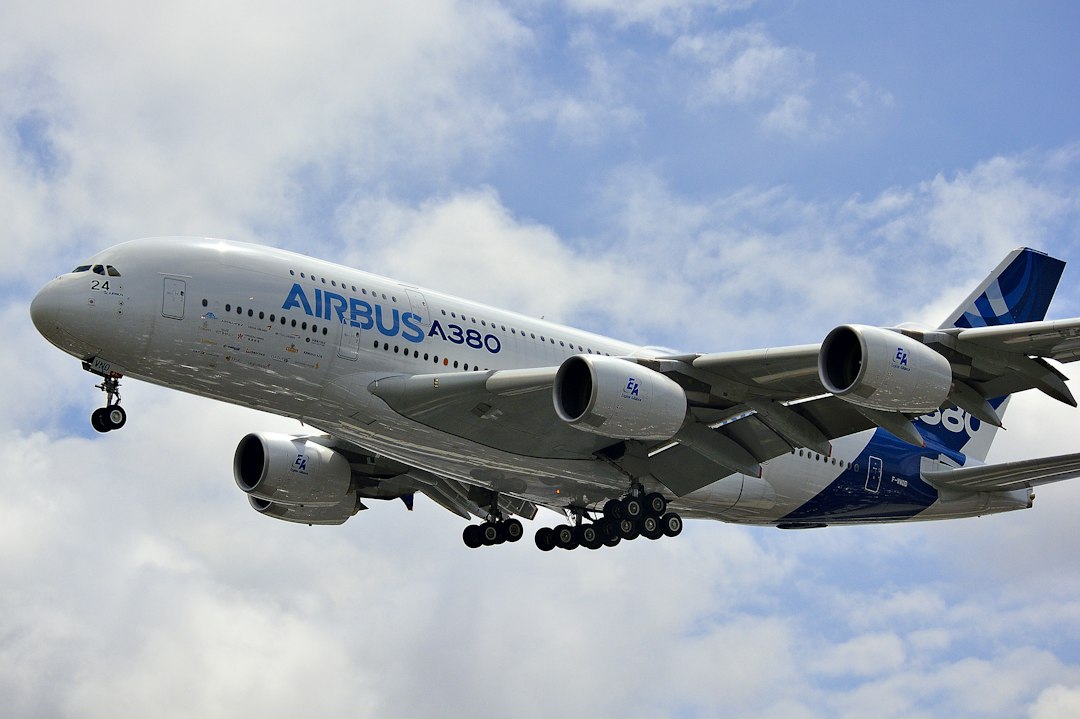
Driver 1: Widebody rate increases — the Hexcel A350 rate 12 ramp. This is the single most important driver for the stock. Airbus reiterated at its 2026 annual press conference that it still targets a production rate of 12 A350s per month in 2028, and its chief executive said he would like to see even higher rates given very strong demand; Airbus is studying what a significant increase would require. Hexcel’s Q2 call indicated Airbus is currently producing at 8 to 9 aircraft per month. On the Boeing side, the 787 is targeted to reach 10 per month in the near term and higher later in the decade, although sources differ on whether the 10-per-month step lands in 2026 or slips into 2027. Hexcel expects at least 80 A350 shipsets in 2026. Each step up in widebody rates flows almost directly into Hexcel’s revenue because material is shipped ahead of aircraft delivery. This is a multi-year driver: the rate-12 target is roughly two years out, and Airbus’s interest in going higher extends the runway further. Management has also said that capacity beyond 13 A350s per month would require about a three-year lead time — a constraint that also protects incumbents.
Driver 2: Composite intensity rising with each new aircraft generation. Older-generation aircraft used composites mostly for secondary structures such as fairings and control surfaces. The A350 and 787 moved composites into primary structures: wings and fuselage. Future narrowbody replacements, expected in the 2030s, are widely anticipated to push composite usage further, particularly in wings, to deliver the fuel-burn improvements airlines demand. Separately, engine programs increasingly use composite fan blades and cases; Hexcel’s Q2 call referenced the GE9X engine and the 777X program. This driver is slower-moving than build rates but is what supports long-term growth beyond the current ramp. It also shapes competition: each new program is a fresh qualification contest, and the winners lock in decades of volume.
Driver 3: Defense and space recovery. Seaport’s upgrade explicitly centers on military aircraft demand and defense growth, which the firm expects to lift earnings starting in 2028. Hexcel’s management has guided to about $200 million of incremental Defense & Space sales before the end of the decade. Hexcel lists rotorcraft, fighter and space-launch programs among its defense exposure, and the company mentioned the U.S. Army’s MV-75 program on its Q2 call (with no impact on 2026 guidance). Defense revenue is lumpy quarter to quarter, and the segment was roughly flat in Q2. The investment case here is not near-term momentum but diversification: defense demand does not track airline cycles, which reduces earnings volatility in a downturn.
Short-term vs. long-term dynamics. In the short term (the next 2–4 quarters), the debate is about execution and costs: management guided second-half EPS below first-half levels due to seasonality, hiring (300 of 400 planned hires completed), a carbon-fiber line restart in Salt Lake City scheduled for the end of 2026, and conservatism on oil-linked raw material costs. In the long term (2028–2030), the debate is about whether Airbus and Boeing actually reach their target rates. The share price tends to trade on the short-term debate while the valuation depends on the long-term one — which is precisely why pullbacks like the current one occur.
2-3. Competitive Landscape
The aerospace composites supply base is concentrated among a handful of qualified suppliers. Rather than present unverified revenue figures for diversified foreign conglomerates, the table below compares positioning and moat characteristics.
Company HQ Aerospace Composite Positioning Key Program Exposure Moat Source Hexcel (HXL) U.S. Pure-play composites; carbon fiber + prepreg + honeycomb + engineered parts A350 primary structure, 787, A320neo, 737 MAX, defense rotorcraft/fighters Qualification lock-in, vertical integration in carbon fiber Toray Industries Japan Diversified materials group with a large carbon-fiber business 787 primary structure prepreg under long-term agreement Scale in carbon fiber, Boeing qualification Syensqo Belgium Specialty chemicals; composite materials and adhesives unit Broad commercial and defense content Resin chemistry, adhesives qualification Mitsubishi Chemical Group Japan Diversified chemicals; carbon fiber and composites Commercial and industrial composites Carbon fiber scale
Hexcel’s financial profile for reference (Finviz, trailing twelve months): sales of $1.96 billion, gross margin 23.5%, operating margin 10.5%, net margin 7.8%, ROE 10.8%, and debt-to-equity of 0.74. Note that the trailing figures include weaker 2025 quarters; Q2 2026 gross margin alone was 26.1% and adjusted operating margin was 13.9%.
Why Hexcel is positioned well relative to peers. Two factors stand out. First, Hexcel is a pure play, whereas Toray, Syensqo and Mitsubishi Chemical are diversified groups where aerospace composites are one business among many; for Hexcel, the widebody ramp is the whole story, so investors get undiluted exposure. Second, Hexcel’s position on the A350 ties it directly to Airbus’s announced ramp from 8–9 aircraft per month today toward rate 12 in 2028. Toray’s 787 position is the mirror image, so the two companies effectively split the two major widebody programs. Hexcel also supplies honeycomb and other materials on the 787 and narrowbody programs, giving it exposure to both airframers.
The flip side of pure-play status is concentration. When widebody production stalled, Hexcel had no other businesses to cushion the blow, and its stock behaved accordingly. That is the trade-off investors accept.
3. Economic Moat Analysis
Moat Type 1: Switching Costs Through Material Qualification
The most powerful source of Hexcel’s competitive advantage is the qualification process. Aircraft structures must be certified by aviation authorities, and that certification is tied to the specific materials used. A carbon-fiber prepreg is not interchangeable with a competitor’s prepreg even if the specifications look similar on paper; replacing it requires extensive testing, re-certification of the structure, and substantial engineering cost. For an airframer, the cost and risk of changing a qualified primary-structure material mid-program is prohibitive.
The practical result is that once Hexcel’s material is designed into a program like the A350, it ships for the program’s life. The A350 entered service in 2015 and is now ramping toward rate 12 in 2028, meaning Hexcel’s revenue stream from this single qualification spans decades. The evidence that this lock-in works is visible in Hexcel’s recovery: despite the pandemic collapse, Hexcel did not lose its program positions. When A350 and 787 volumes came back, Hexcel’s sales came back with them — commercial aerospace sales rose from $911.8 million in 2022 to $1,068.2 million in 2023, and grew 18.5% in the first half of 2026.
Qualification also creates pricing power in a structured form. Long-term agreements specify pricing, often with escalation mechanisms. The Q2 2026 release attributed part of the gross margin improvement to price realization — consistent with the idea that the incumbent supplier holds negotiating leverage when an airframer needs more volume quickly.
Moat Type 2: Efficient Scale and Vertical Integration
The second moat is efficient scale reinforced by vertical integration. Producing aerospace-grade carbon fiber requires large, capital-intensive production lines that take years to build and qualify. Hexcel produces its own carbon fiber, converts it into prepregs and honeycomb, and in some cases into finished parts. This vertical integration secures supply of a scarce input and captures margin at multiple steps.
The market for aerospace-grade carbon fiber is small enough that it supports only a few qualified producers. A new entrant would have to invest heavily in capacity, wait years for qualification, and then win a new aircraft program — of which there are only a handful per decade. That is the textbook definition of efficient scale: the market rewards incumbents and offers inadequate returns to newcomers. Management’s comment that capacity for more than 13 A350s per month requires about a three-year lead time underscores how slow capacity additions are, even for an incumbent.
The financial evidence of scale benefits is the incremental margin. Management cited roughly 37% incremental margins at the midpoint of 2026 guidance and called mid-30s a reasonable go-forward level. Adjusted operating margin rose from 11.1% to 13.9% in a single year on 8% sales growth.
Moat Durability Assessment
Will this moat hold for 5–10 years? For existing programs, almost certainly yes: the A350 and 787 will be produced well into the 2030s, and qualification lock-in protects Hexcel’s positions on both.
The real risk is at the next program. The narrowbody replacements from Airbus and Boeing, expected in the 2030s, will be competitive qualification contests, and the winner will hold that position for decades. Toray, Syensqo, and Mitsubishi Chemical will compete aggressively, and new manufacturing techniques (such as out-of-autoclave processing and thermoplastic composites) could change which materials win. If Hexcel loses a major next-generation narrowbody wing, the moat would erode slowly over the following decade as legacy programs mature.
The counterargument is that Hexcel’s research and qualification track record, plus its incumbency on the two current widebodies, makes it a natural partner for the next program. Management’s focus on technology investments (for example, product launches in honeycomb and HexPly prepreg lines) is consistent with defending that position. On balance, we rate the moat as narrow-to-wide on existing programs and contestable on future ones — durable enough to support a premium multiple, but not a guarantee of share in the 2030s.
4. Financial Analysis
Hexcel’s five-year record tells a story of recovery, stall, and re-acceleration.
Fiscal Year Net Sales YoY Growth GAAP Diluted EPS Adjusted Diluted EPS Free Cash Flow 2022 $1,577.7M — $1.49 $1.28 $96.8M 2023 $1,789.0M +13.4% $1.24 $1.81 $148.9M 2024 $1,903M +6.4% $1.59 $2.03 $203M 2025 $1,894M -0.5% $1.37 $1.76 $157M 2026 Guidance $2,025–2,125M +7% to +12% — $2.30–2.40 >$195M
Sources: Hexcel annual earnings releases (2023, 2024, 2025) and Q2 2026 earnings release. 2023 GAAP operating income was $215.3M and adjusted operating income $216.7M (12.1% margin), versus $175.2M and $163.3M in 2022. 2022 GAAP net income was $126.3M; 2023 was $105.7M.
2023: the rebound year. Sales grew 13.4% as commercial aerospace sales increased to $1,068.2 million from $911.8 million and Space & Defense rose to $544.8 million from $465.2 million. Adjusted EPS jumped 41% to $1.81. GAAP EPS fell to $1.24 because of non-recurring items; in Q4 2023 Hexcel also sold its 50% stake in a joint venture with Boeing.
2024: steady growth. Sales grew about 6%, with commercial aerospace up roughly 12%, and adjusted EPS reached $2.03. Free cash flow hit $203 million. The original 2025 guidance called for $1.95–$2.05 billion of sales and $2.05–$2.25 of adjusted EPS.
2025: the stall. The 2025 guidance proved too optimistic. Sales came in at $1,894 million, essentially flat, and adjusted EPS fell to $1.76. Widebody production rates rose more slowly than planned, and the supply chain worked through inventory. Free cash flow dropped to $157 million. This is the year that reminded investors how exposed Hexcel is to airframer schedules.
2026: re-acceleration with operating leverage. First-half 2026 results show what happens when volume returns to a high-fixed-cost business:
Metric H1 2026 H1 2025 Change Net sales $1,030.8M $946.4M +8.9% Gross margin 26.5% 22.6% +390 bp Adjusted operating income $141.1M $99.5M +41.8% Adjusted operating margin 13.7% 10.5% +320 bp Net income $86.5M $42.4M +104% Adjusted diluted EPS $1.25 $0.87 +43.7% Free cash flow $51.8M -$46.6M +$98.4M
Sales grew 8.9%, but adjusted operating income grew nearly 42%. That is the incremental-margin story in one line. Guidance was raised to $2.30–$2.40 of adjusted EPS, from $2.10–$2.30 previously. The 2026 guidance midpoint of $2.35 implies 33.5% growth over 2025’s $1.76.
Key operating metrics. For Hexcel, the metrics that matter are shipsets and build rates rather than ARR or backlog. Management expects at least 80 A350 shipsets in 2026, with firm Airbus orders covering that level. The 737 MAX ran at just above 42 shipsets in Q2. On the long-term framework, management targets about $500 million of incremental commercial sales once Airbus and Boeing reach peak rates, about $200 million of incremental Defense & Space sales by the end of the decade, and an 18% adjusted operating margin.
Balance sheet and cash flow. At June 30, 2026, Hexcel held $62.2 million of cash against $959.4 million of long-term debt, for net debt of about $897.2 million. Management put leverage at 2.3x net debt to adjusted EBITDA, down from about 2.7x at year-end 2025 but still above its 1.5x–2.0x target range. In Q2, Hexcel refinanced $400 million of 3.95% notes due 2027 with $400 million of 4.9% notes due 2031 — extending maturity at a higher coupon. No shares were repurchased in the first half of 2026 (versus $100.9 million in the first half of 2025), with $380.6 million remaining under the authorization. CFO Jamie Coogan said cash conversion “should exceed 100% in 2026 and for a period of time thereafter,” and full-year free cash flow guidance remains above $195 million with capital expenditures below $100 million.
Margin expansion story. Hexcel is a profitable company in the middle of a margin recovery. Adjusted operating margin went from 10.5% (H1 2025) to 13.7% (H1 2026), and management’s end-of-decade target is 18%. Closing that gap requires roughly 430 basis points of additional expansion, which is plausible at mid-30s incremental margins if sales grow by the $700 million management outlines. The headwinds are real, though: a weaker dollar cost about 90 basis points of operating margin in Q2, and the CFO warned that if oil prices stay elevated, higher energy and acrylonitrile costs (a key carbon-fiber feedstock) “will be layered into the business over time.”
5. Valuation: Pricing the Hexcel A350 Rate 12 Ramp
All market data below uses the latest Finviz quote: price $86.13, market capitalization $6.51 billion, 75.5 million shares outstanding, trailing EPS $1.98, consensus EPS next year $3.14, trailing P/E 43.4x, forward P/E 27.4x, P/B 5.0x, and P/S 3.3x. The consensus price target is $108.80 (26.3% upside). Self-check: $6.51 billion ÷ $86.13 ≈ 75.6 million shares, consistent with the reported share count; $86.13 ÷ $3.14 = 27.4x forward P/E.
Because Hexcel’s earnings are in a cyclical recovery, a single method is unreliable. We use three.
Method A — Forward P/E. We apply 30x to the consensus EPS next year of $3.14, a modest premium to today’s 27.4x that reflects improving earnings visibility as the A350 ramp proceeds:
– $3.14 × 30 = $94.20
Method B — EV/EBITDA on next year’s estimate. Enterprise value today is about $7.41 billion ($6.51 billion market cap + $0.90 billion net debt). Management’s 2.3x leverage ratio implies trailing adjusted EBITDA of about $390 million, so Hexcel trades at roughly 19x trailing EBITDA.
– 2026E adjusted EBITDA: ~$400 million (est.)
– 2027E sales: $2.075 billion guidance midpoint × 1.08 = ~$2.24 billion (est.), an increase of ~$166 million
– Incremental EBITDA at a 35% incremental margin: ~$58 million → 2027E EBITDA ~$458 million (est.)
– Apply 17x (a discount to today’s ~19x as growth normalizes): EV = ~$7.79 billion
– Less estimated end-2027 net debt of ~$600 million (est.; assumes 2026–27 free cash flow less dividends goes to debt reduction)
– Equity value ~$7.19 billion ÷ 75.5 million shares = ~$95
Method C — End-of-decade framework, discounted. Taking management’s long-term sales framework at face value, with our own EBITDA margin assumption:
– 2029E sales: ~$2.6 billion (2025’s $1,894 million + ~$500 million commercial + ~$200 million defense, est.)
– 25% adjusted EBITDA margin (author’s assumption, not a management target) → ~$650 million EBITDA (est.)
– 15x EBITDA (a lower multiple for a mature-rate business) → EV ~$9.75 billion
– Less ~$300 million net debt (est.) → equity ~$9.45 billion ÷ 75.5 million shares = ~$125 per share in 2029
– Discounted three years at 9%: $125 ÷ 1.295 = ~$97
Blended base-case fair value: ~$95 (average of $94.20, $95 and $97), implying 10.3% upside from $86.13.
Scenario analysis:
Scenario Assumption Next-Year EPS Multiple Price Target vs. $86.13 Bull A350 reaches rate 12 on schedule, defense ramps early $3.40 (est.) 34x $116 +34.7% Base Consensus delivered, leverage reaches 2.0x by 2027 $3.14 Blended $95 +10.3% Bear Widebody rates stall at ~9/month, oil-driven cost inflation, 2025-style stall repeats $2.55 (est.) 22x $56 -35.0%
A 25/50/25 probability weighting yields an expected value of about $90.50, roughly 5% above the current price.
Comparison with consensus. We are below the $108.80 consensus target and below Seaport’s $104. We agree with Seaport’s diagnosis — the aerospace recovery is real and defense is under-appreciated — but we disagree on the margin of safety. The consensus EPS of $3.14 already assumes another ~34% growth year after 2026’s ~33%, which means the forward multiple is resting on two consecutive years of strong execution. In 2025, a similar optimism about widebody rates proved premature, and the stock paid for it. We also note that TD Cowen, which cut to $90 with a Hold, sits close to our view. The asymmetry at $86 — roughly +10% to base and +35% to bull versus -35% to bear — is not compelling enough for a Buy, but it becomes attractive in the low $80s and especially below $80.
6. Risk Factors
Risk 1: Airframer schedule slippage. Hexcel’s revenue depends on Airbus and Boeing build rates, and both have a long record of missing production targets. Seaport itself flagged ongoing production delays at Boeing and Airbus as a key risk. The A350 currently runs at 8–9 per month according to Hexcel’s Q2 commentary, and the jump to 12 by 2028 requires the entire supply chain — engines, cabin interiors, structures — to keep pace. Sources already disagree on whether the 787’s step to 10 per month lands in 2026 or slips into 2027. Hexcel’s 2025 is the cautionary tale: guidance assumed widebody rates would rise, they rose more slowly, and full-year sales came in flat while adjusted EPS fell 13%. Because Hexcel ships material ahead of aircraft delivery, it is also exposed to inventory corrections: if airframers or tier-one suppliers build up excess stock, they can pause orders even while aircraft deliveries continue. A repeat of that pattern in 2027 would put the consensus EPS of $3.14 at risk and push the stock toward our bear case.
Risk 2: Input cost inflation from energy and acrylonitrile. Carbon fiber is made from acrylonitrile-based precursor, and its production is energy-intensive. The CFO said on the Q2 call that if oil prices remain elevated, the impact on energy and acrylonitrile costs “will be layered into the business over time,” and hedges currently cushion the near term. Management also built oil-price conservatism into its second-half guidance. Long-term contracts with escalation clauses provide partial protection, but there is usually a lag between cost increases and price adjustments. Combined with the roughly 90-basis-point foreign-exchange margin headwind cited in Q2 from a weaker dollar, cost inflation could slow the march from a 13.9% adjusted operating margin toward the 18% target. Because the valuation leans on mid-30s incremental margins, a few hundred basis points of margin shortfall has an outsized impact on EPS.
Risk 3: Leverage and refinancing cost. Net debt of $897.2 million at 2.3x EBITDA is manageable, but it is above management’s 1.5x–2.0x target, and it constrains capital returns — Hexcel bought back no stock in the first half of 2026 after repurchasing $100.9 million a year earlier. The Q2 refinancing replaced 3.95% notes with 4.9% notes, so interest cost is rising. If EBITDA growth stalls, deleveraging slows, buybacks stay paused, and the equity loses one of its supports. In a stress scenario where aircraft rates drop, leverage could move back toward 3x, as it did after the pandemic.
Additional risks worth monitoring: U.S. defense budget uncertainty (which Seaport flagged and which affects the defense part of the bull case); next-generation narrowbody material selection, which will decide Hexcel’s position for the 2030s; and customer concentration in two airframers, which gives customers significant bargaining power during contract renegotiations.
7. Conclusion & Exit Plan
Investment rating: Hold (Accumulate below $80).
Hexcel is a high-quality business entering the steepest part of its recovery. The Hexcel A350 rate 12 ramp, the 787 rate increases, and a growing defense pipeline give the company a credible path to roughly $2.6 billion of sales and an 18% adjusted operating margin by the end of the decade. First-half 2026 results — 8.9% sales growth translating into 42% adjusted operating income growth — show the operating leverage is real. Seaport’s upgrade is directionally right.
But at $86.13 and 27.4x next year’s consensus EPS, the stock already discounts a strong 2027. Our blended fair value of $95 implies about 10% upside, while a 2025-style stall would send the stock toward $56. That is not a compelling enough asymmetry for new money at the current price. Our preferred approach is to build a position gradually on weakness, with the October 21 third-quarter report as the next decision point.
Entry price range: $76–$80. At $80, our base case offers about 19% upside, and the bear case downside narrows to about 30%. Buy in thirds: one-third at $80, one-third at $78, and the final third after the Q3 report if the A350 shipset outlook of at least 80 for 2026 is reaffirmed.
Exit conditions:
– Target achieved: Trim one-third at our $95 base case; sell the remainder at $112–$116 (bull case), unless Airbus formally announces an A350 rate above 12, in which case reassess the bull multiple.
– Fundamental break: Sell if (1) Airbus delays the A350 rate-12 target beyond 2028, (2) management’s 2027 outlook implies an adjusted operating margin below 14%, or (3) leverage fails to fall below 2.0x by mid-2027 while buybacks remain paused.
– Time-based: Reassess after Q4 2026 results in January 2027, when 2027 guidance will test the $3.14 consensus EPS.
What to watch on October 21: the 2026 A350 shipset outlook, any change to the 2026 adjusted EPS range of $2.30–$2.40, second-half free cash flow progress toward the >$195 million target, and commentary on energy and acrylonitrile costs.
Item Detail Company Hexcel Corporation (HXL) Current Price $86.13 Target Price $95 (base case) Upside 10.3% Rating Hold (Accumulate below $80) Key Thesis A350/787 rate increases plus defense growth drive operating leverage toward an 18% adjusted operating margin Main Risk Airframer schedule slippage repeating the 2025 stall
—
Disclaimer
This content is general investment information provided to an indefinite/unspecified audience by a quasi-investment advisory business registered under Korea’s Financial Investment Services and Capital Markets Act, and is not personalized 1:1 investment advice tailored to any individual investor. This analysis is for informational purposes only and is not a solicitation to invest. All investment decisions and their consequences rest solely with the investor. The estimates and assumptions in this report are as of the writing date (2026-10-14) and may not materialize depending on market conditions and geopolitical variables. Financial data used reflects sources such as company filings and analyst consensus, and the scenarios and price targets represent the author’s conservative assessment. All investments carry the risk of principal loss, and past performance or analytical track record does not guarantee future results. As of the writing date, the author does not hold a position in this stock. The author’s holdings and positions may change without prior notice depending on market conditions.
함께 읽으면 좋은 글
- NextEra Energy Dominion Merger Analysis: A 20% Drawdown Prices a 9%+ EPS Growth Story Like an Ordinary Utility — Our $90 Target
- Booz Allen Hamilton Civil Revenue Bottom: Why the Truist Upgrade and 10.8x Forward Earnings Point to 20% Upside
- ASML Q3 2026 Earnings Preview: How a 30% EUV Capacity Expansion for 2027 Supports a $2,115 Price Target
- Cboe S&P 500 Options License Extension to 2051: Why Morgan Stanley’s Double Upgrade Still Leaves Our Fair Value at $317
- Chipotle Starbucks Takeover Report: Why CMG at 24x Forward Earnings Is Worth $38 Even Without a Deal
참고 자료
- Hexcel Reports 2026 Second Quarter Results
- Hexcel Reports 2025 Fourth Quarter and Full Year Results
- Hexcel upgraded at Seaport Research on defense growth, aerospace recovery (Seeking Alpha)
- Hexcel (HXL) Q2 2026 Earnings Call Transcript (Motley Fool)
- Airbus Annual Press Conference 2026
- Aerospace Composites Market (MarketsandMarkets)