
When a 121-year-old industrial company prints adjusted EPS of $3.30 against a $2.92 consensus, raises its full-year guidance by a wide margin, and discloses that its data center revenue has more than doubled year-over-year, the market should pay attention. On May 5, 2026, Rockwell Automation (NYSE: ROK) did exactly that, and yet at $460.47 the stock trades only marginally above Wall Street’s consensus price target of $469.29. Morgan Stanley has since lifted its Street-high target to $525 (from $460), Citi to $500, Barclays to $480, and Baird to $470. The dispersion is the story: the analyst community is still catching up to a structural inflection that we believe meaningfully revalues the franchise. This article makes the case that ROK is the cleanest, most under-appreciated derivative of three converging supercycles — US reshoring, AI data center electrification, and industrial software monetization — and that the current price embeds an overly conservative assumption about how durable those tailwinds will prove to be.
Three investment points anchor our thesis. First, the Q2 FY2026 print was not an isolated beat — it confirmed that the destocking cycle that depressed FY2024 sales by 9% is fully behind the company, and that the orderbook is now growing on natural end-market demand without distributor pull-forward. Management explicitly stated that the book-to-bill ratio is “slightly above the historical average” and that orders reflect organic capex activity, not channel-stuffing. Second, the Software & Control segment — which now contributes 29% of revenue and posted 9% organic growth with operating margin expanding from 24.2% to 29.7% — is silently transforming the unit economics of the entire company. As high-margin recurring software revenue grows as a share of mix, the company’s structural margin ceiling rises with it. Third, the data center opportunity is real and is hitting Rockwell’s income statement now, not in some hypothetical future quarter. The company specifically called out a marquee win with ATS Automation, which is replacing commercial-grade controls with industrial Logix PLCs at a new AI data center build in Texas — exactly the kind of design-cycle decision that compounds over decades because of switching costs.
This article will walk through the business model and segment mix, dive deep into the industrial automation industry and Rockwell’s competitive positioning, dissect the economic moat with concrete evidence, analyze the multi-year financial trajectory, build a valuation case using forward earnings, surface the risks that bears (including Morgan Stanley’s still-Underweight rating despite its highest-on-Street price target) are flagging, and conclude with a specific investment recommendation, entry range, and exit plan.
1. Company Overview
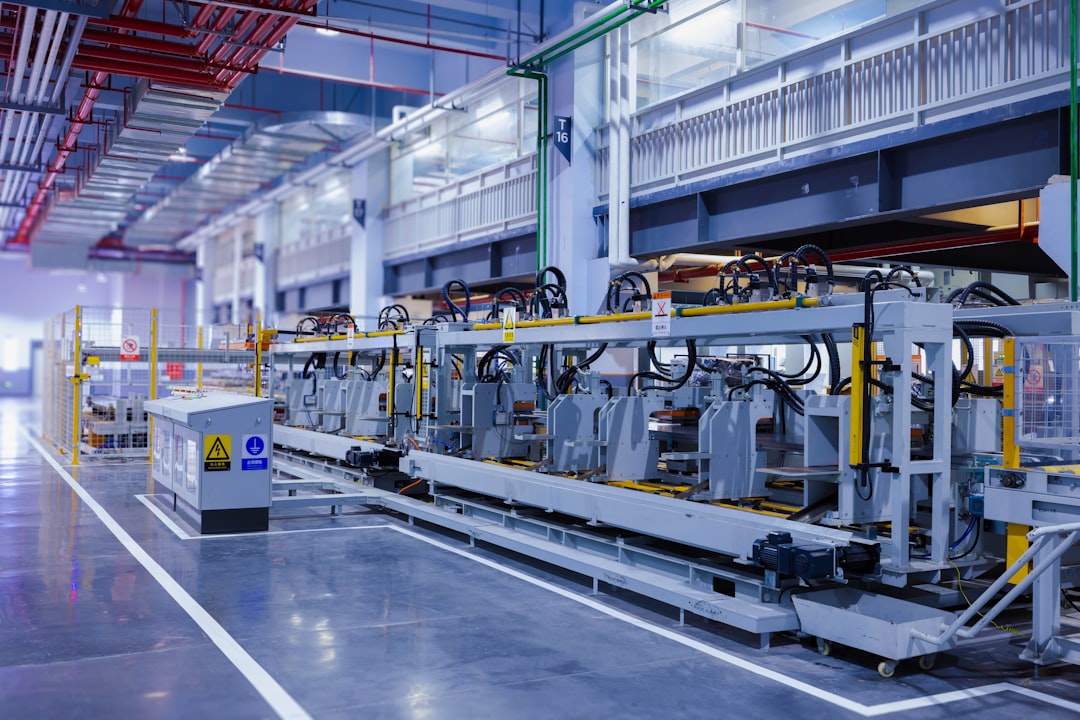
Rockwell Automation is one of the largest U.S.-based pure-play industrial automation companies, with fiscal year 2025 revenue of $8.34 billion and a market capitalization of $51.24 billion. The company designs, manufactures, and services the hardware, software, and engineering systems that operate physical production lines — programmable logic controllers (PLCs), human-machine interfaces, motor controls, drives, safety systems, manufacturing execution software, and lifecycle services. If a US factory floor is automated, there is a very high probability that a Rockwell Allen-Bradley controller is somewhere in the cabinet.
Revenue is reported in three operating segments. Intelligent Devices, the largest at roughly 45% of fiscal 2025 sales, sells the discrete hardware — Allen-Bradley controllers, drives, motion control products, safety devices, and sensors. This is the foundation of the installed base and the primary lock-in mechanism for the rest of the portfolio. Software & Control accounts for approximately 29% of sales and includes the FactoryTalk software suite, control system platforms, network architecture, visualization, and the rapidly growing recurring software revenue stream. This segment grew 9% organically in fiscal 2025 and is the margin engine of the company, expanding operating margin from 24.2% to 29.7% as the mix shifts toward software subscriptions and annual recurring revenue. Lifecycle Services, the remaining 26%, delivers consulting, engineering integration, customer support, and managed services on top of the installed hardware base.
Segment FY25 Revenue Share YoY Growth Operating Margin Intelligent Devices ~$3.76B 45% flat-to-mid single digit ~18–21% Software & Control $2.38B 29% +9% organic 29.7% (up from 24.2%) Lifecycle Services $2.20B 26% −3% mid-teens
The customer base spans automotive, food and beverage, life sciences, semiconductors, warehouse automation, energy, mining, and increasingly data centers. Approximately 60% of revenue is generated in North America, which is both the company’s competitive fortress and the geographic expression of its reshoring thesis. Institutional ownership is dominated by Vanguard (around 11%), BlackRock (around 8%), and State Street (around 4%) — a classic large-cap industrial shareholder register that signals quality but also that any thesis-driven re-rating must come from incremental buyers being convinced, not from a forced-buyer event.
2. Industry Analysis
2-1. Market Size and Growth Trajectory
The global industrial automation market is the macro tailwind under which the entire Rockwell investment case sits. Recent estimates from Mordor Intelligence, Fortune Business Insights, and Coherent Market Insights cluster the 2026 total addressable market in the range of $238 billion to $299 billion, with compound annual growth rates of approximately 7.5% to 9.8% projected through 2031–2034. That places the implied 2031 market size between $343 billion and $632 billion depending on the methodology, with the wide range reflecting different scope definitions (some include process control while others stay narrower in discrete and hybrid automation).
What matters for ROK is not the absolute headline number but where in the cycle the industry sits. Following two years of post-pandemic destocking — during which distributors aggressively reduced inventory positions and many capex projects were delayed — the channel is now clean, machinery utilization is recovering, and a new investment cycle is beginning. Rockwell’s own commentary in its Q2 FY2026 earnings call stated that order activity now reflects natural demand without any meaningful pull-forward, which we interpret as confirmation that the next leg up will be driven by underlying capex rather than working-capital normalization. That is a more durable form of growth.
2-2. Structural Growth Drivers
Three structural drivers are propelling the next phase of industrial automation spending, and Rockwell is positioned at the intersection of all three.
The first driver is the reshoring of US manufacturing. The CHIPS and Science Act, the Inflation Reduction Act, and the broader policy environment have catalyzed more than $400 billion of announced US manufacturing investment over the past three years across semiconductors, batteries, electric vehicles, solar, and pharmaceuticals. Every greenfield US factory requires a controls architecture, and the dominant decision in North American discrete and hybrid automation is Allen-Bradley. Morgan Stanley specifically cited reshoring when raising its ROK price target from $460 to $525, calling Rockwell the most direct US-listed beneficiary of the trend. Because Rockwell generates approximately 60% of its revenue in North America (a higher domestic mix than Siemens, ABB, or Schneider Electric, which are European-headquartered and globally diversified), every incremental dollar of US capex disproportionately flows through Rockwell’s order book.
The second driver is AI data center electrification, which has emerged as a tangible revenue line in real time. Rockwell’s data center sales more than doubled year-over-year in Q2 FY2026, and management explicitly described how power distribution requirements at AI data centers are pushing operators to replace commercial-grade building controls with industrial PLCs that can handle the thermal, electrical, and reliability demands of a 100-megawatt-plus campus. The ATS Automation win at a new Texas AI data center is emblematic — these are 20-year design decisions that compound through every retrofit, expansion, and upgrade. With hyperscalers now spending more than $300 billion annually on AI infrastructure, even a 1–2% share of that spend flowing to industrial controls represents a multi-billion-dollar incremental TAM that did not exist in Rockwell’s models three years ago.
The third driver is the digitization of the factory floor through industrial software. The convergence of PLC data, manufacturing execution systems, predictive maintenance algorithms, augmented reality work instructions, and digital twins is creating a software upsell layer on top of every Rockwell hardware footprint. The company’s $1 billion equity investment in PTC in 2018 (extended in 2020) — which created the FactoryTalk InnovationSuite combining ThingWorx IoT, Kepware connectivity, Vuforia AR, and Rockwell’s MES and Analytics — gave Rockwell a credible end-to-end software stack without the multi-year and multi-billion-dollar internal build cost. This is now the segment driving margin expansion at the company.
2-3. Competitive Landscape
Rockwell competes globally with Siemens (Digital Industries division), ABB (Process Automation), Schneider Electric (Industrial Automation, accelerated by its EcoStruxure platform and Microsoft generative AI co-pilot partnership), Emerson Electric (post-NI acquisition), and Honeywell (whose automation business is in the process of being spun off into a standalone company by year-end 2026). Chinese competitors Hollysys and Delta Electronics undercut Rockwell’s PLC pricing by 30–40% in emerging markets, which is the principal pricing pressure outside North America.
The competitive structure is best understood as regional fortresses. Rockwell holds greater than 50% PLC share in North American discrete automation; Siemens holds comparable share in its home European market; ABB and Schneider have strong positions in process industries and electrification; Emerson holds process control leadership in oil and gas. The implication for an investment thesis is straightforward: Rockwell does not need to win share globally to compound earnings — it needs to defend its North American fortress and ride the reshoring wave. Every dollar of US factory capex that flows through the Allen-Bradley ecosystem is largely uncontested because the cost of switching mid-design from Allen-Bradley to Siemens is prohibitive once a plant is under construction.
Where the competitive concern is sharpest is in software. Siemens Xcelerator, Schneider EcoStruxure (now with Microsoft Azure GenAI integration), and Emerson’s NI-derived software stack are all targeting the same industrial SaaS opportunity that Rockwell’s FactoryTalk addresses. Jefferies downgraded ROK to Hold in March 2026 citing exactly this convergence — the worry that Rockwell’s software differentiation thins as competitors invest aggressively. We address this in the moat and risk sections below.
3. Economic Moat Analysis
Moat Type 1: Switching Costs (Primary Moat)
The single most important economic moat at Rockwell is the switching cost embedded in the installed base of more than 15 million Allen-Bradley controllers across North American industry. Replacing an Allen-Bradley and FactoryTalk install requires retraining the plant’s controls engineers (who have, on average, more than a decade of experience with the Allen-Bradley programming environment), reengineering the I/O architecture, rewiring physical cabinets, validating the new code through a Factory Acceptance Test, and accepting at minimum 12 months of production downtime risk. For a chemical plant, a semiconductor fab, or a pharmaceutical line where unplanned downtime can cost $1 million per hour or more, the math virtually never justifies switching.
This is not a theoretical moat — it is observable in the customer retention data. Rockwell’s North American PLC share has been above 50% for more than two decades, and the company’s installed base has grown every year of that period. The customer churn rate in the core Logix install base is in the low single digits annually, and most of that churn is plant closures rather than competitive losses. Pricing power is the second-order evidence: Rockwell has been able to pass through cumulative price increases of more than 15% since 2021 with no detectable share loss in its home market.
The FactoryTalk software stack reinforces this lock-in by another full layer. Once a plant’s MES (manufacturing execution system) is running on FactoryTalk Production Centre and its analytics layer is built on FactoryTalk Analytics with proprietary historian data, the cost of migrating off Rockwell is no longer just the hardware switching cost — it is also a data migration project and a process redesign project. This is why the company has been able to grow Software & Control segment operating margin from 24.2% to 29.7% in a single year: customers do not negotiate aggressively on software they cannot easily leave.
Moat Type 2: Network Effects via Ecosystem
The Allen-Bradley ecosystem benefits from a real (if narrower) network effect through its system integrator channel. There are more than 1,500 certified Rockwell system integrator partners in North America, each of which has invested in Rockwell certifications and training. When a manufacturer wants to build or expand a US plant, the integrator they hire is overwhelmingly more likely to specify Rockwell than any competitor — because that is what the integrator knows. This creates a self-reinforcing flywheel: more installs drive more integrator demand for Rockwell certifications, which drives more specifications of Rockwell on new projects.
The NVIDIA partnership announced in 2024 should be understood through this lens as well. Rather than competing with NVIDIA’s Omniverse digital twin platform, Rockwell positioned itself as the industrial gateway into the NVIDIA AI stack — meaning that as Omniverse adoption grows, Rockwell becomes more, not less, integral to the AI-augmented factory of the next decade. This converted what could have been an existential threat (NVIDIA building a directly competitive automation simulation layer) into a channel partnership.
Moat Durability Assessment
The 5- to 10-year durability question deserves an honest answer. The PLC switching cost moat is, in our view, structurally robust on a 10-year horizon because the underlying physics of factory commissioning have not changed — downtime is still expensive and retraining is still slow. The data center opportunity strengthens the moat because every new design-win further entrenches Allen-Bradley as the de facto industrial automation specification.
The risk to moat durability sits in the software layer. If Siemens Xcelerator or Schneider EcoStruxure (particularly with Microsoft Azure AI integration) demonstrably outperforms FactoryTalk on AI-driven predictive maintenance or generative engineering, customers could begin to specify those platforms on top of an Allen-Bradley hardware base — which would not destroy Rockwell’s hardware franchise but would cap the upside in the higher-margin Software & Control segment. This is the Jefferies downgrade thesis and we believe it is a real, though manageable, risk. The PTC partnership and NVIDIA integration provide credible counterweights, but Rockwell will need to keep investing aggressively in FactoryTalk’s AI capabilities to maintain software differentiation.
4. Financial Analysis
The five-year financial trajectory tells the story of a cyclical industrial business navigating a difficult macro environment, including a meaningful destocking trough in fiscal 2024. GAAP earnings declined again in fiscal 2025, with the recovery showing up on a trailing-twelve-month basis as Q1–Q2 FY26 strengthened.
Metric FY2021 FY2022 FY2023 FY2024 FY2025 TTM Sales $7.0B $7.76B $9.06B $8.26B $8.34B $8.80B Sales Growth +11% +11% +17% −9% +1% +6% Net Income $1.36B $0.93B $1.39B $0.95B ~$869M $1.09B Diluted EPS $11.58 $7.97 $11.95 $8.28 $7.67 $9.62 Free Cash Flow ~$1.3B ~$0.6B ~$1.2B $639M ~$1.0B+ n/a
Fiscal 2023 was the cyclical peak — a year in which post-pandemic catch-up orders and elevated channel inventory drove revenue to $9.06 billion. Fiscal 2024 then saw a 9% revenue decline as distributors aggressively destocked, which is a familiar pattern in industrial businesses and is now clearly visible in hindsight as a cyclical trough rather than a structural impairment. Fiscal 2025 stabilized at $8.34 billion on the top line even as GAAP diluted EPS declined to $7.67 from FY24’s $8.28, and the trailing twelve months ($8.80 billion in sales, $9.62 in EPS) plus the raised FY2026 guidance (5–9% organic growth, EPS of $12.50–$13.10) implies fiscal 2026 will set a new revenue and earnings high.
Key operating metrics tell a more granular story. The Software & Control segment operating margin expanded by 550 basis points year-over-year in fiscal 2025, from 24.2% to 29.7%, as recurring software revenue grew as a share of mix. Annual recurring revenue (ARR) at Rockwell now exceeds $1 billion and is growing more than 15% annually. The book-to-bill ratio in Q2 FY2026 was “slightly above historical average,” which translated to a stronger orderbook entering the back half of the year. Trailing twelve-month return on equity is 31.2% and return on assets is 9.76%, both at the higher end of the industrial automation peer group.
The balance sheet shows a Debt-to-Equity ratio of 1.15 — elevated for an industrial business but manageable in the context of $1 billion-plus in annual free cash flow and an investment-grade credit profile. Free cash flow conversion was unusually weak in fiscal 2024 ($639 million, down 47%) due to working capital builds during the destocking cycle, but fiscal 2025 saw FCF recover above $1 billion as inventory normalized. The multi-decade track record of consecutive dividend increases (Dividend Aristocrat status) is intact, with the current annualized dividend of $5.32 representing a 55% payout ratio on TTM earnings — comfortable headroom for continued increases.
The fiscal 2026 guidance arithmetic is worth emphasizing. The raised midpoint of $12.80 adjusted EPS implies approximately 22% year-over-year EPS growth. The midpoint of organic sales growth at 7% combined with operating leverage on the recovery in volumes and continued Software & Control margin expansion is the bridge. If management executes against this plan, the trailing P/E compresses from 47.9x to roughly 36x on a current-year basis without any change in the share price — meaning the stock screens differently in six months even if the multiple stays flat.
5. Valuation
Methodology
Rockwell trades at a TTM P/E of 47.85x and a Forward P/E (next year consensus) of 31.82x on consensus FY27 EPS of $14.47. The TTM number is a depressed-earnings-period multiple — fiscal 2025 EPS was below the FY23 peak — and is therefore not the right anchor for fair value. The Forward P/E using forward EPS is the appropriate framework, and we use a multiples-based approach with a sense-check against historical and peer trading ranges.
Step-by-Step Calculation
Rockwell has historically traded at a forward P/E in the 25x to 35x range, with the multiple expanding above 30x during periods of cyclical recovery and software margin expansion (which is exactly the current setup). The peer comparison is informative: Siemens trades around 19x forward (with a holding company discount), ABB around 23x, Schneider Electric around 22x, Emerson around 21x, and Honeywell around 20x. Rockwell trades at a premium to all of these because (a) it is a higher-quality pure-play with a stronger moat in its home geography, (b) its software mix is rising faster, and (c) its US revenue concentration makes it the prime reshoring beneficiary.
We model three scenarios on forward EPS of $14.47:
– Bear case (28x × $14.47 = $405): Multiple compresses if data center demand proves more episodic than structural, or if Siemens/Schneider software convergence forces Rockwell to defend pricing more aggressively. Implies approximately 12% downside from $460.47.
– Base case (32x × $14.47 = $463): Roughly the current price. Assumes Rockwell holds its premium multiple as Software & Control margin expansion continues but the reshoring narrative gradually normalizes into the multiple. Approximately flat from current.
– Bull case (36x × $14.47 = $521): Multiple expands as the market increasingly prices Rockwell as a hybrid industrial-software compounder rather than a cyclical industrial. This roughly matches Morgan Stanley’s Street-high $525 target.
Looking out one more year is where the upside really compounds. If management hits the midpoint of FY26 guidance ($12.80 EPS) and grows EPS another 15% in FY27 (a reasonable base case given the orderbook and software mix shift), FY27 EPS approaches $14.50–$15.00, and FY28 EPS reaches $17.00–$18.00. Applying the same 32x base multiple to $17.50 FY28 EPS gives a target of $560 on a two-year forward basis, equivalent to roughly 22% upside plus a roughly 1.2% dividend yield.
Self-check on per-share consistency: the company has 111.3 million shares outstanding and TTM net income of $1.09 billion, which gives TTM EPS of $9.79 — consistent with the $9.62 figure on the data feed within the precision of the disclosed share count. Market cap of $51.24 billion divided by 111.3 million shares confirms the $460.47 reference price. The forward P/E of 31.82x times forward EPS of $14.47 lands at $460.55, matching the spot price within rounding — confirming the data feed is internally consistent.
Comparison to Analyst Consensus
The consensus price target of $469.29 sits between our base and bear cases. We disagree with the consensus to the upside because it has not fully incorporated either (a) the data center revenue inflection that only became visible in Q2 FY2026, or (b) the Software & Control margin expansion trajectory. We agree with Morgan Stanley’s $525 target as the appropriate 12-month destination, while noting MS still rates the stock Underweight purely on valuation grounds — an internal contradiction that frequently resolves through estimate upgrades rather than multiple compression when fundamentals are this strong.
6. Risk Factors
Risk 1: Cyclicality and capex sensitivity. Rockwell’s revenue is structurally tied to its customers’ capital spending decisions, which are themselves cyclical. The 10-K explicitly cites “the cyclical nature of our customers’ capital spending” as a primary risk factor, and fiscal 2024’s 9% revenue decline demonstrated that the company is not immune to industrial downturns. The current investment thesis assumes that the reshoring and AI data center cycles extend the upcycle for multiple years, but a US recession, a meaningful slowdown in hyperscaler capex, or a CHIPS Act policy reversal under a future administration could compress the upcycle materially. Investors entering at current valuation should size the position with the understanding that a 20–30% drawdown in a recessionary scenario is plausible — that is the nature of high-multiple industrial cyclicals.
Risk 2: Valuation premium and rate sensitivity. At 31.82x forward earnings, ROK trades at a meaningful premium to the industrial automation peer group median of roughly 22x. Morgan Stanley’s continued Underweight rating despite raising its price target to $525 reflects exactly this concern: even if the fundamental story is correct, the stock could deliver flat or modestly negative returns if the multiple compresses as interest rates rise or as the market re-rates the industrials complex lower. The bear case in our valuation framework assumes a 28x multiple, which is itself elevated by historical industrial standards — there is no margin of safety in the multiple, only in the earnings growth.
Risk 3: Software convergence threat from European competitors. Siemens Xcelerator, Schneider EcoStruxure (with the Microsoft Azure AI co-pilot integration announced in 2025), and Emerson’s post-NI software stack are all actively targeting the industrial SaaS opportunity that drives Rockwell’s Software & Control margin expansion. Jefferies downgraded ROK to Hold in March 2026 citing this convergence, arguing that Rockwell’s software differentiation thins as competitors invest aggressively. If FactoryTalk fails to keep pace on AI-driven features — particularly generative engineering, automated code generation, and AI-augmented predictive maintenance — the segment’s margin expansion trajectory could stall, which would remove the most important earnings growth lever in our model.
Risk 4: Chinese competition and international share loss. Hollysys and Delta Electronics sell PLCs at 30–40% lower price points than Rockwell in emerging markets. While this is a manageable issue today (because Rockwell does not depend on Chinese share to make its earnings model work), it caps the international growth opportunity and creates the possibility of price erosion outside North America. A more aggressive Chinese export push into Latin America, Southeast Asia, or the Middle East could put pressure on Rockwell’s international revenue growth.

7. Conclusion and Exit Plan
Investment Rating: Buy
Rockwell Automation is a high-quality industrial automation franchise sitting at the intersection of three multi-year structural tailwinds — US reshoring, AI data center electrification, and the monetization of industrial software — that the current valuation only partially reflects. The Q2 FY2026 earnings beat and raised guidance confirmed that the destocking trough is decisively behind the company and that organic demand is now driving order growth. The Software & Control margin expansion (29.7% segment operating margin, up 550 basis points year-over-year) is silently transforming the unit economics of the entire enterprise. We see fair value at $521 over a 12-month horizon (36x × $14.47 forward EPS) and $560 over a 24-month horizon (32x × $17.50 projected FY28 EPS).
Entry Strategy. With ROK trading at $460.47 against a 52-week range of $305.44 to $468.11, the stock is near the upper end of its range and offers limited valuation cushion. We recommend a phased entry to manage the absence of a clear margin of safety:
– Initial 50% of intended position at the market ($455–$465)
– Add 25% on a pullback to the $420–$430 range (approximately 8–10% below current)
– Add the final 25% on a deeper pullback to $390–$400 if it occurs, which would represent the 28x bear-case multiple on forward EPS — a level at which we view downside as well-contained
Exit Conditions.
– Primary target: Trim 50% of the position at $521 (Morgan Stanley Street-high target, our 12-month bull scenario)
– Extended target: Trim another 25% at $560 (24-month forward base case)
– Fundamental break: Exit fully if (a) two consecutive quarters of organic revenue decline outside a clear macro recession, (b) Software & Control segment operating margin compresses below 24% for two consecutive quarters (signaling competitive pressure on the software thesis), or (c) the orderbook book-to-bill ratio falls below 0.9 for two consecutive quarters (signaling demand rollover)
– Time-based: Reassess the entire thesis after fiscal year 2027 earnings (November 2027). By that point, the reshoring buildout should have produced concrete revenue results, and the data center channel should be a clearly identifiable line item
Item Detail Company Rockwell Automation, Inc. (ROK) Current Price $460.47 Target Price $521 (12-month) / $560 (24-month) Upside 13% (12-month) / 22% (24-month) Rating Buy Key Thesis Pure-play beneficiary of US reshoring + AI data center electrification + industrial software margin expansion, with a switching-cost moat that protects the North American PLC fortress Main Risk Premium valuation (31.8x forward P/E) with limited margin of safety; software convergence from Siemens/Schneider could cap margin expansion
—
Disclaimer
This article is for informational purposes only and does not constitute investment advice. All data sourced from public filings, analyst reports, and news as of the publication date. Invest at your own discretion.
함께 읽으면 좋은 글
- [June 2026 Reanalysis] Rocket Lab After Touching the $151 52-Week High Near Our $160 Bull Case: SpaceX IPO Volatility, Q1 +63% Revenue, and the $113 Reduce-on-Strength Decision
- Hewlett Packard Enterprise AI Server Demand Surge: Why the $49 Entry Point After 40% Revenue Growth Offers Asymmetric Upside
- [2026년 6월 Reanalysis] Tesla Stock After JPMorgan Upgrade and FSD 10 Billion Miles: Why the $391 Price Level Demands Fresh Valuation Framework
- Intuitive Surgical’s da Vinci 80% Market Share Dominance: Why This Robotic Surgery Pioneer Commands a Premium Valuation
- Visa Agentic AI Commerce Network Effects: Why the $615 Billion Payments Giant Deserves a 23% Premium