
When a high-quality compounder spends two years in the penalty box, the market usually stops paying attention right at the moment the fundamentals begin to inflect. Danaher Corporation (NYSE: DHR) looks like exactly that situation in mid-2026. After a brutal multi-year destocking cycle in bioprocessing crushed sentiment around the entire life sciences tools complex, the single most important leading indicator for Danaher’s business — bioprocessing equipment orders — has just turned positive for the first time in nearly two years. At the same time, the company is closing a $9.9 billion acquisition of Masimo’s patient-monitoring franchise, a deal management expects to be accretive to adjusted EPS in the first full year of ownership.
The stock trades at $196.19, with a market capitalization of $138.86 billion on 707.7 million shares outstanding. On trailing earnings of $5.17 per share, the headline P/E of 37.9x looks expensive — but that trailing number reflects the trough of the cycle. The forward picture is what matters: consensus next-year EPS of $9.11 puts the forward P/E at just 21.5x, a meaningful discount to the premium multiple Danaher commanded through most of the last decade. The Wall Street consensus price target sits at $242.05, implying roughly 23% upside from current levels, and the overwhelming majority of covering analysts rate the stock Buy or Outperform.
This article makes the case that Danaher is a classic “quality at a reasonable price” setup with three reinforcing investment points. First, the bioprocessing cycle has bottomed, and Danaher’s razor/razorblade consumables model means a recovery in equipment orders is the leading edge of a much larger, higher-margin recurring revenue reacceleration. Second, the company’s economic moat — built on switching costs in regulated biopharma manufacturing, an installed base of diagnostics instruments, and the Danaher Business System operating discipline — remains fully intact and arguably underappreciated at today’s multiple. Third, the Masimo acquisition adds a durable acute-care monitoring leg to the portfolio at a time when Danaher’s balance sheet (net debt-to-equity of just 0.37) can easily absorb it. The roadmap below walks through the company’s business model and segment economics, a deep dive into the life sciences tools and diagnostics industry, a structured moat analysis, the financial trajectory through the downturn, a valuation framework anchored on forward earnings, the key risks, and a concrete rating with an exit plan.
—
1. Company Overview
Danaher is a science and technology company built around a portfolio of franchises in biotechnology, life sciences, and diagnostics. The modern Danaher is the product of a deliberate, decades-long capital allocation machine: acquire businesses with strong intellectual property and recurring revenue, apply the Danaher Business System (DBS) to improve margins and growth, and recycle the cash flow into the next acquisition. Crucially, the company has repeatedly reshaped itself through spin-offs — Fortive in 2016, Envista in 2019, and Veralto in September 2023 — to concentrate the portfolio on the highest-growth, highest-margin end markets. That last spin-off is essential context for reading the financials: 2022 revenue of roughly $26.6 billion included the water-quality and product-identification businesses that became Veralto, so the cleaner comparison for the continuing company starts in 2023.
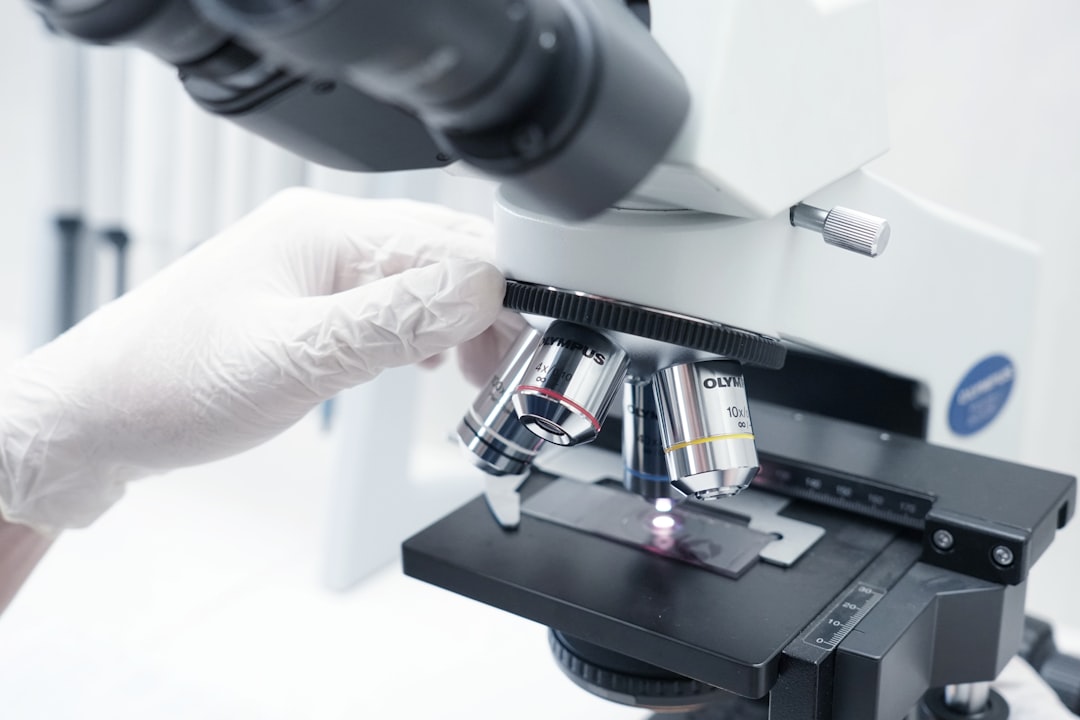
How Danaher makes money. The business is overwhelmingly a recurring-revenue model. Roughly three-quarters of revenue comes from consumables, reagents, software, and service rather than one-time instrument or equipment sales. In bioprocessing, Danaher sells the hardware (bioreactors, filtration, chromatography systems) that biopharma manufacturers install once, then sells the single-use consumables, resins, and media that those customers must repurchase for every batch of drug they produce. In diagnostics, the same dynamic applies: place an analyzer in a hospital lab, then sell a perpetual stream of test cartridges and reagents. This “razor/razorblade” structure is the heart of the investment thesis because it makes revenue sticky and high-margin — Danaher’s trailing gross margin is 61.1% and its operating margin is 21.5%.
Revenue by segment (approximate split). Following the Veralto separation, Danaher reports across three platforms. The approximate revenue mix on roughly $24.8 billion of trailing sales is as follows:
Segment Approx. revenue Approx. share What it sells Diagnostics ~$10.4B (est.) ~44% (est.) Clinical lab analyzers, molecular diagnostics (incl. PCR), acute-care testing, reagents Life Sciences ~$7.1B (est.) ~29% (est.) Mass spec, microscopy, lab instruments, genomics consumables, lab filtration Biotechnology ~$6.4B (est.) ~26% (est.) Bioprocessing hardware and single-use consumables, discovery & medical tools Total ~$24.8B 100%
(Segment dollar figures are approximate and rounded; the platform mix is the structurally important point — Diagnostics is the largest revenue contributor, while Biotechnology is the most cyclically depressed and therefore the largest source of potential upside as the cycle turns.)
Customers and market position. Danaher’s customer base spans the world’s largest pharmaceutical and biotech manufacturers, hospital and reference laboratories, academic and government research institutions, and applied industrial markets. In bioprocessing, the company is one of a small handful of franchises — alongside a few European peers — that effectively underpin the global biologics manufacturing supply chain. In diagnostics, its molecular and acute-care brands hold leading positions in their niches. This is not a commodity business; it is embedded infrastructure for regulated industries where the cost of switching suppliers is extremely high.
Ownership and governance. Danaher is a widely held, institutionally owned large cap. The shareholder base is dominated by long-only index and active institutional managers, with insider ownership modest relative to the float — typical for a company of this scale and history. The capital allocation track record under a stable, promote-from-within management culture is one of the most respected in the industrial and healthcare universe, and the Danaher Business System remains the central organizing philosophy that management uses to drive continuous improvement across every acquired franchise.
—
2. Industry Analysis
2-1. Market Size & Growth Trajectory
Danaher operates at the intersection of three large, structurally growing end markets: bioprocessing/biologics manufacturing, life science research tools, and clinical diagnostics. Taken together, the addressable market spans well over $100 billion in annual spending and has historically grown at a mid-single-digit to high-single-digit pace, with the bioprocessing sub-segment growing considerably faster over a full cycle.
The most important market to understand is bioprocessing — the manufacturing of biologic drugs (monoclonal antibodies, vaccines, cell and gene therapies). Over the long run this market has compounded at roughly a low-to-mid teens rate, driven by the secular shift in pharmaceutical pipelines toward biologics and away from small-molecule chemistry. The single-use, consumables-heavy nature of modern biomanufacturing makes it an unusually attractive market for a supplier like Danaher: every new gram of biologic drug produced consumes filters, media, resins, and single-use bags.
But the bioprocessing market has just lived through an unusual cycle. During the pandemic, biopharma customers massively over-ordered consumables to protect their supply chains. When demand normalized, those customers spent nearly two years working down bloated inventories — a “destocking” cycle that caused Danaher’s bioprocessing revenue to stagnate or decline even as the underlying end-demand for biologic drugs kept growing. The critical signal in 2026 is that this destocking has run its course: bioprocessing equipment orders have turned positive for the first time in nearly two years. In a razor/razorblade model, an equipment-order inflection is the leading edge of a consumables recovery, because new hardware installations pull through years of subsequent consumable purchases. The industry, in other words, is transitioning from the late-stage trough of an inventory cycle into the early-growth phase of a new expansion.
The diagnostics market is larger and steadier — clinical testing volumes grow with demographics, the aging population, and the expansion of molecular and companion diagnostics. After the enormous distortion of pandemic-era respiratory testing (which inflated then deflated reported revenue), the base diagnostics business has normalized into a steady mid-single-digit grower with very high recurring revenue. The life sciences research tools market is more exposed to academic, government, and biotech funding cycles, which have been soft, but it offers high-margin instrument-and-consumable economics over time.
2-2. Structural Growth Drivers
Driver 1 — The biologics manufacturing supercycle. The most powerful long-term driver is the ongoing shift of the global drug pipeline toward biologics. Monoclonal antibodies, GLP-1 biologics, vaccines, and especially the emerging wave of cell and gene therapies all require biomanufacturing capacity that simply did not exist a decade ago. Every new biologic approval and every capacity expansion at a contract manufacturer (CDMO) translates into demand for bioreactors, filtration, and — most importantly — a perpetual annuity of single-use consumables. Because biologic manufacturing processes are validated with regulators using specific equipment and consumables, this demand is exceptionally durable: once a process is locked in, the supplier is effectively designed into the customer’s regulatory filing. As the destocking overhang clears, Danaher is positioned to recapture the full underlying growth rate of this market plus the catch-up from depleted customer inventories. This is a multi-year tailwind, not a one-quarter bounce.
Driver 2 — Molecular and companion diagnostics expansion. Diagnostics is shifting from simple chemistry toward molecular testing (PCR, next-generation sequencing) and companion diagnostics that pair a test with a specific therapy. This raises the value and stickiness of each placed instrument because molecular menus expand continuously and each new assay drives incremental high-margin reagent pull-through. The aging of the global population and the growth of precision medicine provide a steady demographic tailwind underneath the cyclical noise. Diagnostics is the ballast of the Danaher portfolio: it grows more slowly than bioprocessing in an up-cycle, but it is far more resilient in a downturn, smoothing the overall revenue profile and funding R&D and M&A through the cycle.
Driver 3 — Single-use technology penetration and CDMO outsourcing. Within biomanufacturing, the structural shift from stainless-steel to single-use (disposable) systems continues to deepen, and the outsourcing of drug manufacturing to specialized CDMOs continues to expand. Both trends are consumable-intensive and favor scaled suppliers with broad portfolios and validated supply chains. A CDMO running multiple client programs on single-use trains is a recurring-consumables machine for a supplier like Danaher. As biotech funding recovers and more programs advance into commercial-scale manufacturing, the consumable intensity per dollar of industry capex rises — a favorable mix shift for the razorblade side of the model.
The short-term dynamic is the cyclical recovery from destocking; the long-term dynamic is the secular biologics and precision-medicine wave underneath it. The bull case is that these two reinforce each other in 2026–2028, producing a period where reported growth runs ahead of the underlying market as inventories rebuild.
2-3. Competitive Landscape
The life sciences tools and bioprocessing industry is a consolidated oligopoly. A handful of scaled players — Danaher, Thermo Fisher Scientific, and a few European specialists in filtration and bioprocessing — control the bulk of the validated supply chain. The table below frames Danaher against representative peers (figures approximate; Danaher’s own figures are the authoritative fetched values).
Company Approx. market cap Trailing operating margin Primary moat source Danaher (DHR) $138.9B 21.5% Switching costs (validated bioprocess/consumables), DBS operating system, diagnostics installed base Thermo Fisher (TMO) ~$190B (est.) ~20% (est.) Scale, breadth, distribution reach European bioprocess/filtration peers varies high (est.) Filtration IP, single-use franchises
Danaher’s differentiation is twofold. First, the Danaher Business System is a genuine, repeatable operating advantage — a lean-manufacturing and continuous-improvement culture that the company applies to every acquisition to expand margins and accelerate growth. Few competitors have an equivalent institutionalized playbook. Second, Danaher’s portfolio is deliberately weighted toward the highest-recurring-revenue, highest-regulatory-stickiness end markets after years of pruning lower-quality businesses through spin-offs. The result is a company whose revenue base is roughly three-quarters recurring and whose gross margins (61%) sit at the high end of the diversified industrial-healthcare peer set. Against this backdrop, the current forward multiple of 21.5x looks like the market pricing Danaher as an average cyclical rather than the premium compounder its margin and moat profile would justify.
—
3. Economic Moat Analysis
Moat Type 1: Switching Costs in Regulated Bioprocessing
Danaher’s deepest moat is the switching cost embedded in regulated biopharmaceutical manufacturing. When a drug company develops a biologic, it validates the entire manufacturing process — including the specific filters, resins, media, and single-use components — with regulators such as the FDA and EMA. That validated process becomes part of the drug’s regulatory filing. Changing a consumables supplier after approval can require re-validation, comparability studies, and regulatory amendment — an expensive, time-consuming, and risk-laden process that customers avoid unless absolutely necessary. The practical consequence is that once Danaher’s consumables are designed into a commercial drug process, the company captures a multi-year (often multi-decade) annuity that competitors cannot easily dislodge on price alone.
The evidence for this moat is visible in the economics: roughly three-quarters of revenue is recurring, gross margins exceed 61%, and the business throws off strong free cash flow even through a demand downturn. The very fact that destocking — a temporary inventory phenomenon — was the cause of the recent weakness, rather than customer losses, underscores how sticky the underlying relationships are. Customers did not switch suppliers; they simply drew down inventory and have now begun reordering. That is the signature of a switching-cost moat doing its job.
Moat Type 2: Installed Base and Razor/Razorblade Economics in Diagnostics
The second moat is the classic installed-base advantage in diagnostics. Danaher places clinical analyzers and molecular diagnostic instruments in hospital and reference labs, and each placed instrument generates a long tail of high-margin, proprietary reagent and cartridge sales. Labs standardize their workflows, staff training, and laboratory information system integrations around a given platform, making mid-life switching disruptive and costly. As menus expand — more assays runnable on the same instrument — the value of each placement compounds, and the customer’s incentive to stay rises. This razor/razorblade structure produces predictable, recurring, high-margin revenue that is largely insulated from macro cycles, because diagnostic testing volumes are driven by clinical need rather than discretionary capex.
Moat Type 3 (Process Power): The Danaher Business System
A third, less tangible but very real source of advantage is the Danaher Business System — an institutionalized operating culture of lean manufacturing, continuous improvement, and disciplined capital allocation. DBS is what allows Danaher to acquire good businesses and make them better, systematically expanding margins and accelerating growth across a diverse portfolio. This is “process power”: a capability that is extremely difficult for competitors to replicate because it is embedded in thousands of trained employees and decades of refined methodology rather than in a single patent or asset. It is the reason Danaher’s serial-acquisition model has compounded shareholder value for decades where many conglomerates have struggled.
Moat Durability Assessment
Will these moats hold for the next 5–10 years? The switching-cost moat in bioprocessing is, if anything, strengthening: as more biologics reach commercial scale with Danaher’s validated consumables, the installed annuity grows. The principal risk to the moat is not displacement by competitors but end-market disruption — for example, a structural shift in drug modalities that bypasses traditional biomanufacturing, or a sustained collapse in biotech funding that shrinks the customer base. The diagnostics moat is highly durable, anchored by clinical necessity and regulatory standards. The DBS process moat depends on cultural continuity through management transitions, which has so far been managed well via a deep, promote-from-within bench. On balance, the moats look wide and durable, and the current valuation does not appear to give Danaher full credit for them.
—
4. Financial Analysis
Danaher’s recent income statement tells the story of a quality business moving through a cyclical trough. The table below shows the continuing-company trajectory (note that 2022 included the Veralto businesses spun off in September 2023, so 2023 onward is the cleaner comparison). Trailing-twelve-month (TTM) figures are the authoritative fetched values.
Metric FY2023 FY2024 FY2025 TTM Revenue $23.89B $23.88B $24.57B $24.78B Operating income $5.20B $4.86B ~$5.1B (est.) ~$5.3B (est.) Net income $4.74B $3.90B $3.61B $3.69B Net margin ~19.9% ~16.3% ~14.7% 14.9%
The narrative behind the numbers: revenue has been broadly flat-to-modestly-up since the Veralto spin, masking a tug-of-war between resilient diagnostics/life sciences and a depressed bioprocessing business working through destocking. Net income declined for two consecutive years — from $4.74 billion in 2023 to $3.61 billion in 2025 — reflecting both the mix shift away from high-margin bioprocessing consumables and elevated investment. This earnings trough is precisely why the trailing P/E of 37.9x overstates how expensive the stock is. As bioprocessing consumables reaccelerate off depressed levels, the incremental margins are very high, and earnings should recover faster than revenue — which is exactly what the forward consensus implies: EPS rebuilding from a trailing $5.17 toward $9.11 next year as the mix and volumes normalize.
Key operating metrics. The metrics that matter most for Danaher are core (organic) revenue growth, bioprocessing book-to-bill and order trends, and recurring-revenue share. The most important of these — bioprocessing equipment orders — has just inflected positive after nearly two years of decline, and recent quarters have shown sequential improvement (trailing EPS growth of roughly +9% quarter-over-quarter and sales growth of about +3.7% quarter-over-quarter, per the latest data). These are early-cycle readings, not blowout numbers, which is consistent with the thesis that the recovery is just beginning.
Balance sheet and cash flow. Danaher’s balance sheet is a strength, not a constraint. Debt-to-equity stands at just 0.37, well within investment-grade comfort, and the business is a strong free-cash-flow generator with cash conversion typically near or above net income. This financial flexibility is what allows the company to fund the $9.9 billion Masimo acquisition — partly through a senior-notes offering — without straining its credit profile. Trailing returns are temporarily depressed (ROE of 7.1%, ROA of 4.5%) because the denominator includes a large goodwill base from decades of acquisitions while the numerator sits at a cyclical earnings trough; as earnings recover toward the forward consensus, returns on capital should improve materially.
The margin-expansion story. Danaher is already highly profitable (61% gross, 21.5% operating margin), so the path forward is less about reaching profitability and more about operating leverage on recovering volumes. Bioprocessing consumables carry very high incremental margins; as destocked customers rebuild and reorder, the drop-through to operating income should be strong, lifting net margins back toward the high-teens/near-20% level seen in 2023 and driving the EPS recovery embedded in consensus.
—
5. Valuation
Because Danaher is currently earning below its mid-cycle potential, trailing P/E is a misleading anchor. The right framework values the company on forward earnings power and cross-checks against its through-cycle multiple.
Forward P/E approach (primary). The authoritative consensus next-year EPS is $9.11, and at the current price of $196.19 that is a forward P/E of 21.5x. Historically, Danaher has commanded a premium multiple in the high-20s to low-30s during periods of healthy bioprocessing growth, reflecting its recurring-revenue quality and DBS-driven compounding. Applying a range of forward multiples to the $9.11 consensus EPS yields the following fair-value scenarios:
Scenario Forward P/E applied Fair value (× $9.11 EPS) Implied vs. $196.19 Bear 19.0x $173 −12% Base 25.0x $228 +16% Bull 28.0x $255 +30%
The base case of ~$228 assumes the bioprocessing recovery proceeds as the order inflection suggests and Danaher re-rates back toward a 25x forward multiple — still below its historical premium. The bull case of ~$255 (28x) assumes a faster, sharper consumables reacceleration plus accretion from Masimo pulling forward the earnings trajectory. The bear case of ~$173 (19x) reflects a scenario where the recovery stalls, biotech funding stays weak, and the multiple compresses toward the low end of the cyclical-industrial range.
Cross-check vs. analyst consensus. The Wall Street consensus price target is $242.05, implying roughly 23% upside and an embedded forward multiple of about 26.6x on $9.11 EPS. That sits between my base and bull cases, and I broadly agree with it: the consensus is effectively pricing a partial re-rating back toward Danaher’s historical premium as the cycle turns, which is reasonable given the order inflection and the Masimo catalyst. I would weight slightly more conservatively than the Street given the multi-year nature of the recovery, anchoring my own base case at $228 while acknowledging clear paths to the consensus $242 and beyond if consumables reaccelerate faster.
A note on trailing P/E. The trailing 37.9x P/E is not a reason to avoid the stock; it is a symptom of the earnings trough. The entire thesis rests on earnings recovering from the trailing $5.17 toward the forward $9.11 — and the forward multiple of 21.5x is the number that captures the actual valuation. Investors who anchor on the trailing figure will mis-price a recovering cyclical compounder.
Base-case conclusion: a fair value of approximately $228, about 16% above the current price, with a credible path to the $242–$255 range if the bioprocessing recovery and Masimo accretion play out. This is a favorable risk/reward for a wide-moat quality compounder.
—
6. Risk Factors
Risk 1 — The bioprocessing recovery could be slower or shallower than the order inflection implies. The entire bull case rests on destocking having ended and consumables reaccelerating. But a single quarter of positive equipment orders does not guarantee a smooth, sustained ramp. Customers could pause again if biotech funding tightens, if macro uncertainty delays capacity expansions, or if the inventory rebuild proves more gradual than expected. If revenue growth disappoints and the forward EPS recovery toward $9.11 is pushed out by several quarters, the multiple could compress and the stock could revisit the lower end of its 52-week range (the low is $160.93). Because the valuation thesis depends explicitly on forward, not trailing, earnings, any delay in the earnings recovery directly undermines the case. This is the single most important risk to monitor, and it can be tracked quarter-by-quarter through bioprocessing order and book-to-bill commentary.
Risk 2 — Masimo integration and acquisition execution risk. The $9.9 billion Masimo acquisition is a meaningful undertaking. While management expects first-year EPS accretion and the balance sheet can absorb the financing (debt-to-equity remains a conservative 0.37 even with the senior-notes offering), large acquisitions carry integration risk: cultural fit, retention of key personnel, realization of expected synergies, and the distraction of management bandwidth. Patient-monitoring is also a somewhat different end market from Danaher’s core consumables franchises. If the deal closes on less favorable terms, faces unexpected regulatory conditions, or fails to deliver the projected accretion, the capital deployed could earn a sub-par return and weigh on the consolidated growth and margin profile. Acquisition integration is precisely where the Danaher Business System is supposed to add value, but execution is never guaranteed.
Risk 3 — End-market and geopolitical exposure (biotech funding, China, pricing). Danaher’s research and applied businesses are exposed to academic, government, and biotech funding cycles, which have been soft and could weaken further if interest rates stay elevated or public research budgets are cut. The company also has meaningful exposure to China, where both macroeconomic softness and government healthcare and anti-corruption policy shifts have pressured diagnostics and life sciences demand and where geopolitical tension could disrupt supply chains or demand. Additionally, healthcare cost-containment pressure could constrain pricing in diagnostics over time. Any combination of these factors could cap the pace of the recovery even if the bioprocessing cycle itself turns favorably. None of these is a thesis-killer on its own, but together they define the range of outcomes around the central recovery case.
—
7. Conclusion & Exit Plan
Investment rating: Buy. Danaher is a wide-moat, recurring-revenue quality compounder trading at a forward P/E of 21.5x — a discount to its historical premium — just as its most important leading indicator, bioprocessing equipment orders, inflects positive after a near-two-year destocking trough. The razor/razorblade economics mean an equipment recovery is the leading edge of a higher-margin consumables reacceleration, and the pending Masimo acquisition adds a durable monitoring franchise that management expects to be EPS-accretive in year one. The base-case fair value of approximately $228 offers about 16% upside, with a credible path to the consensus $242 and a bull case of $255, against a downside toward the $173–$161 range if the recovery stalls.
Entry price range. The current $196 level is an attractive entry for a long-term holder, given the forward multiple and the early-cycle order inflection. Disciplined investors could look to add on any pullback toward the $175–$185 zone (closer to the bear-case fair value), which would widen the margin of safety. Buying near the 52-week low of $161 would represent an exceptional risk/reward if the macro environment temporarily overwhelms the company-specific recovery.
Exit conditions:
– Target achieved: Trim into strength as the stock approaches the base-case fair value of $228; reassess and consider further trimming near the consensus $242 and the bull-case $255.
– Fundamental break: Reduce or exit if bioprocessing orders roll back into sustained decline (a renewed destocking signal), or if two-plus consecutive quarters show the forward EPS recovery toward $9.11 clearly stalling — that would invalidate the core “cycle has turned” thesis.
– Time-based: Reassess the position in 6–12 months, anchored to the cadence of quarterly bioprocessing order data and the Masimo deal close and integration milestones.
Summary table:
Item Detail Company Danaher Corporation (DHR) Current Price $196.19 Target Price $228 (base) · $242 consensus · $255 (bull) Upside +16% (base) / +23% (consensus) Rating Buy Key Thesis Bioprocessing destocking has ended; razor/razorblade consumables reaccelerate off a trough at a 21.5x forward P/E, with Masimo adding an accretive monitoring leg Main Risk A slower-than-expected bioprocessing recovery delays the forward EPS rebuild toward $9.11
—
This article is for informational purposes only and does not constitute investment advice. All data sourced from public filings, analyst reports, and news as of the publication date. Invest at your own discretion.
> This content is general investment information provided to an indefinite/unspecified audience by a quasi-investment advisory business registered under Korea’s Financial Investment Services and Capital Markets Act, and is not personalized 1:1 investment advice tailored to any individual investor. This analysis is for informational purposes only and is not a solicitation to invest. All investment decisions and their consequences rest solely with the investor. The estimates and assumptions in this report are as of the writing date (2026-06-27) and may not materialize depending on market conditions and geopolitical variables. Financial data used reflects sources such as company filings and analyst consensus, and the scenarios and price targets represent the author’s conservative assessment. All investments carry the risk of principal loss, and past performance or analytical track record does not guarantee future results. As of the writing date, the author does not hold a position in this stock. The author’s holdings and positions may change without prior notice depending on market conditions.
함께 읽으면 좋은 글
- AutoZone Megahub and Commercial DIFM Growth: Why the Post-Earnings Selloff Is a 30% Upside Opportunity in 2026
- Airbnb 2026 Summer Release Analysis: How Services, AI, and Boutique Hotels Expand the Moat — and the Path to $188
- Lowe’s Pro Customer Pivot: Why the $8.8B Foundation Building Materials Acquisition Could Drive 20%+ Upside in 2026
- Robinhood Prediction Markets 320% Surge: Why HOOD Stock Faces a Valuation Test Above Its $103 Consensus Target
- Uber Robotaxi Platform Strategy 2026: Why the Waymo Partnership and Free Cash Flow Inflection Point to 46% Upside