
The artificial intelligence revolution has created an energy crisis that nobody saw coming. While the world debates the capabilities of large language models and autonomous agents, a more fundamental bottleneck has emerged: electricity. Data centers housing the computational infrastructure for AI are consuming power at unprecedented rates, and the grid is struggling to keep up. Into this void steps Constellation Energy (NASDAQ: CEG), America’s largest nuclear fleet operator, which has quietly positioned itself as the indispensable power provider for the AI age.
The thesis is straightforward yet compelling. Every AI model trained, every query processed, and every autonomous system deployed requires electricity—clean, reliable, 24/7 baseload power that cannot be interrupted. Solar panels don’t generate power at night. Wind turbines sit idle when the air is still. Natural gas plants emit carbon that tech giants have pledged to eliminate. Nuclear power, however, delivers carbon-free electricity around the clock with near-perfect reliability. Constellation owns 21 nuclear reactors capable of generating over 19,000 megawatts—enough to power 16 million homes—and has just completed a transformative $16.4 billion acquisition that brings its total generation capacity to 60 gigawatts.
Three investment points make Constellation Energy a compelling opportunity at current prices. First, the company has locked in long-term power purchase agreements with Microsoft, Meta, and other hyperscalers, converting volatile wholesale electricity prices into predictable, premium-priced revenue streams. Second, the Calpine acquisition adds 26GW of flexible natural gas and geothermal capacity, creating the most diversified clean energy portfolio in America while generating over $2 billion in annual synergies. Third, at $251.65 per share, the stock trades roughly 39% below its 52-week high of $412.70 and sits just above its 52-week low of $243.30, despite analyst consensus targets averaging $371, suggesting the market has overreacted to short-term regulatory noise while underpricing the structural tailwinds from AI power demand.
This analysis will examine Constellation’s business model, the explosive growth in data center electricity demand, the competitive moat created by operating America’s largest nuclear fleet, recent financial performance, a detailed valuation framework, and the key risks that could derail the investment thesis.
1. Company Overview
Constellation Energy Corporation is the nation’s largest producer of clean energy, operating the biggest nuclear fleet in America with 21 reactors across 12 sites from the Midwest to the Mid-Atlantic and Northeast. The company was created in February 2022 when it was spun off from Exelon Corporation, allowing it to operate as a pure-play competitive power generator freed from the regulatory constraints of utility distribution assets.
Business Model and Revenue Generation
Constellation generates electricity and sells it through three primary channels. The first is wholesale power markets, where the company sells electricity into regional grids like PJM Interconnection, ERCOT, and CAISO at prevailing market prices. The second is retail power sales, where Constellation is the leading energy supplier to large commercial and industrial customers in America, serving approximately 80% of the Fortune 100 companies with customized energy solutions. The third is long-term power purchase agreements (PPAs), which have become increasingly important as technology companies seek dedicated carbon-free electricity supplies for their data centers.
Revenue Breakdown by Segment
Segment Description Approximate Revenue Share Mid-Atlantic (PJM) Nuclear plants in PA, MD, NY ~45% Midwest (MISO/PJM) Illinois nuclear fleet ~30% ERCOT (Texas) Calpine natural gas assets ~15% Other (CAISO, Retail) Geothermal, retail, hedging ~10%
Key Customers and Market Position
Constellation’s customer roster reads like a who’s who of American industry. Microsoft has signed a landmark 20-year power purchase agreement to purchase the entire output of the restarted Crane Clean Energy Center (formerly Three Mile Island). Meta has entered multi-gigawatt agreements for data center power. CyrusOne, a major data center operator, has signed agreements covering more than 1,100 megawatts. Beyond technology, Constellation supplies energy to manufacturing plants, hospitals, universities, and government facilities across the country.
The company ranks as the undisputed leader in U.S. nuclear generation, operating more nuclear capacity than the next three competitors combined. Following the Calpine acquisition, Constellation has become the largest independent power producer in America with approximately 60GW of total generation capacity.
Ownership and Governance
Institutional investors dominate the shareholder base, with Vanguard, BlackRock, and State Street among the largest holders. The board includes seasoned energy executives and independent directors with backgrounds in finance, regulation, and technology. The company maintains investment-grade credit ratings of Baa1/BBB+ from Moody’s and S&P, reflecting its stable cash flows and disciplined capital allocation.
2. Industry Analysis
2-1. Market Size and Growth Trajectory
The intersection of artificial intelligence and electricity demand represents one of the most significant structural shifts in the energy industry since electrification itself. The numbers are staggering. U.S. data centers consumed approximately 4.4% of total U.S. electricity in 2023. By 2028, that figure is projected to reach 6.7% to 12.0% of total electricity consumption, with absolute demand rising from 176 terawatt-hours (TWh) in 2023 to between 325 and 580 TWh by 2028.
The International Energy Agency projects that global data center electricity consumption will double by 2030, with AI-focused facilities seeing their power use triple. In the United States, which currently accounts for 45% of global data center electricity consumption, data center demand for energy is projected to increase by 130% by 2030.
Capital expenditure from the five largest technology companies—Microsoft, Amazon, Google, Meta, and Apple—surged to more than $400 billion in 2025 and is set to increase by a further 75% in 2026, with much of that investment directed toward data center infrastructure and associated energy procurement. This is not speculative growth; these are committed capital projects with multi-year construction timelines and contracted power needs.
The nuclear power component of this market is equally compelling. The pipeline of conditional offtake agreements between data center operators and small modular reactor (SMR) projects has grown from 25 gigawatts at the end of 2024 to 45 gigawatts today. Existing nuclear plants, like those operated by Constellation, benefit from immediate availability while SMRs remain years from commercial deployment. Nuclear power is projected to supply at least 5GW of dedicated data center capacity by 2030 through existing reactor restarts and power purchase agreements.
2-2. Structural Growth Drivers
Driver 1: AI Model Training and Inference Energy Intensity
The computational requirements of AI have grown exponentially. Training GPT-4 required an estimated 50 gigawatt-hours of electricity—equivalent to powering approximately 50,000 homes for a year. As models grow larger and more sophisticated, energy requirements scale accordingly. Inference—the process of running trained models to answer queries—consumes even more electricity in aggregate because it occurs billions of times per day across millions of users. Every ChatGPT conversation, every AI-powered search result, and every autonomous vehicle decision requires electricity. This demand is not cyclical; it is structural and accelerating.
Driver 2: Hyperscaler Carbon Neutrality Commitments
Microsoft has pledged to be carbon negative by 2030. Google aims for 24/7 carbon-free energy across all operations by 2030. Amazon has committed to net-zero carbon by 2040 with 100% renewable energy by 2025. These are not aspirational statements; they are binding commitments enforced by shareholders, regulators, and public pressure. Meeting these commitments while simultaneously increasing electricity consumption requires massive procurement of carbon-free power. Nuclear is the only technology that can deliver 24/7 carbon-free baseload power at scale, making it irreplaceable in the hyperscaler energy procurement strategy.
Driver 3: Grid Constraints and Interconnection Delays
Even companies willing to pay premium prices for clean electricity face a fundamental constraint: the grid cannot deliver power that doesn’t exist. Interconnection queues for new generation projects now average 5 years in many regions. Transmission infrastructure, much of it built decades ago, cannot move power from remote renewable installations to data center clusters. In this environment, existing generators with established grid connections hold enormous value. Constellation’s 60GW of operational capacity, already connected to the grid and permitted for operation, represents irreplaceable infrastructure that cannot be replicated by competitors for years.
Driver 4: Regulatory Support for Nuclear Renaissance
The Inflation Reduction Act of 2022 extended production tax credits to existing nuclear plants, providing substantial operating subsidies that improve economics. The Department of Energy has committed billions in loan guarantees for nuclear projects, including the $1 billion loan supporting Constellation’s Crane Clean Energy Center restart. State legislatures in Illinois, New York, and other states have passed clean energy standards that specifically include nuclear as a qualifying resource. Bipartisan support for nuclear power has reached levels not seen since the 1970s, reducing the political risk that has historically plagued the industry.
2-3. Competitive Landscape
Company Nuclear Capacity Total Capacity Market Cap Enterprise Value 2026E EPS Constellation Energy (CEG) 22 GW 60 GW ~$91B ~$118B $13.54 Vistra Corp (VST) 6.4 GW 43 GW ~$50B ~$70B $8.50 NextEra Energy (NEE) 0 GW 72 GW ~$155B ~$210B $3.80 Duke Energy (DUK) 11 GW 54 GW ~$90B ~$160B $6.20
Constellation’s competitive position is unique for several reasons. The company operates more nuclear capacity than any U.S. utility, giving it the largest source of 24/7 carbon-free power in the country. The Calpine acquisition added the nation’s premier natural gas fleet with modern, efficient combined-cycle plants that can ramp quickly to meet demand fluctuations. The Geysers geothermal complex in California, acquired through Calpine, represents another source of baseload carbon-free power.
Vistra Corp is the closest competitor in the “nuclear-AI” theme, having acquired Energy Harbor’s nuclear assets. However, Vistra’s nuclear fleet is less than one-third the size of Constellation’s, and the company lacks the diversified fuel mix that Calpine provides. NextEra Energy, while the largest utility by market capitalization, generates no nuclear power and relies primarily on regulated utility earnings rather than competitive merchant generation. Duke Energy operates significant nuclear capacity but is primarily a regulated utility with limited merchant exposure.
The competitive moat created by scale in nuclear operations cannot be overstated. Refueling outages must be carefully scheduled. Specialized maintenance crews must be maintained year-round. Regulatory compliance requires dedicated teams at each site. These fixed costs create economies of scale that make it economically disadvantageous to operate small nuclear fleets. Constellation’s 21 reactors allow it to spread these costs across a massive generation base, achieving unit economics that smaller operators cannot match.
3. Economic Moat Analysis
Moat Type 1: Irreplaceable Physical Infrastructure
Constellation’s primary moat derives from owning physical assets that cannot be replicated at any price in the foreseeable future. No new nuclear reactors have been licensed in the United States since the 1970s until very recently. The two units under construction at Plant Vogtle in Georgia took over a decade to build and cost over $35 billion—more than twice the original estimate. Existing nuclear plants like those operated by Constellation represent licensed, operating infrastructure that would require 10-15 years and tens of billions of dollars to replicate.
This moat is strengthening, not eroding. The Nuclear Regulatory Commission (NRC) licensing process for new reactors takes 4-7 years minimum. Construction takes another 5-10 years. Small modular reactors, while promising, remain years from commercial deployment. Every month that passes without new nuclear capacity coming online increases the scarcity value of existing assets like Constellation’s fleet.
Concrete evidence of this moat appears in the premium prices Constellation commands for its power. The Microsoft PPA for Crane Clean Energy Center reportedly prices power at significant premiums to wholesale market rates, reflecting the unique value of dedicated, carbon-free baseload power. Similar premium pricing characterizes the Meta and CyrusOne agreements.
Moat Type 2: Customer Switching Costs and Long-Term Contracts
Once a hyperscaler commits to a 20-year power purchase agreement with Constellation, switching costs become prohibitive. Data centers are designed around specific power supplies. Transmission infrastructure is built to connect generation assets to consumption points. Corporate carbon accounting depends on contracted clean energy attributes. Breaking these agreements would trigger massive termination fees, require years of planning to find alternative supply, and potentially jeopardize carbon neutrality commitments that face external scrutiny.
The contracted nature of Constellation’s revenue creates visibility that most competitive generators lack. Management has indicated that approximately 90% of projected generation through 2026 is already contracted or hedged. This contrasts sharply with pure merchant generators whose revenue fluctuates with volatile wholesale prices.
Moat Durability Assessment
The durability of Constellation’s moat depends on factors both internal and external. Internally, the company must maintain its nuclear fleet’s operational excellence. The 21 reactors operated at 98.8% capacity during summer 2025, demonstrating the operational discipline that customers pay premium prices to access. Externally, the moat could erode if new nuclear construction accelerates dramatically or if alternative zero-carbon technologies achieve cost parity with nuclear baseload.
Looking forward 5-10 years, the moat appears robust. SMR technology, while promising, faces commercialization timelines extending to 2030 and beyond. Grid-scale battery storage cannot yet economically provide multi-day backup required for true baseload replacement. Fusion power remains decades from commercial viability. Absent breakthrough technological developments, Constellation’s existing nuclear fleet will remain irreplaceable through the end of this decade.
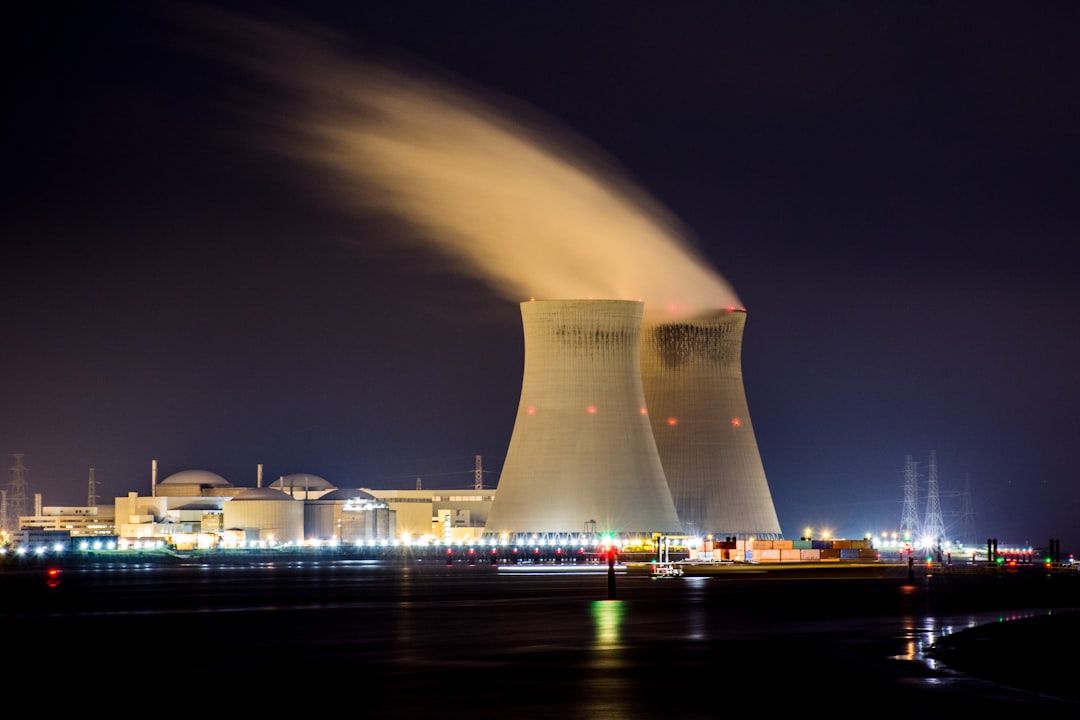
4. Financial Analysis
Historical Financial Performance
Metric 2023 2024 2025 2026E Revenue ($B) $20.8 $19.0 $22.7 — Net Income ($B) $1.6 $3.8 $2.3 — Diluted EPS (GAAP) $5.01 $11.89 $7.40 — Consensus EPS (forward) — — — $13.54
Revenue, net income, and EPS are GAAP actuals from SEC 10-K filings (FY2023–FY2025). 2026E reflects Wall Street consensus forward EPS.
The financial trajectory reflects a business in transition rather than a smooth growth story. Revenue fell from $20.8B in 2023 to $19.0B in 2024 on wholesale power price volatility, then recovered to $22.7B in 2025 as the Calpine assets and premium contract pricing began contributing. Reported GAAP net income is lumpy—$3.8B in 2024 was boosted by non-operating items, while 2025 net income of $2.3B reflects acquisition-related and mark-to-market noise. This is why the market and analysts focus on the forward earnings power: consensus 2026 EPS of $13.54 represents the cleaner run-rate once Calpine is fully consolidated.
Key Operating Metrics
Nuclear capacity factor—the percentage of time reactors operate at full power—is the critical operating metric for any nuclear generator. Constellation’s fleet achieved 98.8% capacity factor during summer 2025, among the highest in the industry. High capacity factors translate directly to revenue, as fixed costs remain constant regardless of output. Every percentage point of improvement in capacity factor generates tens of millions in incremental profit.
Fuel costs for nuclear generation run approximately $5-7 per megawatt-hour, compared to $30-50 per MWh for natural gas at current prices. This inherent cost advantage provides margin protection when wholesale prices decline and exceptional profitability when prices rise.
Balance Sheet Strength
Following the Calpine acquisition, Constellation’s balance sheet carries approximately $30 billion in total debt against assets exceeding $70 billion. The debt-to-EBITDA ratio stands at approximately 3.5x, within the investment-grade target range. Free cash flow before growth capital expenditures is projected to exceed $4 billion across 2026-2027, providing substantial capacity for debt reduction, share repurchases, and dividend growth.
The company has increased its total share repurchase authorization to $5.0 billion and targets double-digit dividend growth, reflecting confidence in cash flow sustainability.
Path to Continued Growth
Wall Street consensus points to adjusted earnings of roughly $13.54 per share in 2026, a step up from the GAAP volatility of 2024–2025 as Calpine is fully consolidated and premium PPA pricing flows through. The Calpine integration is expected to generate over $2 billion in annual free cash flow contribution and 20% EPS accretion. Beyond 2026, management targets 20%+ base EPS growth annually through 2029, supported by three primary drivers: existing contract escalations, additional hyperscaler PPAs, and the Crane Clean Energy Center restart in 2027.
5. Valuation
Valuation Methodology
Given Constellation’s transformation into a contracted clean energy generator, the most appropriate valuation approach combines earnings multiples with a sum-of-the-parts analysis recognizing the premium value of nuclear assets.
Earnings Multiple Approach
At the current price of $251.65 and 2026 consensus EPS of approximately $13.54, Constellation trades at 18.6x forward earnings (and roughly 21.9x trailing earnings on TTM EPS of $11.51). This compares to:
– Vistra Corp (VST): 16.4x forward P/E
– NextEra Energy (NEE): 25x forward P/E
– S&P 500 Utilities Sector: 18x forward P/E
Notably, after a roughly 39% drawdown from the 52-week high, Constellation no longer trades at the rich premium it commanded at the AI-power-hype peak. At 18.6x forward earnings it sits roughly in line with the broad utilities sector despite owning a larger nuclear fleet, faster growth, and a more diversified portfolio than peers following the Calpine acquisition—the basis for the upside case.
Target Price Calculation
Applying a 24x multiple to 2027 estimated EPS of approximately $15.50 (reflecting continued mid-teens growth off the $13.54 2026 consensus base) yields a base case value of $372. Discounting back one year at 10% produces a 12-month target of about $338, representing roughly 34% upside from the current $251.65.
Analyst Consensus Comparison
Wall Street consensus targets average roughly $371, implying meaningful upside from the current $251.65. Our $338 target sits modestly below consensus, reflecting a more conservative multiple assumption given regulatory uncertainties and the lumpiness of recent GAAP earnings.
Scenario Analysis
Scenario Probability 2027 EPS Multiple Target Price Bull Case 25% $17.00 27x $459 Base Case 55% $15.50 24x $372 Bear Case 20% $12.00 18x $216 Weighted Average $360
Bull case assumes additional hyperscaler contracts, successful Crane restart, and favorable regulatory resolution. Bear case assumes regulatory price caps, integration challenges, and lower wholesale prices.
6. Risk Factors
Risk 1: Regulatory Intervention in Power Purchase Agreements
The most significant near-term risk involves potential regulatory action to cap prices on data center power agreements. The Federal Energy Regulatory Commission (FERC) recently rejected expanded co-location arrangements, creating uncertainty about the regulatory framework for tech company power procurement. Proposed “emergency auctions” aimed at increasing power supply could pressure the premium prices Constellation commands in its specialty contracts. Analysts warn that government-mandated price adjustments could force renegotiation of existing contracts, removing the “AI premium” from valuation models. Management has addressed this risk by noting that existing contracts contain protective provisions and that the company’s diversified revenue streams limit exposure to any single regulatory action.
Risk 2: Execution Risk on Crane Clean Energy Center Restart
Restarting a nuclear reactor that has been dormant since 2019 involves significant technical and regulatory challenges. Constellation is investing approximately $1.6 billion in the project, with completion targeted for 2027. Any delays could push commercial operation past the contracted date with Microsoft, potentially triggering performance penalties or contract modifications. The NRC licensing process, while progressing on schedule, could encounter unexpected complications during safety reviews. While the $1 billion DOE loan provides financial cushion, cost overruns are common in nuclear projects. The recent experience at Plant Vogtle—where costs exceeded estimates by over 100%—demonstrates the risks inherent in nuclear construction. Constellation has mitigated this risk by accelerating the restart timeline and achieving 80% staffing ahead of schedule, but investors should monitor quarterly progress updates closely.
Risk 3: Interest Rate Sensitivity and Debt Load
The Calpine acquisition added substantial debt to Constellation’s balance sheet, increasing interest expense sensitivity. Interest costs rose 25% year-over-year in recent quarters, reflecting the higher-for-longer rate environment. With approximately $30 billion in total debt, each 100 basis points of higher interest rates translates to roughly $300 million in additional annual expense. The company’s investment-grade credit ratings provide access to debt markets, but refinancing upcoming maturities in a sustained high-rate environment could pressure earnings. Management’s guidance for $4+ billion in free cash flow provides capacity for debt reduction, but execution on deleveraging targets will be critical for the investment thesis.
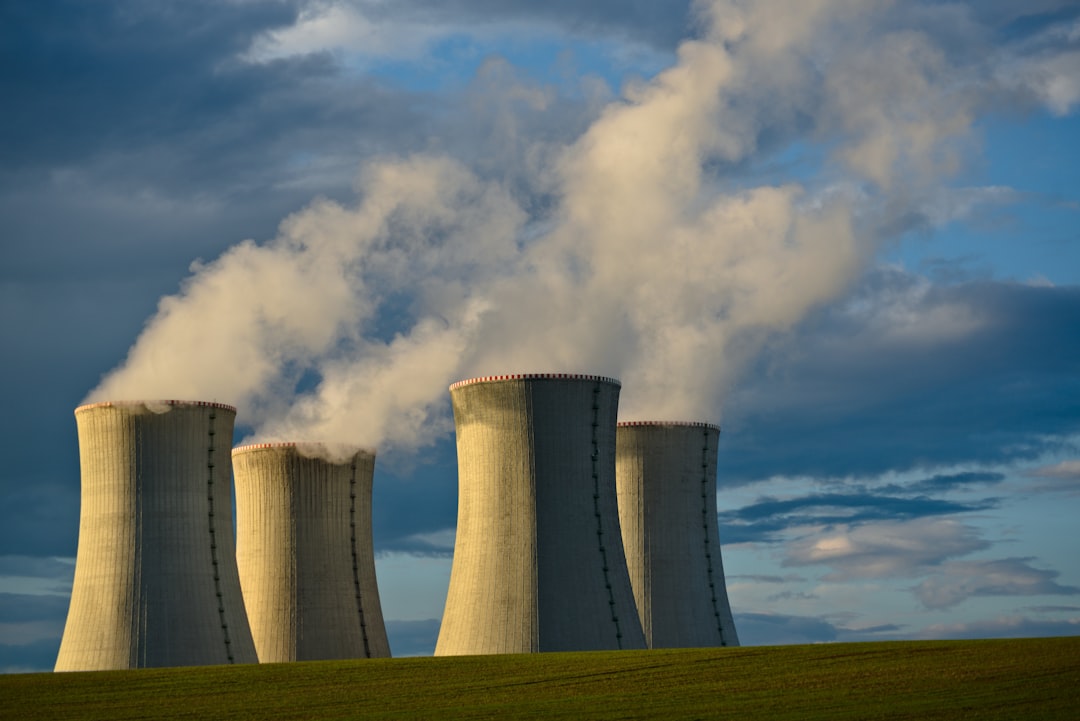
7. Conclusion and Exit Plan
Investment Rating: Buy
Constellation Energy represents a rare opportunity to own irreplaceable infrastructure positioned at the center of a structural megatrend. The AI power crisis is not a temporary phenomenon; it is a fundamental shift in electricity demand that will persist for decades. Constellation’s 60GW generation portfolio, anchored by America’s largest nuclear fleet, cannot be replicated by competitors in any reasonable timeframe. The Calpine acquisition creates immediate value through synergies while positioning the company for continued growth. At current prices, the stock offers meaningful upside to analyst targets while providing downside protection through contracted cash flows and disciplined capital return.
Entry Price Recommendation
The optimal entry range is $245-$270. The stock has traded down roughly 39% from its 52-week high of $412.70 and is hovering just above its 52-week low of $243.30, pressured by regulatory noise and guidance that fell short of elevated AI-hype expectations. This pullback creates an attractive entry point for long-term investors. Accumulate shares on weakness toward the lower end of this range; consider adding on any pullback related to quarterly earnings that meet but don’t exceed expectations.
Exit Conditions
Target Achieved: Begin reducing position if the stock reaches $338, representing our 12-month base case target. Consider full exit toward $460, which reflects the upper end of our probability-weighted scenario analysis.
Fundamental Break: Exit the position if any of the following occurs:
– FERC imposes binding price caps on nuclear PPA contracts, materially impairing contracted revenue
– Crane Clean Energy Center restart is delayed beyond 2028 or costs exceed $2.5 billion
– Management reduces EPS growth guidance below 15% annually through 2029
– Credit ratings downgraded to below investment grade
Time-Based Reassessment: Conduct full thesis review at Q2 2027 earnings release, which should provide visibility on Crane restart progress, Calpine integration synergies, and regulatory developments. If the thesis remains intact, extend holding period; if fundamental deterioration is evident, exit regardless of price.
Summary Table
Item Detail Company Constellation Energy (CEG) Current Price $251.65 Target Price $360 (probability-weighted) Upside 43% Rating Buy Key Thesis America’s largest nuclear fleet is irreplaceable infrastructure at the center of the AI power crisis. Calpine acquisition creates 60GW clean energy empire with 20%+ EPS growth through 2029. Main Risk Regulatory intervention in hyperscaler PPA pricing could remove AI premium from valuation
—
Disclaimer
This article is for informational purposes only and does not constitute investment advice. All data sourced from public filings, analyst reports, and news as of the publication date. The author may hold positions in securities mentioned. Past performance does not guarantee future results. Invest at your own discretion.
함께 읽으면 좋은 글
- General Motors Q1 2026 Earnings Analysis: How a $500 Million Supreme Court Tariff Refund and EV Strategy Reset Are Creating 20% Upside
- Intel Q1 2026 Earnings CPU Renaissance: How Agentic AI Is Restoring the Chipmaker to Data Center Dominance
- Airbnb Business Inflection 2026: Why Wells Fargo’s Upgrade Signals a Platform Renaissance Worth 27% Upside
- MSCI Q1 2026 Earnings Analysis: How the $7 Trillion ETF Index Giant Is Building the Financial Infrastructure of Passive Investing
- Lumentum Stock Analysis: The Optical Backbone of AI Infrastructure Powered by Nvidia’s $2 Billion Endorsement